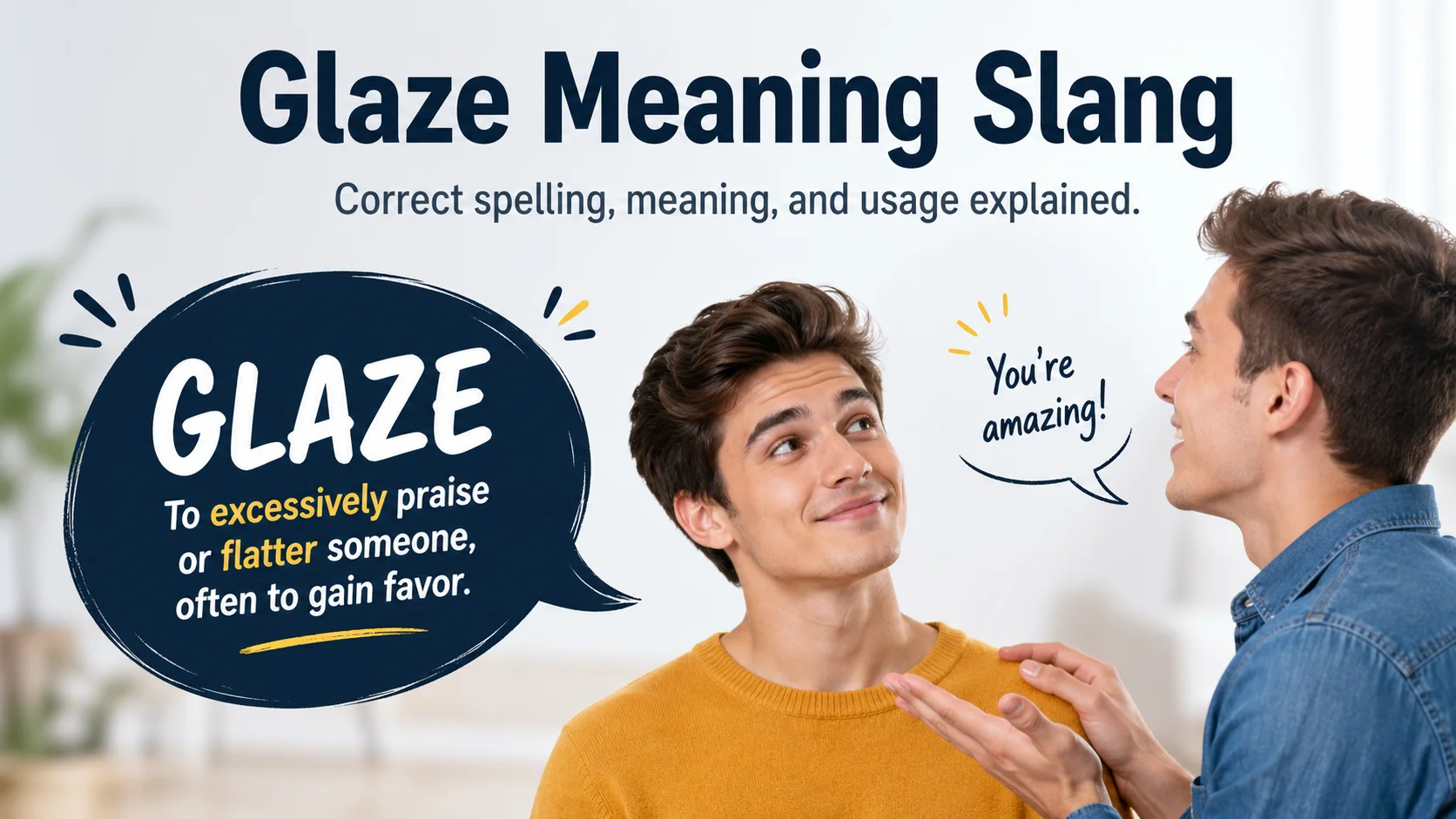
In today’s fast-moving digital world, slang evolves quickly—and sometimes in surprising ways. One term that’s gained traction across social media and texting is Glaze Meaning Slang: What It Really Means in Modern Text Culture. At first glance, “glaze” might remind you of donuts or pottery, but online, it carries a completely different tone.
In the United States, slang often reflects humor, exaggeration, and social dynamics. “Glaze” is a perfect example of how everyday words shift into expressive digital shorthand. Understanding it helps you keep up with conversations on platforms like TikTok, Instagram, and messaging apps.
So what does “glaze” really mean, and why are people using it so much? Let’s break it down clearly and simply.
Quick Answer
Glaze meaning slang refers to overly praising or admiring someone, often in an exaggerated or insincere way. In U.S. text culture, it usually implies “hyping someone up too much,” sometimes to the point of annoyance or humor.
TL;DR
• Means excessive praise or admiration
• Often used in a teasing or critical way
• Popular on TikTok and online chats
• Suggests someone is “overdoing compliments”
• Can be playful or slightly negative
• Reflects modern internet humor and tone
What Does “Glaze” Mean in Slang?
This section explains the core idea behind the slang and why it matters in everyday conversations.
Basic Definition
In slang, “glaze” means to overly compliment or praise someone, especially when it feels exaggerated. It’s often used to call someone out for going too far with admiration.
How It’s Used
• “Stop glazing him, he’s not that good”
• “Bro is glazing hard in the comments”
• “Why are you glazing like that?”
These examples show how the word is used casually, often in a joking tone.
Where Did the Slang “Glaze” Come From?
Understanding the origin helps explain why this word feels so expressive today.
Traditional Meaning
Originally, “glaze” referred to:
• A shiny coating on food or pottery
• A smooth or glossy finish
• Something that enhances appearance
Shift Into Slang
Over time, the idea of “covering something” or “making it look better” turned into a metaphor. Online, this became:
• “Covering someone in praise”
• “Making someone seem better than they are”
• “Over-polishing their image”
This shift reflects how language adapts in digital spaces.
Why Is “Glaze” Popular in U.S. Internet Culture?
Slang spreads fast in the U.S., especially through social media.
Role of Social Media
Platforms like TikTok and Twitter helped popularize the term. It fits perfectly with:
• Reaction videos
• Comment sections
• Meme culture
Cultural Fit
In American online culture:
• Humor often involves exaggeration
• Calling out behavior is common
• Playful criticism is widely accepted
“Glaze” fits all three, making it easy to adopt.
Emotional and Social Meaning Behind “Glaze”
Slang isn’t just about words—it’s about feelings and social signals.
What It Communicates
When someone says “you’re glazing,” they might mean:
• You’re trying too hard to impress
• Your praise feels fake
• You’re being overly loyal
Emotional Tone
• Playful teasing among friends
• Mild criticism in debates
• Sarcasm in online comments
It can feel lighthearted or slightly negative depending on context.
Examples of “Glaze” in Real Conversations
Seeing it in action makes it easier to understand.
Common Situations
• Friends joking about favoritism
• Fans praising celebrities too much
• Gamers hyping teammates excessively
Sample Lines
• “You glazing him like he’s the GOAT”
• “Relax, no need to glaze that hard”
• “Chat is glazing again”
These examples show how flexible the term is.
“Glaze” vs Similar Slang Terms
This section compares “glaze” with other popular expressions.
Key Differences
| Term | Meaning in the USA | Common Associations | Notes |
| Glaze | Overpraising someone | Online comments, TikTok | Often teasing or critical |
| Simp | Excessive admiration, often romantic | Relationships, fandom | Stronger, sometimes negative |
| Meat riding | Blind support or loyalty | Sports, debates | More aggressive tone |
| Hyping | Encouraging or praising | Friends, motivation | Usually positive |
Why “Glaze” Stands Out
• Less aggressive than “meat riding”
• More humorous than “simp”
• More critical than “hyping”
Is “Glaze” Always Negative?
Not necessarily. Context matters a lot.
Positive Use
• Friendly teasing
• Playful exaggeration
• Inside jokes
Negative Use
• Calling out fake praise
• Criticizing bias
• Mocking over-the-top fans
Tone and relationship determine how it feels.
Read This: Snow Bunny Meaning Slang
How “Glaze” Reflects Modern Communication
Language today is fast, expressive, and often layered.
Key Trends
• Short, punchy words
• Humor mixed with criticism
• Shared understanding in online groups
Why It Matters
“Glaze” shows how:
• People bond through humor
• Language evolves quickly
• Meaning depends on context
Cross-Cultural Perspective on Similar Ideas
While “glaze” is modern slang, the idea behind it isn’t new.
Universal Concepts
Across cultures, people recognize:
• Flattery
• Excessive praise
• Social approval
Differences
However:
• The word “glaze” is specific to English slang
• Other cultures use different expressions
• The tone may vary from respectful to critical
Misunderstandings and Misuse of “Glaze”
Like many slang terms, it can be confusing.
Common Misunderstandings
• Thinking it means literal coating
• Assuming it’s always negative
• Misreading tone in text
Misuse Examples
• Using it in formal settings
• Applying it to serious praise
• Overusing it in every conversation
Clarity comes with practice and context.
How the Meaning of “Glaze” Is Evolving
Slang never stays the same for long.
Current Trends (2025–2026)
• Increased use in video content
• Expansion into gaming communities
• More mainstream recognition
Possible Future
• Could fade like older slang
• Might evolve into new variations
• May become widely understood beyond youth culture
How to Use “Glaze” Naturally
If you want to use it correctly, keep it simple.
Tips
• Use it casually, not formally
• Match the tone of the conversation
• Don’t overuse it
Best Situations
• Chatting with friends
• Commenting online
• Reacting to exaggerated praise
FAQs:
What does “glaze” mean in texting?
It means giving too much praise or admiration, often in an exaggerated way. It’s usually playful but can be slightly critical.
Is “glazing” someone a bad thing?
Not always. It can be joking or friendly, but it may sound negative if it implies fake praise.
Where did “glaze” slang come from?
It evolved from the idea of “coating” or “enhancing,” turning into a metaphor for overpraising someone.
Is “glaze” the same as “simp”?
Not exactly. “Glaze” is lighter and more humorous, while “simp” can feel more serious or negative.
Who uses the slang “glaze” the most?
It’s most common among younger users, especially on social media platforms and gaming communities.
Can “glaze” be used positively?
Yes, in a playful or joking way among friends, it can feel positive and fun.
Conclusion:
Language is always changing, and slang gives us a window into how people connect today. Glaze Meaning Slang: What It Really Means in Modern Text Culture shows how a simple word can evolve into a powerful social signal.
In the United States, “glaze” reflects humor, exaggeration, and the way people interact online. It can be playful, critical, or somewhere in between, depending on how it’s used.
As digital culture continues to grow, words like “glaze” remind us that meaning isn’t fixed—it’s shaped by how we use language every day.

Emily Carter is the voice behind EnglishSharpMind.com, helping learners sharpen their English skills through clear, practical, and confidence-building guidance.