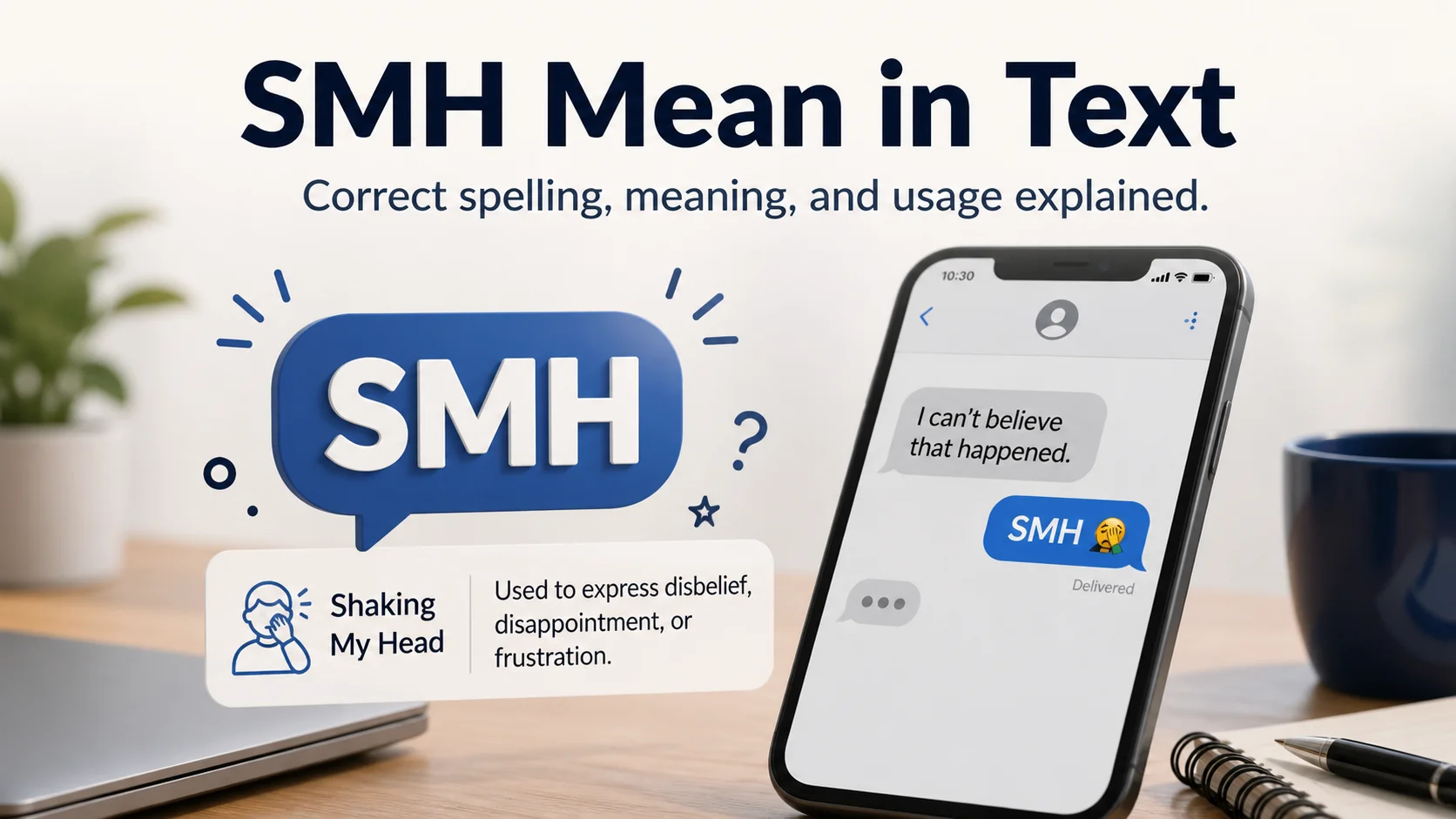
In today’s fast-paced digital world, short expressions often carry big meaning. One of the most common is SMH, a simple abbreviation that shows emotion without long explanations. You’ve likely seen it in texts, comments, or social media posts.
SMH Mean in Text: Complete Guide, Real-Life Examples & Usage (2026 Update) explores how this small phrase reflects modern communication habits in the United States. It’s more than slang—it’s a cultural signal.
People use SMH to react quickly to situations that feel disappointing, surprising, or just plain ridiculous. Because of that, it has become a powerful emotional shortcut in American digital language.
Quick Answer
SMH Mean in Text stands for “shaking my head,” and in the USA, it symbolizes disappointment, disbelief, or mild frustration. It often expresses silent judgment or reaction without direct confrontation.
TL;DR
• SMH means “shaking my head”
• Shows disappointment or disbelief
• Widely used in American texting culture
• Common on social media and messaging apps
• Tone ranges from playful to critical
What Does SMH Mean in Text?
Understanding SMH starts with its literal meaning and how it appears in everyday conversations. While it’s simple, its emotional tone can shift depending on context.
Literal Definition
SMH stands for “shaking my head.” It reflects the physical gesture people make when they disagree or feel disappointed.
How It Appears in Messages
In texts and posts, SMH usually appears at the end or beginning of a sentence.
• “You forgot again? SMH”
• “SMH, I can’t believe this happened”
• “He said that? SMH…”
• “SMH at this situation”
Why It Matters
In the USA, SMH helps people express feelings quickly. It replaces longer emotional reactions with a short, widely understood phrase.
The Origins of SMH in Digital Culture
To understand SMH fully, we need to look at how it developed over time. Its roots are tied to early internet communication.
Early Internet Slang
SMH became popular in the early 2000s through chat rooms and forums. It followed a pattern of abbreviations like LOL and BRB.
Rise with Social Media
As platforms like Twitter and texting apps grew, SMH spread quickly.
• Short character limits encouraged abbreviations
• Younger users adopted it first
• It became mainstream by the 2010s
• Now used across all age groups
Evolution Over Time
Today, SMH is no longer niche slang. It’s part of everyday American digital language.
Symbolism of SMH in American Culture
In the United States, SMH carries emotional meaning beyond its literal definition. It reflects attitudes and social behavior.
Core Symbolic Meanings
SMH often signals subtle judgment or reaction.
• Disappointment without confrontation
• Silent criticism or disbelief
• Emotional distance or detachment
• Social awareness of “what’s right”
Cultural Context
Americans often value quick, expressive communication. SMH fits perfectly into that style.
It allows people to react without escalating a situation. Instead of arguing, they simply show disapproval.
Real-Life Examples of SMH in Texts
Seeing SMH in action helps clarify how it works in daily communication.
Everyday Situations
People use SMH in casual, relatable moments.
• Friend cancels plans last minute: “SMH”
• Someone posts misinformation: “SMH at this”
• Unexpected mistake at work: “SMH, not again”
• Silly behavior online: “SMH people these days”
Tone Differences
The tone can change depending on context.
• Light and playful among friends
• Slightly judgmental in public posts
• Frustrated in serious situations
Emotional and Psychological Meaning of SMH
SMH is not just about words—it reflects emotional reactions and mindset.
Emotional Signals
When someone uses SMH, they often feel:
• Frustration without anger
• Disbelief or confusion
• Mild disappointment
• Social embarrassment
Psychological Role
SMH acts as a “safe reaction.” It allows expression without conflict.
Instead of arguing directly, users show disapproval indirectly. This helps maintain social harmony while still expressing feelings.
SMH in Social Media and Online Identity
Social media has amplified the use of SMH across the United States.
Common Platforms
You’ll see SMH across many apps:
• Text messages and chats
• Instagram comments
• Twitter/X posts
• TikTok captions
Identity and Expression
Using SMH can signal awareness or attitude.
• Shows you understand online culture
• Expresses personality subtly
• Builds connection through shared reactions
SMH Meaning Across Different Contexts
The meaning of SMH can shift depending on where and how it’s used.
Context Table
| Context | Meaning in the USA | Common Associations | Notes |
| Text Messages | Mild frustration | Forgetfulness, mistakes | Usually casual tone |
| Social Media | Public disbelief | Viral content, opinions | Can feel judgmental |
| Friend Groups | Playful teasing | Inside jokes | Often lighthearted |
| Work Chats | Subtle disapproval | Errors, delays | Use carefully |
| Online Debates | Silent criticism | Disagreement | Avoids direct conflict |
Cross-Cultural Understanding of SMH
Although SMH is rooted in English, its meaning spreads globally.
Global Recognition
Many non-English speakers recognize SMH due to internet culture.
Cultural Differences
However, interpretation can vary.
• Some see it as rude or dismissive
• Others view it as humorous
• Tone may not translate perfectly
In the USA, it’s generally understood as casual and expressive rather than offensive.
Read This: What Does STSU Mean in Text?
Misunderstandings and Misuse of SMH
Like many slang terms, SMH can be misunderstood or misused.
Common Misinterpretations
Some people think SMH is harsher than intended.
• Seen as disrespectful in formal settings
• Misread as anger instead of mild frustration
• Confusing for older audiences
When to Avoid SMH
There are situations where SMH may not fit.
• Professional emails
• Serious discussions
• Sensitive topics
Using it in the wrong context can create misunderstandings.
How SMH Has Evolved Over Time
SMH has changed as digital communication has grown.
Early vs Modern Use
Originally, SMH was more literal. Today, it’s more flexible.
• Early: direct reaction to disappointment
• Now: can be sarcastic or humorous
• Sometimes used ironically
Future Trends
As language evolves, SMH may continue to shift.
However, its core meaning remains stable in American culture.
SMH vs Similar Slang Terms
SMH is part of a larger family of internet expressions.
Comparison
Each abbreviation has its own tone.
• LOL: amusement or laughter
• OMG: surprise or shock
• IDK: uncertainty
• SMH: disappointment or disbelief
Why SMH Stands Out
SMH is unique because it expresses silent reaction rather than excitement or humor.
Why People Use SMH Instead of Words
Short expressions are powerful in digital communication.
Benefits of Using SMH
• Saves time while texting
• Conveys emotion quickly
• Avoids long explanations
• Feels natural in casual chats
Social Efficiency
In the USA, fast communication is valued. SMH fits perfectly into that pattern.
FAQs:
What does SMH mean in text messages?
SMH means “shaking my head.” It shows disappointment or disbelief in a quick, informal way.
Is SMH rude or offensive?
Not usually. However, it can feel dismissive depending on tone and context.
When should I use SMH?
Use it in casual conversations or social media. Avoid it in formal or professional settings.
Can SMH be used humorously?
Yes. Many people use SMH jokingly among friends to tease or exaggerate reactions.
Do older people understand SMH?
Some do, but others may not. It’s more common among younger, digital-savvy users.
Is SMH still popular in 2026?
Yes. SMH remains widely used across texting and social media platforms in the USA.
Conclusion:
SMH is a small phrase with a big role in modern communication. It reflects how Americans express emotion quickly and subtly in digital spaces. From casual texts to social media posts, it captures feelings of disbelief, frustration, and quiet judgment.
Understanding SMH Mean in Text: Complete Guide, Real-Life Examples & Usage (2026 Update) helps you see how language evolves with technology. It’s not just slang—it’s a cultural signal that connects people through shared reactions.
As communication continues to change, expressions like SMH remind us that even the shortest phrases can carry deep meaning.

Emily Carter is the voice behind EnglishSharpMind.com, helping learners sharpen their English skills through clear, practical, and confidence-building guidance.