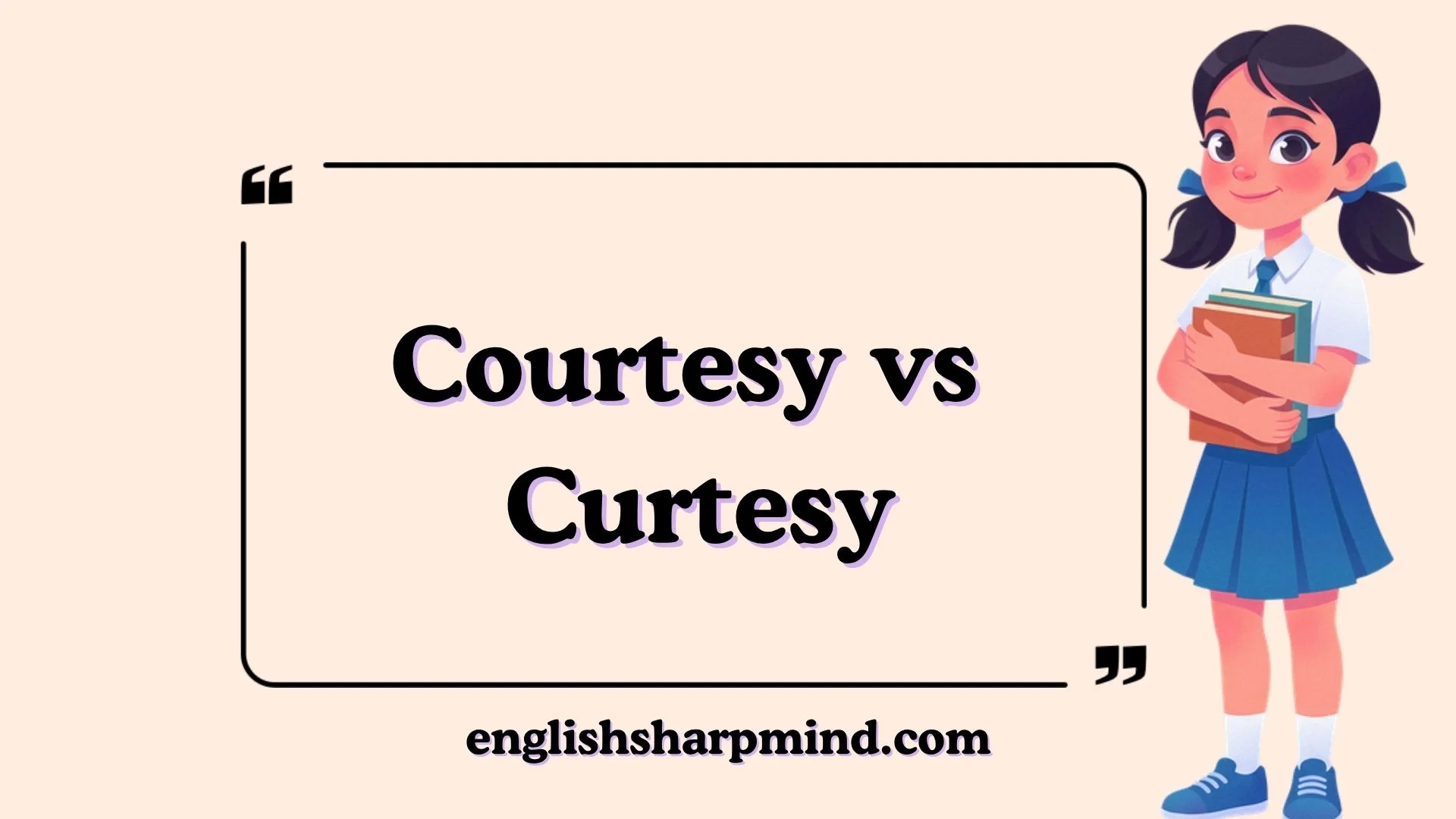
Understanding Courtesy vs Curtesy helps avoid confused usage of these words. Many people, especially students and beginners, struggle to differentiate because both seem similar in spelling and pronunciation. The proper and widely accepted term is courtesy, which refers to politeness, respect, and consideration for others. In everyday interaction, simple acts like saying please, thank-you, holding the door, or offering help improve communication-skills and show professional behavior in various contexts and real life situations.
The term curtesy is an outdated, legal word from old English law, linked to a husband’s right to a deceased wife’s property. It is rarely used today and often causes confusion in emails, school assignments, or social media posts. Using the wrong word may lead to misunderstandings and embarrassing mistakes. To avoid errors, always use the correct term, follow simple rules, and practice with examples, reading, and writing to build confidence and ensure clear communication.
Courtesy vs Curtesy: The Core Difference
At a glance, these words look nearly identical. But they live in entirely different worlds.
- Courtesy = politeness, respect, good manners
- Curtesy = an old legal term about property rights
That’s it. Simple. Yet the confusion keeps happening.
Quick Comparison Table: Courtesy vs Curtesy
| Feature | Courtesy | Curtesy |
| Meaning | Politeness, respect, good manners | Historical legal right of a widower |
| Usage | Everyday language | Rare, legal/historical only |
| Context | Social, business, communication | Property law (mostly outdated) |
| Frequency | Extremely common | Extremely rare |
| Example | “She showed great courtesy.” | “He held the estate by curtesy.” |
| Modern Use | Essential word | Almost never used |
Bottom line: If you’re unsure, you almost always want courtesy.
What Does “Courtesy” Mean?
Definition
Courtesy means showing politeness, respect, and consideration toward others. It reflects how you treat people in everyday situations.
Meaning in Real Life
Think about the small things:
- Holding a door open
- Saying “thank you”
- Writing a respectful email
- Listening without interrupting
Those actions? That’s courtesy in motion.
It’s not just about manners. It signals emotional intelligence and professional awareness.
Examples You’ll Actually See
Let’s make this practical.
- Workplace:
“He responded with courtesy even under pressure.” - Customer service:
“The staff treated every guest with courtesy.” - Everyday conversation:
“It’s just common courtesy to say hello.”
Short. Clear. Natural.
Common Phrases with “Courtesy”
You’ll see this word used in phrases all the time:
- Common courtesy → basic politeness everyone expects
- Courtesy call → a polite or formal check-in
- Courtesy of → giving credit
- Professional courtesy → respectful behavior in business
Example:
“This report is shared courtesy of the research team.”
What Does “Curtesy” Mean?
Now here’s where things get interesting.
Definition
Curtesy is a legal term from old English law. It refers to a husband’s right to his deceased wife’s property—if they had children together.
Yes, it’s that specific.
Historical Context (Why It Existed)
Back in medieval England, property laws heavily favored men. If a wife owned land and passed away, her husband could claim a life interest in that land.
This right was called “tenancy by the curtesy.”
Key conditions included:
- The marriage had to be valid
- The wife had to own property
- The couple needed a living child
Without those conditions, no curtesy rights applied.
Why You Rarely See “Curtesy” Today
Modern law replaced this concept long ago.
Today:
- Property rights are more balanced
- Inheritance laws are standardized
- Gender-based legal privileges have largely disappeared
So unless you’re reading a legal textbook or historical document, you won’t encounter “curtesy.”
Example in Context
Here’s a correct usage:
“Under common law, he retained rights to the estate by curtesy.”
Notice how formal and specific that sounds. That’s your clue. This word belongs in legal history, not everyday writing.
Why People Confuse Courtesy and Curtesy
The confusion isn’t random. It happens for a few clear reasons.
Similar Spelling
They differ by just one letter. When you type quickly, it’s easy to slip.
Autocorrect Doesn’t Always Help
Spellcheck may not flag “curtesy” because it’s technically a real word.
That’s where mistakes sneak through.
Lack of Awareness
Most people don’t know “curtesy” exists as a legal term. So they assume it’s just a variation of “courtesy.”
Quick Rule That Solves 99% of Cases
If you’re talking about kindness, manners, or respect, use:
👉 Courtesy
How to Remember the Difference (Simple Tricks That Work)
You don’t need complicated grammar rules. Just use memory shortcuts.
Trick One: “Courtesy Has a ‘You’ in It”
- Courtesy → think “you” → how you treat others
That connects the word directly to behavior.
Trick Two: “Curtesy Sounds Like Curse”
- Curtesy → “curse” → something old and outdated
That helps you remember it belongs to history, not daily use.
Trick Three: Context Check
Ask yourself:
- Am I talking about politeness? → Courtesy
- Am I discussing old legal property rights? → Curtesy
Simple. Fast. Reliable.
Also Read This: What Does LMY Mean in Text? A Complete Guide
Common Mistakes and How to Avoid Them
Mistakes usually happen in everyday writing. Let’s fix that.
Mistake One: Emails
“Thank you for your curtesy.”
“Thank you for your courtesy.”
This error shows up more often than you’d expect.
Mistake Two: Resumes
“Known for curtesy and professionalism.”
“Known for courtesy and professionalism.”
In a resume, that one typo can cost you credibility.
Mistake Three: Overthinking the Word
Sometimes people hesitate and pick the wrong option just to be “safe.”
Here’s the truth:
👉 If it’s not legal writing, it’s courtesy.
When Should You Use “Courtesy” in Writing?
You’ll use this word more than you realize.
Professional Settings
- Emails
- Reports
- Client communication
Example:
“Please extend professional courtesy to all clients.”
Customer Experience
Businesses rely on courtesy to build trust.
- Greeting customers
- Handling complaints
- Offering help
Fact: Studies show polite interactions increase customer loyalty by over 60%.
Daily Conversations
Courtesy shapes how people perceive you.
- “Thanks for your courtesy.”
- “I appreciate your kindness.”
It’s simple, yet powerful.
Quick Checklist
Use courtesy if your sentence involves:
- Respect
- Manners
- Politeness
- Kindness
If yes, you’re good to go.
When (If Ever) Should You Use “Curtesy”?
Let’s keep this honest.
You’ll only use “curtesy” in very specific situations:
Legal Writing
- Property law discussions
- Historical legal analysis
Academic Contexts
- Law school essays
- Research papers
Rule of Thumb
If you’re not writing about old legal systems, don’t use it.
Real-World Example: Both Words in Action
Here’s a short contrast to lock it in.
“She handled the situation with courtesy, ensuring everyone felt respected. Meanwhile, the historian explained how land ownership once passed through curtesy under English common law.”
See the difference? One feels modern and natural. The other sounds formal and historical.
Case Study: A Small Mistake, Big Impact
Scenario
A job applicant sends this email:
“Thank you for your time and curtesy.”
What Happens Next
- The recruiter notices the mistake
- It raises questions about attention to detail
- The candidate loses a competitive edge
Correct Version
“Thank you for your time and courtesy.”
One letter fixed. Big difference in perception.
Related Confusing Word Pairs
If this mix-up caught your attention, you’ll want to watch out for these too:
- Affect vs Effect
- Compliment vs Complement
- Advice vs Advise
Each pair looks similar but carries different meanings. Mastering them sharpens your writing fast.
FAQs:
1. What is the main difference between courtesy and curtesy?
Courtesy means politeness, respect, and kind behavior in daily life, while curtesy is an old legal term related to property rights.
2. Is curtesy still used today?
No, curtesy is rarely used today and mostly appears in historical or legal contexts.
3. Why do people get confused between these words?
People get confused because both words have similar spelling and pronunciation, but very different meanings.
4. Which word should I use in daily communication?
You should use courtesy, as it is the correct, common, and widely accepted term in modern English.
5. How can I avoid mistakes between courtesy and curtesy?
Practice with examples, focus on usage, and remember that courtesy relates to polite behavior, while curtesy is a legal term.
Conclusion:
Understanding Courtesy vs Curtesy is important for clear and effective communication. While courtesy reflects politeness and respect in everyday life, curtesy belongs to old legal usage and is no longer common. By learning their differences and practicing correct usage, you can avoid confusion, improve your writing, and build more confidence in using English correctly.

Emily Carter is the voice behind EnglishSharpMind.com, helping learners sharpen their English skills through clear, practical, and confidence-building guidance.