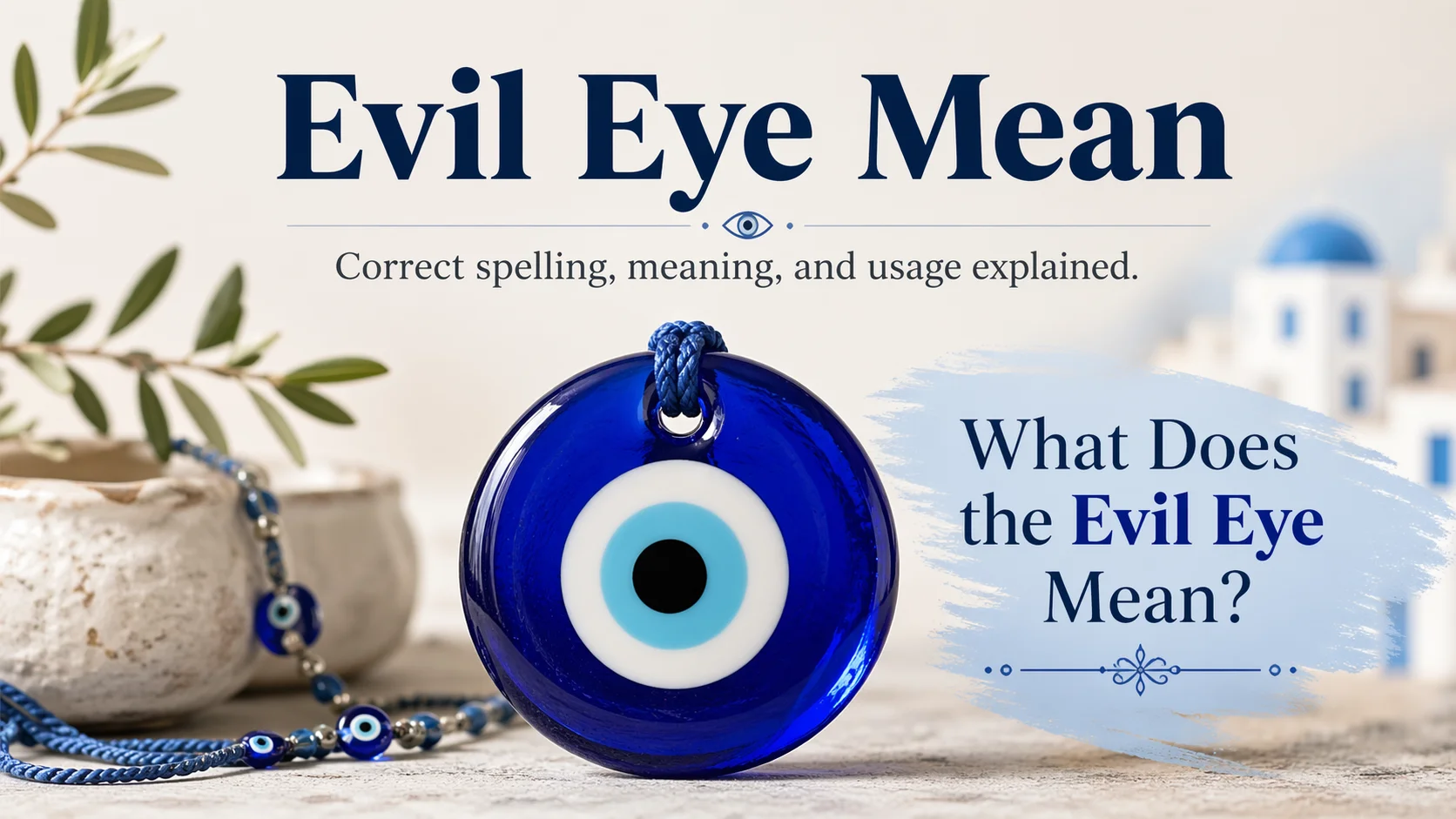
What Does the Evil Eye Mean? is ancient belief about a harmful glance linked to injury or death affecting vulnerable people across cultures worldwide in modern global societies today still
This belief appears across ancient Greece, Rome, Jewish, Islamic, Buddhist, and Hindu traditions, plus indigenous, peasant, and folk societies, persisting into modern times. Those most often accused of casting include strangers, malformed individuals, childless women, and old women, while pregnant women, children, and animals are seen as particularly susceptible, where injury and death may follow a harmful glance. These beliefs remain ancient, ubiquitous, shaping modern times worldwide through folk societies.
Quick Answer
The evil eye symbolizes protection from negative energy, jealousy, and harm. In the USA, it is commonly worn as a charm or jewelry piece for emotional protection and good luck, while globally it represents spiritual safeguarding against envy-based misfortune.
TL;DR
• Ancient symbol meant to protect from envy and negative energy
• Found in Mediterranean, Middle Eastern, and South Asian cultures
• Popular in the USA as jewelry, tattoos, and decor
• Often linked with psychological ideas about jealousy and perception
• Believed to “reflect back” harmful intentions
• Now used both spiritually and as fashion symbolism
Overview of the Evil Eye Symbol
The Evil Eye is one of the oldest protective symbols still widely used today. It usually appears as a blue eye-shaped charm, often made of glass, ceramic, or metal. However, variations exist in different cultures, including multi-colored or stylized versions.
Core Visual Features
• Circular eye design with concentric rings
• Dominant blue color for protection symbolism
• Glass or enamel materials in modern charms
• Often paired with hands, beads, or hamsa symbols
• Used in jewelry, home decor, and spiritual objects
The simplicity of its design is part of its power. It is instantly recognizable across cultures, which is why it has remained relevant for thousands of years.
Quick Historical Origins of the Evil Eye Belief
The belief in the Evil Eye goes back thousands of years, long before modern religions. Ancient civilizations believed that envy could cause real harm through a glance alone.
Early Human Beliefs
In early societies, unexplained illness or misfortune was often blamed on unseen forces. The idea of harmful envy became a way to explain sudden bad luck.
• First recorded mentions appear in Mesopotamian texts
• Ancient Greeks believed certain gazes carried destructive power
• Romans used charms to deflect jealous attention
• Early protective symbols were carved into stone and pottery
• Eye imagery was used to “watch back” against harm
This belief spread widely because it helped people make sense of unpredictable life events.
Ancient Mediterranean Roots and Early Civilizations
The strongest historical roots of the Evil Eye come from the Mediterranean region, especially Greece, Turkey, and surrounding areas.
Greek and Roman Influence
Ancient Greeks called it “mati,” meaning eye. They believed envy was a powerful emotional force that could harm others.
• Sailors painted eyes on ships for protection
• Blue beads were used to block jealousy energy
• Soldiers wore charms before battles
• Artists carved eye symbols into architecture
• Rituals were performed to break the curse
The Roman Empire helped spread these beliefs across Europe and North Africa.
Evil Eye in Islamic, Jewish, and Christian Traditions
The Evil Eye is also found in major religious traditions, though interpretations vary.
Spiritual Interpretations
In Islam, Judaism, and Christianity, the Evil Eye is often seen as real but preventable through prayer or protection.
• Islamic tradition references protection through prayers and verses
• Jewish texts mention the power of envy in spiritual harm
• Christian folk traditions include blessings against the “evil gaze”
• Amulets are sometimes combined with religious symbols
• Protection often linked to humility and gratitude
These interpretations show how deeply embedded the belief is across spiritual systems.
Symbolism of Colors and Shapes in Evil Eye Amulets
The Evil Eye is not just about the symbol itself—it’s also about color and design.
Meaning Behind Colors
| Color | Meaning in the USA | Common Associations | Notes |
| Blue | Protection & calm | Peace, clarity | Most traditional form |
| White | Purity & cleansing | Spiritual balance | Less common |
| Black | Absorbing negativity | Strength | Often modern designs |
| Red | Energy & courage | Passion, protection | Used in contemporary styles |
| Green | Growth & healing | Nature, renewal | Regional variations |
The circular shape represents cycles, awareness, and the idea of “watching back” against harm.
What Does the Evil Eye Mean in the United States Today
In the USA, the Evil Eye has become both a cultural symbol and a fashion trend. Many people wear it without deep religious belief, while others see it as spiritual protection.
Modern American Interpretations
• Protection from jealousy in personal life
• Symbol of positive energy and mindfulness
• Fashion statement in jewelry and accessories
• Decorative item in homes and offices
• Cultural appreciation of global traditions
The meaning often depends on personal belief rather than strict tradition.
Cross-Cultural Meanings Around the World
Although the Evil Eye is widely recognized, its meaning shifts slightly across cultures.
Global Interpretations
• Middle East: protection from envy and harm
• South Asia: spiritual defense against negative gaze
• Latin America: “mal de ojo” belief in emotional harm
• Europe: folk protection charm traditions
• North Africa: blended spiritual and cultural use
Despite differences, the central idea remains consistent: protection from jealousy.
Psychological Meaning and Hidden Emotional Associations
Beyond spirituality, the Evil Eye also reflects human psychology. It connects to how people understand jealousy, attention, and social comparison.
Emotional Symbolism
• Fear of being judged or envied
• Desire for emotional protection
• Awareness of social comparison
• Sense of control over uncertainty
• Comfort in symbolic reassurance
Psychologically, the symbol works as a reminder to stay mindful of emotional energy—both yours and others’.
Also Read This: EVOO Meaning
How the Evil Eye Is Used in Jewelry, Tattoos, and Fashion
The Evil Eye has become extremely popular in modern design. It appears in many personal and lifestyle items.
Modern Uses
• Necklaces and bracelets for daily wear
• Minimalist tattoo designs on wrists or neck
• Home decor like wall hangings and mirrors
• Phone charms and digital wallpapers
• Luxury fashion accessories and branding elements
Its adaptability is a major reason for its continued popularity.
Evil Eye in Social Media and Modern Digital Culture
In digital spaces, the Evil Eye has taken on new meaning. It is often used as an aesthetic symbol or protective emoji-style image.
Online Presence
• Used in posts about protection or positivity
• Seen in lifestyle and wellness content
• Shared as aesthetic “good luck” imagery
• Popular in minimalist design trends
• Often detached from original cultural meaning
This digital shift shows how symbols evolve with technology.
Misunderstandings and Common Myths About the Evil Eye
There are many misconceptions about the Evil Eye, especially in modern usage.
Common Misbeliefs
• It is not inherently “evil” itself
• Not tied to one religion or culture only
• Not a guaranteed magical protection object
• Not always used in a religious context
• Not meant to cause harm to others
Instead, it is primarily a protective and symbolic concept.
Controversies: Cultural Appropriation vs Cultural Appreciation
As the Evil Eye becomes more popular globally, discussions about cultural respect have increased.
Key Concerns
• Mass commercialization without context
• Loss of original cultural meaning
• Fashion use without understanding history
• Respectful adoption versus misuse debate
• Increasing awareness of cultural origins
Many experts encourage learning the history while appreciating the symbol.
Shifts in Meaning Over Time and 2026 Perspective
In 2026, the Evil Eye exists in multiple layers of meaning at once. It is spiritual, cultural, and aesthetic depending on who uses it.
Modern Evolution
• From ancient protection to global fashion icon
• From religious belief to personal symbolism
• From regional tradition to worldwide trend
• From superstition to psychological metaphor
• From ritual object to everyday accessory
This evolution shows how symbols adapt while still keeping their core identity.
FAQs:
1. What Does the Evil Eye Mean?
It is the belief that a harmful glance can cause injury or death, especially to pregnant women, children, and animals who are particularly susceptible.
2. Is the belief in the Evil Eye modern or ancient?
It is ancient and ubiquitous, found in ancient Greece, Rome, Jewish, Islamic, Buddhist, and Hindu traditions, and still exists in modern times.
3. Who is believed to cast the Evil Eye?
People often say strangers, malformed individuals, childless women, and old women are most often accused of casting it.
4. Why is the Evil Eye feared?
Because it is believed a simple glance can cause injury, death, or misfortune, especially to vulnerable groups.
5. Where is the Evil Eye belief found today?
It is found across the world, continuing in folk societies, indigenous, and peasant cultures, even in modern times.
Conclusion:
The idea of the Evil Eye remains a powerful belief shaped by ancient, ubiquitous traditions from ancient Greece to Islamic, Hindu, and other cultures. It continues to influence how people understand injury, death, and the fear of a harmful glance in everyday life.

Emma Brooke is the voice behind English Sharp Mind, dedicated to helping learners sharpen their English skills with clear explanations, practical tips, and confidence-building guidance.