My friend Tariq left his BMW sitting in an open car park near JLT for four months. He went back to Pakistan for family reasons, figured it’d be fine, and came back to a car that wouldn’t start, seats that had developed a subtle but permanent musty smell, and a front bumper someone had apparently kissed at low speed with zero intention of leaving their details.
He spent close to AED 3,800 sorting it all out. The storage facility he didn’t use would’ve cost him AED 480 a month.
I tell that story not to be dramatic about it but because it’s genuinely the most common version of how this goes. People know car storage in Dubai exists. They just don’t get round to sorting it, or they assume the building car park is basically the same thing, or they’re too busy in the two weeks before they leave to deal with another task.
None of those are good reasons to skip it. Not here.
Dubai’s Heat Does Things to Parked Cars That You Actually Need to Know About
Look, everyone knows Dubai is hot. That’s not new information. But there’s a difference between knowing it’s hot and understanding what 70-plus degrees inside a sealed vehicle does over weeks and months.
Dashboard plastics crack. Not all of them, not always but leather-grain dashboard surfaces and soft-touch trim around the instrument cluster don’t love sustained baking. The adhesive holding interior panels together starts losing its grip. Door seal rubber dries out faster than you’d think. And the battery this one gets almost everyone drained to the point of no return if nobody starts the car for more than a few weeks.
The paint is a slower story but it’s real. UV in Dubai hits differently than in most of the world. The UV index in July is consistently extreme. Clear coat that looks fine when you park slowly oxidises under sustained exposure. A waxed car in covered storage holds up. An unwaxed car in an open lot for three months looks a little duller when you come back. After two summers of that, you’ve got a car that’s aged visually by much more than the mileage suggests.
Dust is the third thing. Al Quoz in a shamal, or pretty much anywhere in Dubai Industrial Area when the wind picks up fine abrasive particles get into places you can’t reach. Around windscreen seals, into door jamb gaps, into the engine bay intake areas. On a driven car this mostly doesn’t matter. On a car that’s been sitting still, it accumulates and that’s precisely where secure self storage with fully enclosed, sealed units makes a difference that open bays and casual parking spots simply can’t.
None of this is catastrophic on its own. But compound it over several months, across multiple systems, and you come back to a car that’s a bit more tired than the one you left.
What Professional Car Storage Actually Gives You
It’s accountability more than anything else. When you leave a car with a proper storage facility, there’s a contract, a condition report, a record of who accessed what and when. The car is on camera. Someone on-site knows it’s there.
Compare that to a residential building basement, which might have CCTV that hasn’t been checked in months, no record of your car specifically being there, and zero liability if anything happens.
The environmental protection is real too. Even basic enclosed storage brings the temperature down significantly compared to an outdoor space. A proper roof and walls keep dust out. Climate-controlled storage takes that further your car sits in a genuinely regulated environment where temperature and humidity stay consistent.
And then there’s the peace of mind thing, which people dismiss as fluffy but actually matters. Spending three months in London or Karachi or wherever vaguely worrying about what’s happening to your car is a low-grade stress that’s completely avoidable.
The Types of Storage You’ll Actually Find in Dubai
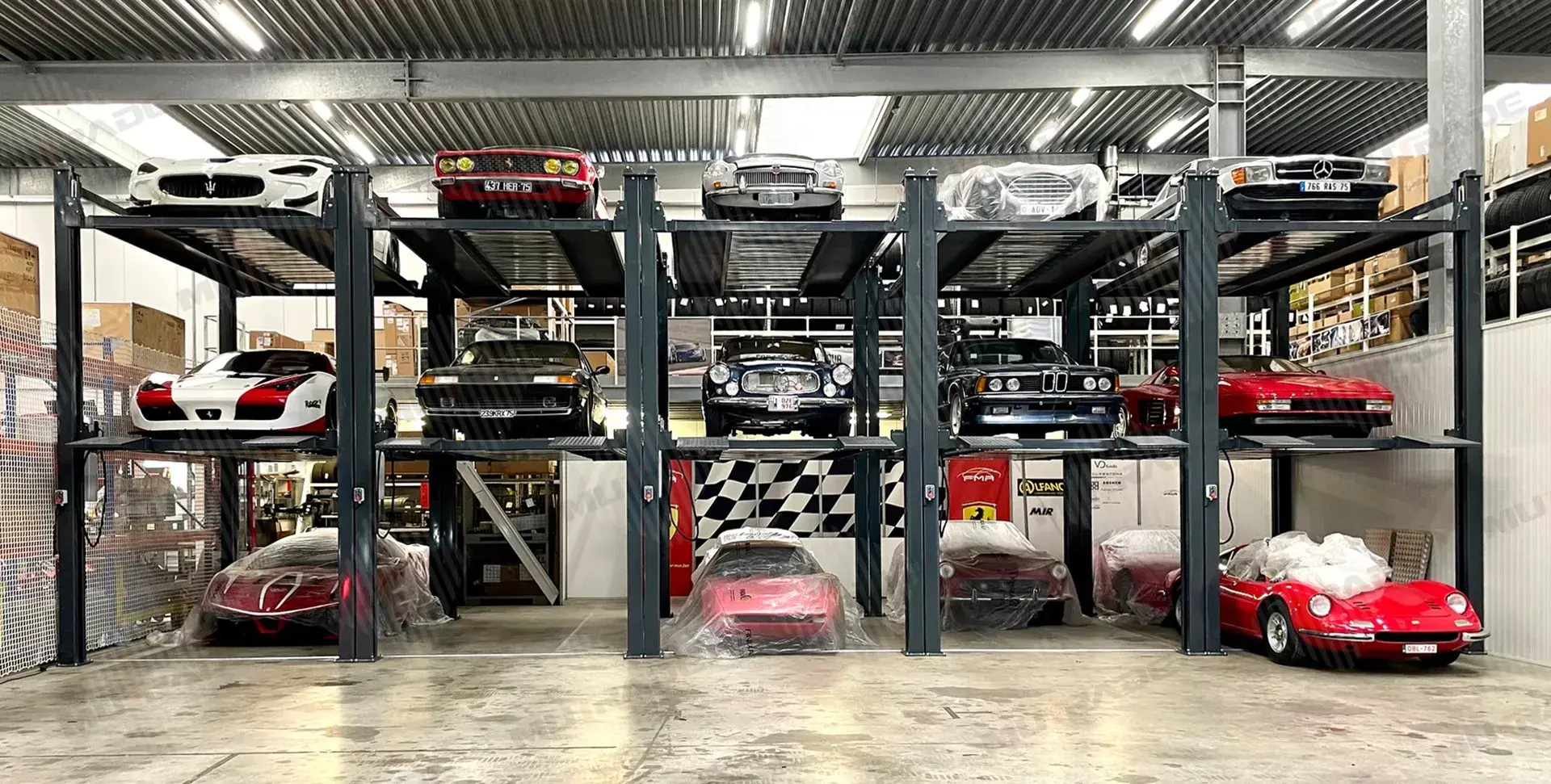
Climate-controlled indoor storage is exactly what it sounds like. Enclosed building, temperature-regulated, your car is not going to see 60-degree ambient heat under any circumstances. This is the right choice for high-value cars, classic vehicles, anything with sensitive electronics or interior materials you care about. It costs more. For most cars it’s optional. For some, it’s not really optional.
Enclosed non-climate-controlled storage is the middle ground that makes sense for most people. Indoor, covered, dust-free, monitored. The temperature inside an enclosed building is meaningfully lower than an open lot even without active cooling. For a standard family SUV being stored for two to five months, this is usually enough and it won’t cost you what climate-controlled will.
Covered outdoor bays permanent roof, open or partially open sides. The direct sun problem is solved, the dust situation is improved, and security is generally still proper. Cheaper again. Works better for shorter periods.
Drive-in self-storage units are a different model you get a large lockable unit you drive into, keep your own key, and can access on your schedule. Several secure self storage operators across Dubai have expanded into these specifically for vehicles. Good option if you want control of access, or if you’re storing the car alongside other possessions because you’re relocating or clearing out a villa.
None of these is universally right. It depends on the car, the duration, your budget, and how much access you might need.
How to Actually Set This Up Before You Leave
Start by being specific about your timeline. Not “about three months” as specific as you can be. Storage pricing is structured around duration and some facilities have minimum periods. If you’re away for ten weeks, know that going in.
Then look at location practically. You’re dropping the car off before you leave and collecting it when you’re back. If you’re flying from DXB, Al Quoz or Ras Al Khor might be convenient. If you’re driving out to Abu Dhabi first, something along the E11 corridor makes more sense. Jebel Ali is fine if you don’t mind the extra drive. Dubai Investment Park has a cluster of storage operators worth checking.
Visit the facility. Not just their Instagram or Google listing actually go. Look at where your car would sit. Is the CCTV coverage real or are there obvious blind spots? Is there a physical gate with access control? Are staff on site during the hours they claim? Ask how many vehicles are currently being stored. A facility that’s comfortable answering that question straight is usually the kind you want to be dealing with.
Ask specifically what the monthly rate includes. Battery trickle charging, periodic engine starts, tyre pressure checks these aren’t always standard. For short-term storage you might not need them. For anything over six weeks, you want at least the battery situation sorted.
Get it in writing. Rate, period, what’s included, who’s liable for damage, cancellation terms. If the operator is resistant to a proper written agreement, that’s not a facility you want to use regardless of the price.
Before handover, photograph everything. Every panel, every corner, existing marks, interior condition everything. Share with the facility and keep a copy yourself. This isn’t distrust, it’s just sense.
Preparing the Car Properly This Part Actually Matters
Wash it. Properly. Not a drive-through rinse a full exterior clean including wheel arches, followed by wax or paint sealant. Contaminants sitting on paintwork and baking for months are genuinely harder to shift than fresh ones and they do cause micro-etching. The wax gives the surface some protection.
Change the oil if you’re anywhere near the interval. Old oil sitting in a hot engine is mildly acidic. Over months that has real effects on internal surfaces that you won’t see but the engine will feel. Fresh oil before storage isn’t overcomplicating things it’s just good sense.
Fill the tank. A full tank leaves less airspace for condensation and moisture to develop. If you’re storing longer than four months, fuel stabiliser available at most automalls in Dubai prevents petrol degradation over extended periods.
Inflate the tyres to the upper end of the manufacturer’s recommended range. Not over the limit, just toward the higher end of what’s specified. Tyres lose pressure slowly even stationary, and flat-spotting is a genuine problem on cars stored for months at low pressure.
Sort the battery before you hand the car over. This is the single most common reason people come back to a car that won’t start. Ask the facility if they offer trickle charging many do, sometimes for free, sometimes as a small add-on. If they don’t, disconnect the negative terminal yourself before handover. Or buy a smart trickle charger and ask if they have a socket. They usually do.
Clear out anything organic. Food crumbs in door pockets, certain types of air freshener, natural fibre floor mats that aren’t perfectly clean all of these can attract pests in a warm enclosed environment. Even facilities with excellent perimeter control can have a mouse find its way into a car that smells interesting.
Use a breathable car cover if the storage isn’t fully enclosed. Breathable fabric, not plastic sheeting plastic traps moisture against the surface and causes its own problems. A quality cover keeps dust off while letting the car breathe.
What It Costs in Dubai in 2026
Real numbers, not ranges designed to cover every possible situation:
Covered outdoor storage for a standard sedan or compact SUV somewhere between AED 300 and AED 550 a month. Larger vehicles, add 20 to 30 percent.
Enclosed indoor storage without climate control AED 500 to AED 900 for most cars. Premium facilities in more central locations sit at the higher end.
Climate-controlled indoor storage AED 900 on the low end, AED 2,500 on the high end for a full-sized vehicle in a premium facility. The range is wide because quality genuinely varies.
Drive-in self-storage units AED 650 to AED 1,800 depending on unit dimensions and the operator.
Most places will come down on the monthly rate if you commit to three months or more upfront. Ten to twenty percent is a reasonable negotiation target. It’s worth asking directly they’d rather have the longer commitment.
Don’t pick purely on price. There’s a meaningful difference between a well-run facility at AED 600 a month and a poorly run one at AED 350. The visit matters.
Things People Get Wrong
Storing a dirty car. Happens constantly. The logic seems to be “why clean it if it’s just going into storage” but that’s backwards. The contamination does its damage during storage, not after.
Not contacting the insurer. Most UAE comprehensive policies continue covering a stored vehicle but some have specific requirements about the storage environment. A two-minute email or call before you leave gives you written confirmation either way. You want that before you need it.
Taking someone’s word for it without a contract. Especially with smaller, informal operators. A handshake arrangement is not protection when you come back to a car that’s been moved, damaged, or has a dispute about fees.
Skipping the condition photos. Even with a signed condition report from the facility, photos are your backup. If something looks different when you collect the car, photos with timestamps from before handover are your evidence.
Assuming the battery is fine. Four weeks of Dubai summer heat with no charging it won’t be.
Driving off without checking anything. Tyre pressure will be low. The car’s been sitting. Give it five minutes before you get on Emirates Road.
What You Should Actually Ask the Facility Before Signing
- Who has access to the car during the storage period?
- What is the CCTV setup and how long is footage retained?
- Is battery maintenance included or separate?
- Do you offer periodic engine starts for long-term storage?
- What is your process if damage occurs while in your care?
- Do you carry liability insurance for vehicles stored here?
- What happens if I need to collect earlier than planned?
Any decent facility handles these questions every week. If the answers are vague or the staff seem caught off guard, keep looking.
One Last Thing
When you come back, before you drive off walk around the car slowly. Check the exterior against your pre-handover photos. Start it, let it warm up for a few minutes. Check tyre pressures before you leave the facility or shortly after. The car’s been static for weeks or months and it needs a moment to be a car again.
It sounds like a small thing. But it’s also just the moment where you confirm everything went as it should, or you flag something while you’re still on-site. Either way, it’s two minutes well spent.
Dubai makes car ownership complicated in ways other cities don’t. The heat, the cost, the traffic and then this, the question of what to do with the car when you’re not here. But it’s a solvable problem. Sort it properly once and it’s just an item on the pre-travel checklist from then on.
Also Read
- Common Home Appliance Problems and Appliance Repair Dubai Solutions
- 30 Other Ways to Say “I’m Not Interested” in Business Deals
- Tying or Tieing? Use the Correct Form