Walk into any beauty store and you’ll be met with hundreds of products, each promising glowing, flawless skin. Yet most people still struggle to find a routine that actually works for them. The reason is simple: skincare is not one-size-fits-all. What clears up your friend’s breakouts might leave your skin dry and irritated, while the moisturizer that saves your winter skin could clog someone else’s pores within days.
The missing piece for most people isn’t a miracle product — it’s a clear understanding of their own skin type. Once you know what you’re working with, choosing the right ingredients, routine, and treatments becomes far less confusing. This article breaks down the major skin types, how to identify yours, and how to build a skincare strategy that’s actually personalized to you.
Why Skin Type Matters More Than Trends
Social media moves fast, and skincare trends move even faster. A serum that goes viral this month might be completely wrong for your skin’s needs. Ingredients that work beautifully for oily, acne-prone skin can be far too harsh for dry or sensitive skin, and vice versa. Layering trendy products without understanding your skin’s baseline needs often does more harm than good, leading to irritation or a dull, uneven complexion.
Understanding your skin type gives you a foundation to build on. It helps you filter out the noise, avoid wasting money on unsuited products, and create a routine that supports your skin’s natural balance instead of fighting it. Professionals at skin clinics and studios, including specialists like those at Skin Theory Aesthetics, often emphasize that the first step in any effective treatment plan is correctly identifying skin type — everything else follows from there.
The Five Main Skin Types
Dermatologists generally classify skin into five broad categories. Most people fall primarily into one, though skin can shift with seasons, hormones, age, and lifestyle changes.
1. Normal Skin
Normal skin is well-balanced — neither too oily nor too dry. It typically has small, barely visible pores, an even tone, good elasticity, and a smooth texture without excessive sensitivity. People with normal skin rarely experience breakouts or flaking, and their skin tends to look healthy with minimal effort.
While normal skin is considered the “easiest” type to manage, it still benefits from a consistent routine. Neglecting sun protection or hydration can gradually shift normal skin toward dryness or sensitivity, especially as it ages.
2. Oily Skin
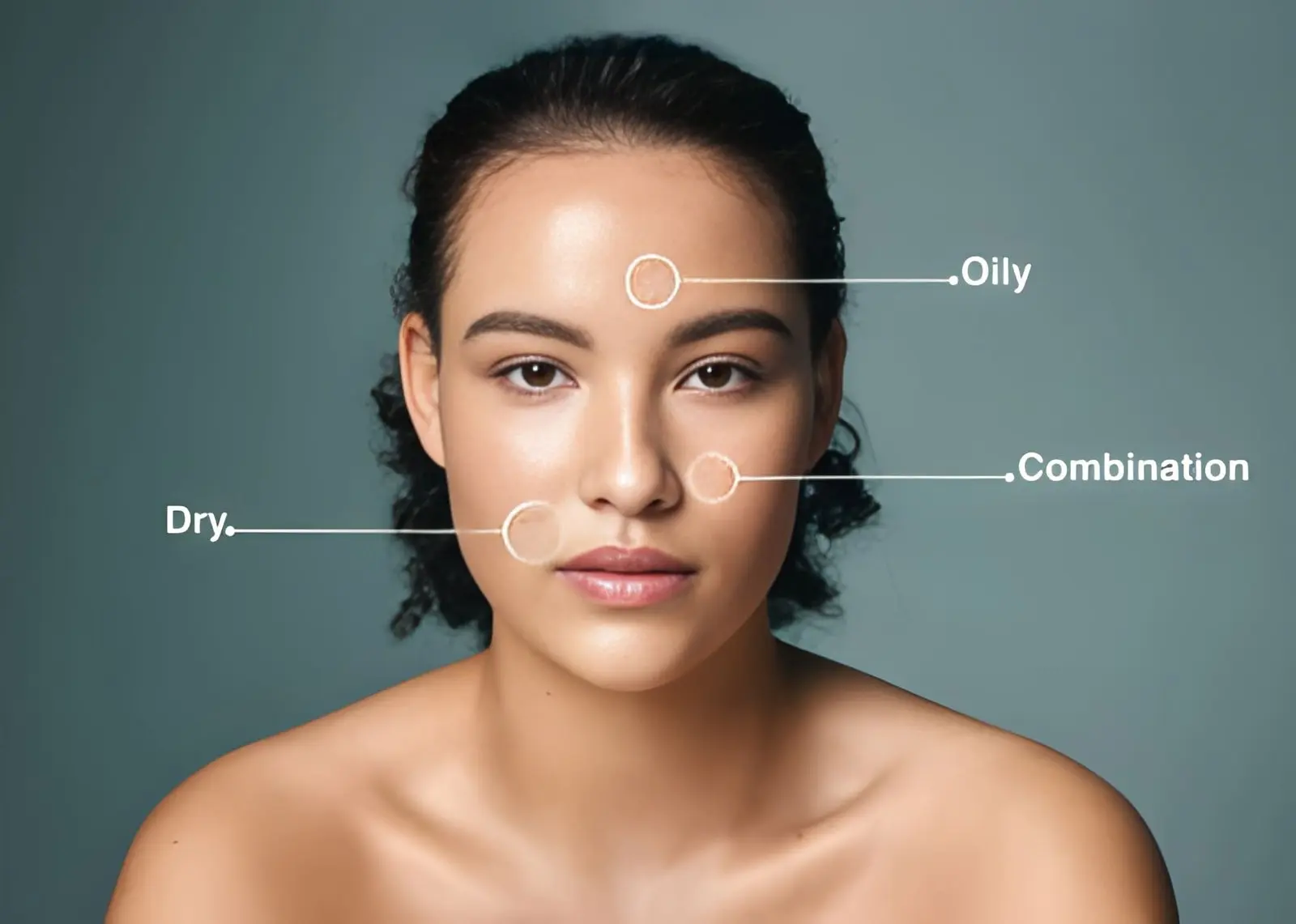
Oily skin produces excess sebum, giving the face a shiny or greasy appearance, particularly in the T-zone (forehead, nose, and chin). Pores are usually larger and more visible, and this skin type is more prone to blackheads, whiteheads, and acne breakouts.
Genetics, hormones, humidity, and even certain skincare products can increase oil production. A common mistake people with oily skin make is over-cleansing or using harsh, stripping products in an attempt to control shine. This often backfires — when the skin is stripped of its natural oils, it can respond by producing even more sebum to compensate, creating a frustrating cycle.
3. Dry Skin
Dry skin lacks sufficient natural oils and often struggles to retain moisture. It can feel tight, rough, or flaky, and may show fine lines more prominently, especially in low-humidity environments or during colder months. Dry skin is also more prone to redness and irritation because a compromised moisture barrier offers less protection against environmental stressors.
This skin type benefits from rich, emollient products that help rebuild the skin barrier rather than lightweight formulas designed for oil control. Over-exfoliating or using alcohol-based products can worsen dryness significantly, so a gentler approach is key.
4. Combination Skin
Combination skin is exactly what it sounds like — a mix of oily and dry (or normal) areas on the same face. Most commonly, the T-zone tends to be oilier while the cheeks are drier or more balanced. This skin type can be one of the trickiest to manage because different areas of the face may need different types of care.
People with combination skin often find success using multiple products or applying the same product differently across their face — for example, a lightweight gel moisturizer on the T-zone and a richer cream on the cheeks.
5. Sensitive Skin
Sensitive skin reacts easily to products, weather changes, or even minor friction. It’s often characterized by redness, itching, burning, or stinging sensations, and can appear alongside any of the other four skin types — meaning someone can have oily and sensitive skin, or dry and sensitive skin simultaneously.
This type requires extra caution when introducing new products. Fragrance, alcohol, and certain active ingredients like strong acids or retinoids can trigger flare-ups. A patch test before trying new products is especially important for sensitive skin types.
How to Identify Your Skin Type
If you’re unsure which category describes your skin, a simple test can help. Cleanse your face, pat it dry, and avoid applying products for about an hour. Then observe how your skin feels and looks:
- If your skin appears shiny all over, especially in the T-zone, you likely have oily skin.
- If it feels tight, rough, or shows flaking, dryness is probably your primary concern.
- If the T-zone looks oily while the cheeks feel normal or dry, you likely have combination skin.
- If your skin looks balanced with no significant shine or tightness, you likely have normal skin.
- If your skin reacts with redness, itching, or discomfort to many products or environmental changes, sensitivity is likely a major factor regardless of your other characteristics.
Keep in mind that skin type isn’t always permanent. Hormonal changes, climate, stress, diet, and aging can all cause shifts over time, so it’s worth reassessing periodically rather than assuming your skin will always behave the same way.
Building a Personalized Skincare Strategy
Once you’ve identified your skin type, the next step is building a routine tailored to its specific needs. While individual concerns vary, a few general principles apply across the board.
Start with the basics. Regardless of skin type, a solid routine typically includes a gentle cleanser, a moisturizer suited to your skin’s hydration needs, and daily sun protection. These three steps form the foundation that everything else builds upon.
Match product texture to your skin type. Oily skin generally benefits from lightweight, oil-free, gel-based formulas, while dry skin thrives with thicker, cream-based products containing ingredients like ceramides or hyaluronic acid. Combination skin may require a mix of both, applied strategically to different areas of the face.
Introduce active ingredients gradually. Ingredients like retinoids, exfoliating acids, and vitamin C can be transformative, but they should be introduced slowly, especially for sensitive or dry skin types. Adding too many actives at once increases the risk of irritation and can undo progress rather than accelerate it.
Don’t ignore the basics of lifestyle. Hydration, sleep, diet, and stress levels all influence skin health. A well-designed routine can only do so much if these underlying factors are consistently working against it.
Reassess and adjust seasonally. Skin needs often shift with the seasons — skin that feels balanced in summer might feel dry and tight come winter. Building flexibility into your routine, such as swapping a lightweight moisturizer for a richer one in colder months, helps maintain consistent skin health year-round.
For those who find their skin concerns more complex or persistent — such as ongoing acne, rosacea, or premature aging — consulting with skincare professionals can make a significant difference. Trained estheticians and dermatologists can assess skin more precisely than at-home observation allows, recommend targeted treatments, and help avoid the trial-and-error approach that often leads to frustration and wasted money.
Final Thoughts
Understanding your skin type is the foundation of any effective skincare strategy. Rather than chasing whatever product is trending, taking the time to identify whether your skin is normal, oily, dry, combination, or sensitive allows you to make informed choices that support your skin’s health. From there, building a routine around your skin’s specific needs — and adjusting it as those needs change — is what separates a routine that works from one that simply adds steps without results. Personalized care, guided by an honest understanding of your own skin, will always outperform generic advice.
Also Read-Next-Generation Construction Strategies for Cost Optimization