Polished equipment demonstrations can make a production decision feel much closer than it is. Capsules arrive, a sequence runs, a finished sample appears, and the visitor leaves with a favorable impression. Yet a smooth demo can answer only the question that was actually demonstrated. Such a presentation does not automatically answer whether the buyer’s capsule family, recipe, materials, staff routines, or site conditions will behave in the same way.
Useful visitors are not the people who ask for the longest presentation. An evidence-first visitor turns the demonstration into a series of evidence questions. What product path is being shown? Which step connects filling to sealing? Which material or recipe assumption is carrying the result? One compact scorecard helps a commercial or operations team retain those questions after the sales conversation ends.
Why an impressive demo can still be thin evidence
Demonstrations are designed to be understandable. That is their value, but it can also conceal choices made before the visitor arrived. Prepared samples may use a known material. Experienced operators may already know the sequence. Demonstration time may omit a pause because the purpose is to introduce the equipment, not recreate every day of production. None of this is deceptive. Visitors should record the conditions of the observation before treating it as a conclusion.
Evidence-first viewing changes the meeting from “Did it run?” to “What did this run establish?” That question produces better follow-ups. This approach also avoids an unfair demand that a supplier predict a site result from a short visit. Purpose is not to catch the demonstration out. Separating what was seen from what still needs testing is the real task.
Start by naming the capsule family
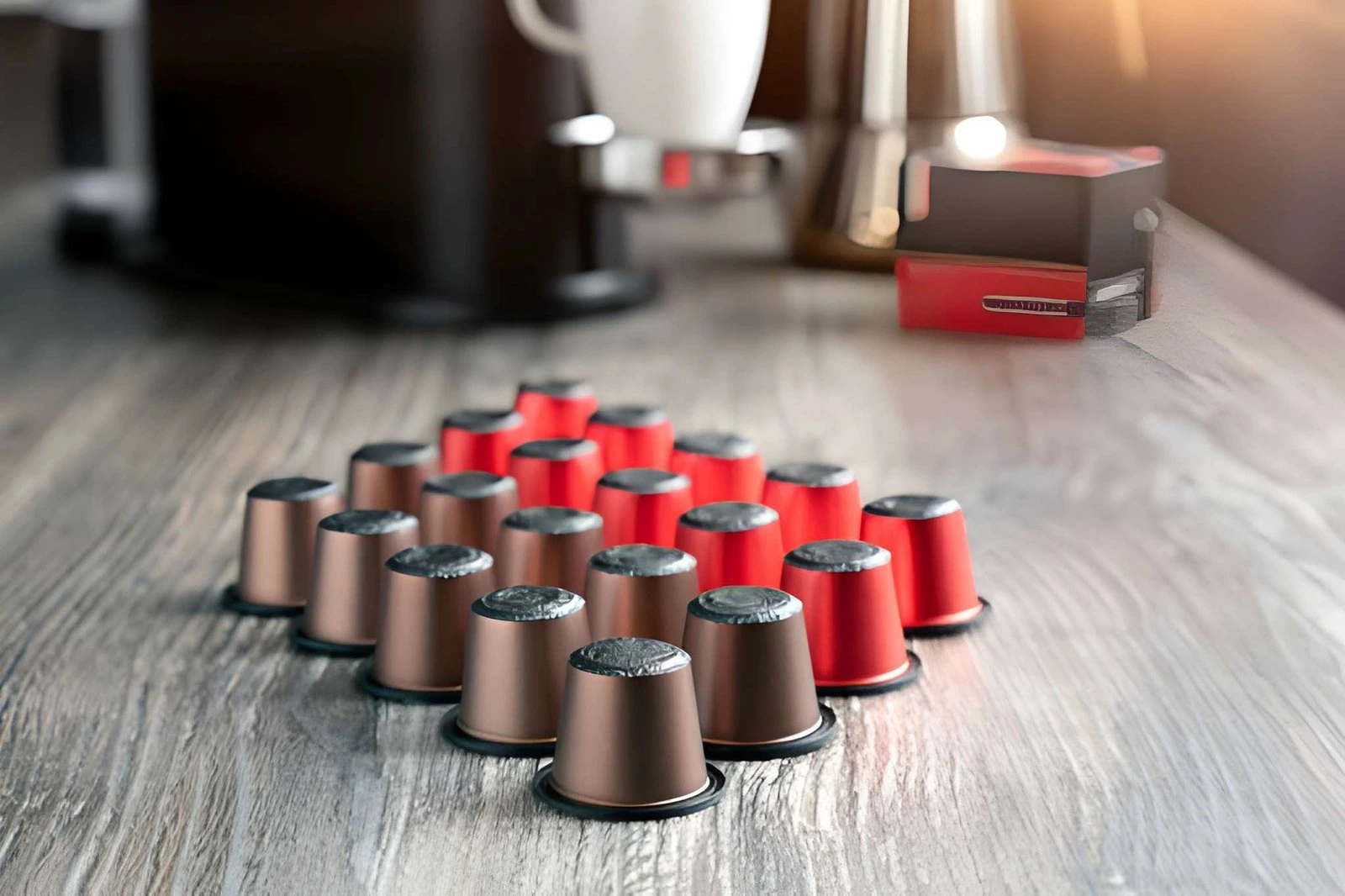
AFPAK’s K-cup filling-machine page treats K-cup production as a recognisable product family. Before watching a demo, a visitor should ask whether that is the family being shown and whether it matches the intended launch. “Coffee capsule” alone is not a sufficient answer. Capsule form, associated parts, lid or closure arrangement, and relevant product inputs give the observation its context. For the capsule family shown, record whether the presentation uses the intended material and recipe handoff or only a reference sample.
Write the answer in ordinary language. If the displayed family differs from the intended one, label the demo as a reference conversation rather than direct proof. That does not make it worthless. Scorecard notes should capture the transferable question—perhaps the order of work or the type of handoff—without pretending that all physical inputs are identical.
Watch the filling-to-sealing sequence, not only the finished capsule
A finished capsule is a useful object to inspect, but the sequence that produced it carries more learning. AFPAK describes K-cup filling and sealing together, which supports asking about the connected path rather than treating the two stages as unrelated spectacles. During a demo, note what enters filling, what is checked before sealing, what is observed after the closure step, and where an operator would identify an exception. This filling-to-sealing sequence should stay attached to the capsule family and the stated material and recipe handoff.
This attention changes the visitor’s behavior. Instead of asking whether the machine is “easy,” the team can ask for the visible decision points in the sequence. One clear answer may show that the workflow is easy to explain. Vague replies may reveal a topic for later validation. Either outcome is more useful than relying on a general impression of speed or polish.
Use an Evidence-First Demo Scorecard
Evidence-First Demo Scorecard is a compact learning tool, not a pass-fail test for a supplier. Give each question one of three notes: directly observed, explained but not observed, or still open. Score matters less than the record beside it. Those notes help a team remember whether a confident answer came from the demonstration, a discussion, or an assumption made on the journey home.
Evidence-First Demo Scorecard
| Question to record | What counts as evidence today | Follow-up if still open |
| Which capsule family is running? | A named sample, its stated role, and the relevant product brief | Compare it with the buyer’s intended family and materials |
| What links filling and sealing? | Observed sequence and the operator’s explanation of checks | Define the buyer’s acceptance observation for a trial |
| Which material or recipe is assumed? | Named input and note of any substitute or prepared condition | Plan a final-material, site-specific validation |
Ask how materials and recipes enter the story
Material and recipe handoff questions are often more revealing than a generic request for capacity. What exactly is entering the demonstration? Is the sample the intended product, a convenient stand-in, or an early formulation? Who has identified it? If a change is made, is the visitor seeing a routine operating choice or an exploratory adjustment? The answers tell the team how far it can reasonably carry the observation into its own project.
Write five evidence notes before leaving: 1. the capsule family; 2. the material reference; 3. the recipe condition; 4. the filling-to-sealing sequence; and 5. the owner of the material and recipe handoff. Pause. A long explanation from a supplier can be valuable, but a visitor should preserve the exact condition that supports each conclusion rather than relying on a general memory of the presentation.
Leaving room for “not established” makes a scorecard more useful. That phrase is not a criticism of the equipment. This wording keeps a material question from being converted into a machine verdict. Buyer teams can then assign a next step to the people who own the final recipe, packaging inputs, and site validation plan.
Use the supplier discussion to clarify the missing comparison
AFPAK also presents a Nespresso coffee capsule filling-and-sealing machine as a defined equipment conversation. When discussing AFPAK capsule production equipment, a visitor can use the scorecard to state the exact comparison still needed: capsule family, materials, recipe condition, or a particular filling-sealing handoff. Supplier discussion then receives a clearer question than “Will it work for us?”
Specificity benefits both sides. Such clarity prevents the buyer from interpreting a presentation as an unqualified guarantee, while allowing the supplier to explain what belongs to the demonstrated path. A good demo can therefore lead to a better trial brief rather than an argument over a promise no one made.
Compare notes before the memory of the demo hardens
Different visitors notice different things. A commercial lead may remember the sample and timeline; an operator may remember the sequence; a product colleague may notice the material assumption. Meet soon after the demo and complete one scorecard together. Mark direct observations separately from explanations and unanswered questions. This is more reliable than asking each attendee weeks later whether the line “looked suitable.”
Teams should not average away disagreement. If one person saw a step and another did not understand why it mattered, the record should retain both notes. That gap can become the next question in a trial, training session, or technical review. Learning becomes cumulative when uncertainty is recorded rather than smoothed over.
Know what a demo cannot replace
No demo can replace final-material trials, site validation, safety assessment, agreed acceptance criteria, or evidence of performance under the buyer’s own operating conditions. Nor can a short session establish that an unfamiliar recipe will behave like the prepared sample, or that a team will make the same decisions after installation. These limits are normal, not a reason to avoid a demonstration.
Time is the trade-off. An evidence-first visit may create more follow-up work than a quick buying decision because it reveals which comparisons remain open. In return, the buyer has a structured route from a promising presentation to a relevant trial. That is a stronger basis for selection than confusing confidence with proof.
Convert open items into a trial brief
Finish the scorecard with a short trial brief, not a loose request to “see it again.” Name the capsule family to be examined, the final or proposed material, the recipe condition, the filling-to-sealing observation, and the person who will decide what counts as acceptable evidence. A trial brief does not need to predict an outcome. Its job is to keep the next exercise tied to the uncertainty that the demo exposed.
For example, a team may carry forward one specific question about how a chosen material enters the process, another about an observed sealing handoff, and a third about the sample identity needed for comparison. Those questions can be tested separately if combining them would make the result difficult to interpret. Short, focused trials often teach more than one elaborate session with several changing inputs.
Invite the people who will use the result to read the brief before the trial occurs. Product, operations, and commercial colleagues may not need identical detail, yet each should understand what the evidence is meant to settle and what it will not settle. Agreement at that point prevents a later argument in which a practical demonstration is remembered as a universal commitment.
Let the next question be the result
A valuable outcome from an equipment demo is sometimes not a yes or no. Often, the useful result is a better next question: which capsule family needs to be trialled, which filling-sealing observation needs agreement, and which material or recipe handoff needs an owner. Evidence-First Demo Scorecard notes turn those questions into a record that can travel from a visit to the people who must make the decision.
By distinguishing direct observation from explanation and keeping final validation in view, a team can enjoy a well-run demo without asking it to prove too much. Practical learning turns a demonstration into evidence for the next stage, rather than a substitute for it. Visitors can retain the scorecard with the project brief, then compare its open items against the final materials, recipe, staffing plan, and site conditions before any acceptance decision is made. When the final trial differs from the demonstration, the scorecard should make that difference explicit; it should not be used to erase the distinction between a useful reference run and a decision under real site conditions.
Read more: Mrf Plastic Bottlenecks: A Plant-Level Guide for Public-Private Mrfs
From Samples to Factory Acceptance: Keeping Custom Automation Decisions Clear
How To Self Publish A Book: Complete 2026 Guide