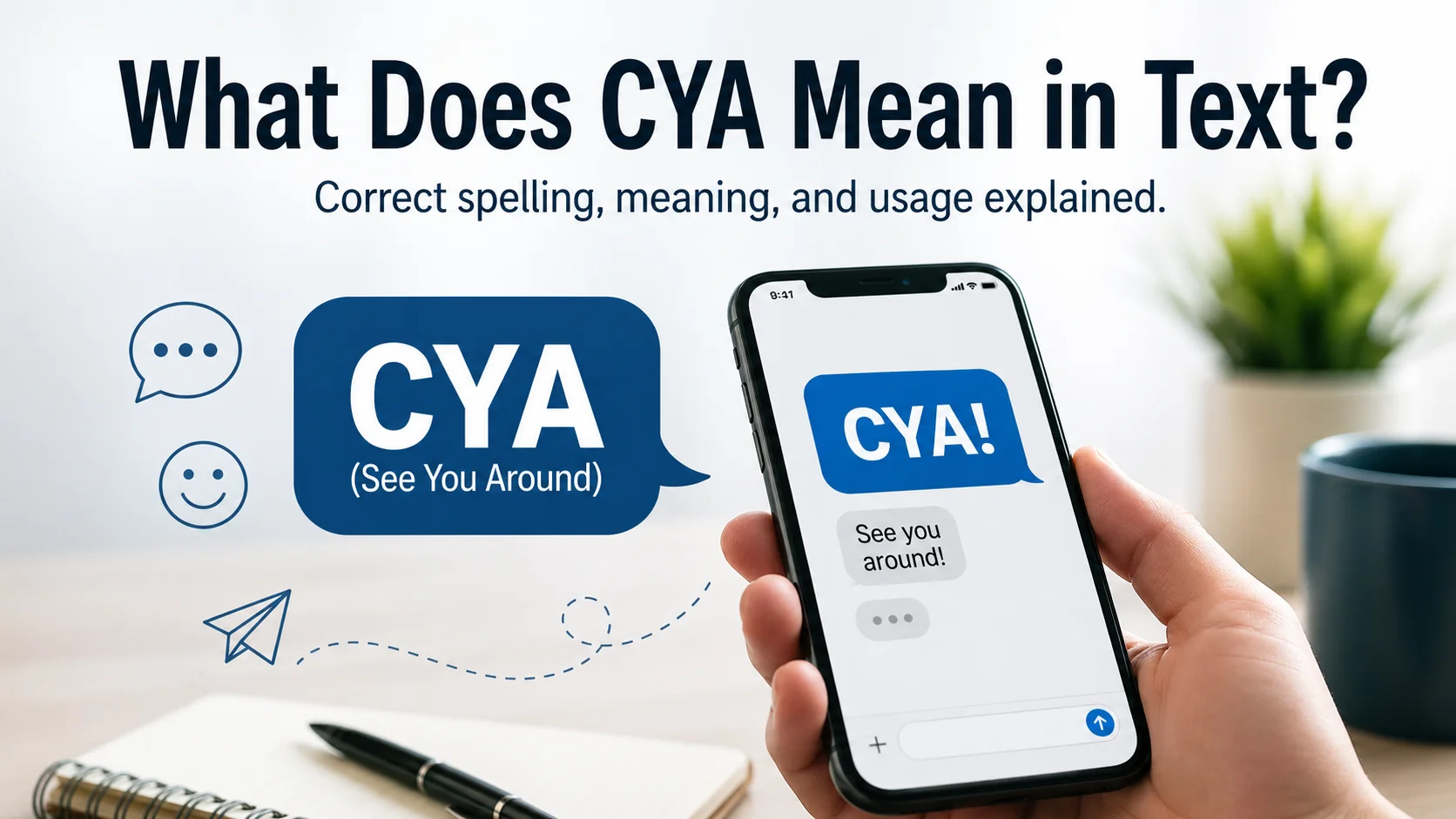
In today’s fast-moving digital world, short phrases carry a lot of meaning. One of those is“CYA,” a common text abbreviation you’ve probably seen in messages, emails, or social media posts. But what does it actually mean—and why does it matter?
“What Does CYA Mean in Text” is a question many people ask when they first encounter it. While it may look simple, this abbreviation carries layered meanings depending on tone, context, and even workplace culture in the United States.
Understanding CYA isn’t just about decoding slang. It also reflects how Americans communicate casually, professionally, and sometimes defensively in modern life. Let’s break it down clearly.
Quick Answer
What Does CYA Mean in Text? In the United States, “CYA” most commonly means “See You,” used as a casual goodbye. However, it can also mean “Cover Your Ass,” especially in professional or cautious situations.
TL;DR
• “CYA” usually means “See You” in casual texts • It can also mean “Cover Your Ass” in workplace slang • Tone and context decide the meaning • Popular in American texting and email culture • Reflects both friendliness and self-protection
What Does CYA Mean in Texting?
This section explains the basic definition and why it’s widely used in the USA. Because Americans value speed and informality in digital communication, abbreviations like CYA are very common.
Everyday Meaning: “See You”
In casual texting, CYA is simply a friendly sign-off.
• Used instead of “goodbye” in quick messages • Common among friends, teens, and coworkers • Often paired with emojis or casual tone • Signals a relaxed, informal relationship
For example: “Gotta run, CYA later!”
Alternate Meaning: “Cover Your Ass”
However, in work or serious contexts, it shifts meaning.
• Refers to protecting yourself from blame • Common in office emails or corporate talk • Suggests caution or documentation • Often used humorously but with real intent
Where Did CYA Come From?
Understanding its origin helps explain why it has two meanings today.
Early Digital Communication
CYA emerged during early internet and SMS culture.
• Short forms saved time and character limits • Popular in chat rooms and early mobile texting • Spread through email and workplace slang • Became mainstream by the early 2000s
Dual Meaning Evolution
Over time, the phrase split into two uses.
• “See You” came from phonetic abbreviation • “Cover Your Ass” developed in workplace slang • Both meanings coexist today • Context determines interpretation
Why Americans Use CYA So Often
In the United States, communication style shapes how slang evolves.
Speed and Efficiency
Americans prefer quick, direct communication.
• Texting culture values brevity • Short forms reduce typing effort • Fits fast-paced daily life • Common in both personal and work chats
Casual Tone in Culture
Even professional settings can feel informal.
• Friendly language is widely accepted • Slang crosses into workplace communication • Emails often mix formal and casual tone • CYA reflects this blend
CYA Meaning in Different Contexts
Context is everything when interpreting CYA.
Casual Conversations
Here, it almost always means “See You.”
• Ending a friendly chat • Saying goodbye quickly • Used among peers or family • Light and positive tone
Workplace Communication
In contrast, the tone changes significantly.
• “Cover Your Ass” signals caution • Often used when documenting actions • Suggests awareness of responsibility • Sometimes used jokingly but seriously meant
Emotional and Psychological Meaning
Language reflects mindset, and CYA is no exception.
Friendly Connection
When used as “See You,” it builds connection.
• Signals warmth and familiarity • Keeps tone relaxed • Encourages ongoing interaction • Feels informal and approachable
Self-Protection Mindset
When used differently, it reflects caution.
• Shows awareness of risk • Indicates accountability concerns • Suggests workplace pressure • Reflects defensive communication habits
CYA in American Workplace Culture
This is where the phrase gains deeper meaning.
Why “Cover Your Ass” Matters
In many U.S. workplaces, accountability is key.
• Employees document decisions carefully • Emails are used as proof of actions • Miscommunication can lead to blame • CYA becomes a survival strategy
Common Situations
• Confirming instructions in writing • Saving emails for records • Clarifying responsibilities • Following up on decisions
Modern Usage in Social Media and Texting
CYA continues to evolve with digital trends.
Social Media Use
• Used in comments or messages casually • Appears in memes about work culture • Often humorous in tone • Widely understood by younger audiences
Messaging Apps
• Common in WhatsApp, iMessage, and Snapchat • Used as a quick sign-off • Rarely misunderstood in casual chats • Still context-dependent in mixed groups
Common Misunderstandings of CYA
Because it has two meanings, confusion can happen.
When Misinterpretation Occurs
• Formal emails where tone is unclear • Messages between different age groups • Cross-cultural communication • Professional vs casual environments
How to Avoid Confusion
• Consider your audience carefully • Use full phrases in formal settings • Add context if needed • When unsure, avoid abbreviation
Also Read This: What Does IDEK Mean in Text?
CYA vs Similar Text Abbreviations
Understanding related terms helps clarify usage.
Comparison Table
ContextMeaning in the USACommon AssociationsNotesCYA (casual)See YouFriendly goodbyeInformal textingCYA (work)Cover Your AssSelf-protectionWorkplace slangBRBBe Right BackTemporary absenceNeutral toneTTYLTalk To You LaterFuture conversationSlightly more formalFYIFor Your InformationSharing updatesCommon in emails
Cross-Cultural Understanding of CYA
Outside the U.S., meaning may differ or confuse.
International Interpretation
• “See You” is usually understood globally • “Cover Your Ass” may confuse non-native speakers • Workplace slang varies by country • Tone may seem rude or unclear
Cultural Sensitivity
Because language differs globally:
• Avoid slang in international business • Use clear, full phrases when needed • Be mindful of tone differences • Keep communication respectful
How the Meaning of CYA Has Changed Over Time
Language evolves, and so does CYA.
Earlier Usage
• Mostly meant “See You” in early texting • Less common in professional language • Limited to casual communication
Modern Shift
• Dual meaning is now widely recognized • Workplace use has increased • Popular in memes and office humor • Reflects modern work culture pressures
When You Should (and Shouldn’t) Use CYA
Knowing when to use it matters.
Good Situations
• Casual chats with friends • Informal coworker conversations • Quick text sign-offs • Social media messaging
Situations to Avoid
• Formal emails or business writing • Communication with clients • Academic or professional documents • Cross-cultural conversations
FAQs:
What does CYA mean in texting?
CYA usually means “See You” in casual texting. However, it can also mean “Cover Your Ass” in workplace or serious contexts.
Is CYA rude or offensive?
Not usually. “See You” is friendly, while “Cover Your Ass” can sound blunt but is often used humorously.
How do I know which meaning is intended?
Look at the context. Casual chats mean “See You,” while professional discussions may suggest the other meaning.
Is CYA appropriate for work emails?
It depends. “Cover Your Ass” may appear in informal workplace talk, but it’s best avoided in formal emails.
Do older adults use CYA?
Some do, especially in workplace settings. However, younger users use it more often in texting.
Is CYA still popular in 2026?
Yes, it remains widely used in both casual texting and workplace slang across the United States.
Conclusion:
So, what does CYA mean in text? At its core, it’s a simple abbreviation with two very different meanings—one friendly and one cautious. In casual settings, it’s just a quick way to say goodbye. In professional spaces, it reflects a deeper awareness of responsibility and self-protection.
This dual meaning makes CYA a fascinating example of how language adapts to modern life. It shows how Americans balance friendliness with practicality in communication.
Next time you see “CYA,” take a moment to read the context. That small detail makes all the difference.

Emma Brooke is the voice behind English Sharp Mind, dedicated to helping learners sharpen their English skills with clear explanations, practical tips, and confidence-building guidance.