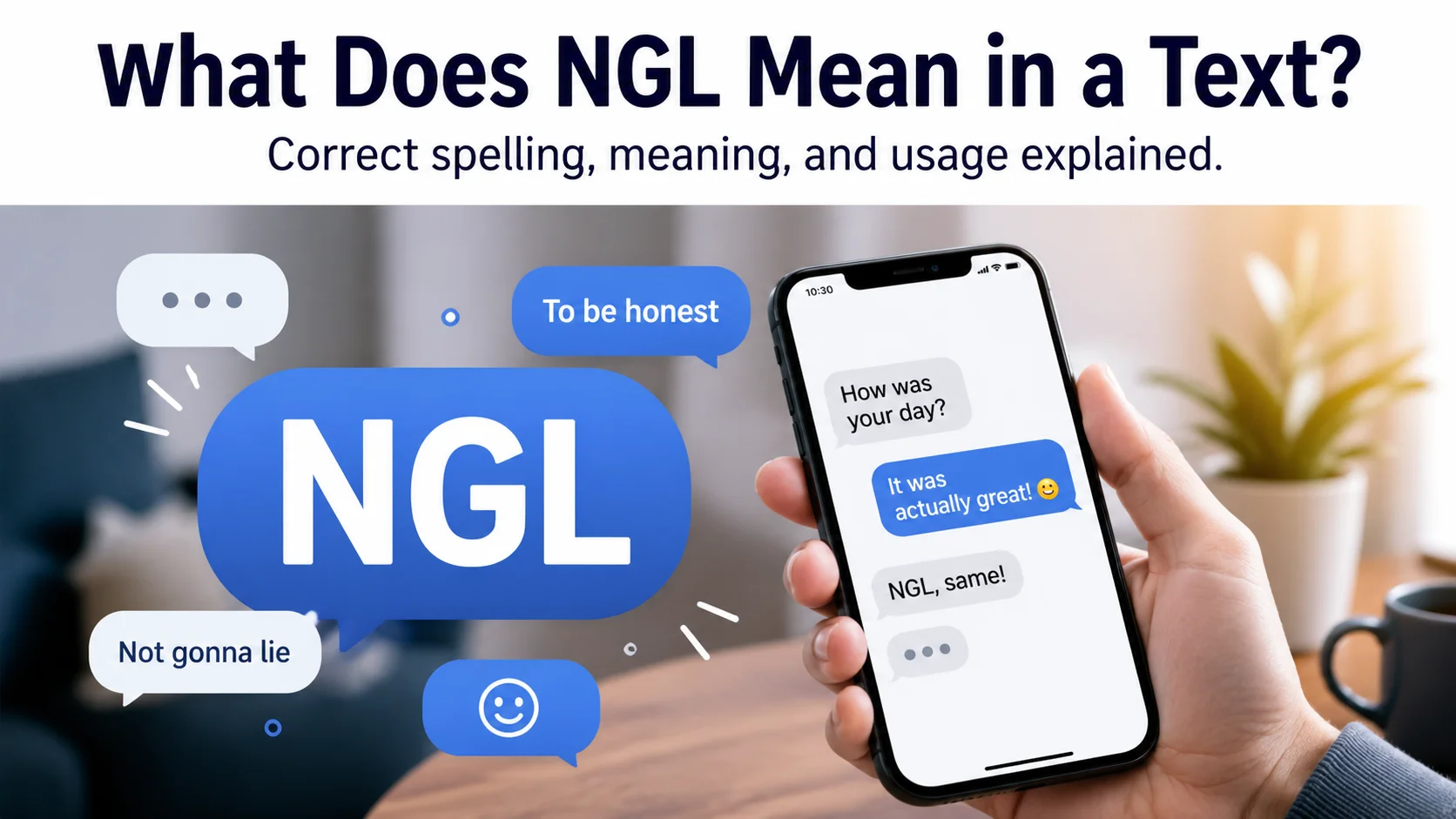
In today’s fast-moving digital world, short phrases and abbreviations shape how people communicate. One of the most common is “NGL,” a simple acronym that carries a surprisingly rich meaning. If you’ve seen it in texts, social media, or memes, you might wonder what tone or message it really sends.
What Does NGL Mean in a Text is a question many people ask as online language evolves. While it may seem like just another slang term, it reflects deeper ideas about honesty, identity, and social connection—especially in American culture.
Understanding “NGL” isn’t just about decoding a phrase. It’s about seeing how people signal truth, vulnerability, and even humor in modern communication.
Quick Answer
What Does NGL Mean in a Text? It stands for “Not Gonna Lie.” In the USA, it signals honesty or blunt truth, often used casually or humorously to share real opinions.
TL;DR
• “NGL” means “Not Gonna Lie” • Signals honesty or candid opinion • Common in American texting and social media • Often used before a confession or strong statement • Can be serious, funny, or slightly sarcastic • Reflects modern values of authenticity and openness
What Does NGL Mean in Text Messages?
“NGL” is a shorthand phrase used to introduce honesty. It prepares the reader for a truthful or personal statement. In American texting culture, it’s widely understood and accepted.
Basic Meaning
The phrase stands for “Not Gonna Lie.” It’s often placed at the beginning of a sentence.
• Signals honesty before sharing an opinion • Softens blunt or direct statements • Adds a casual, conversational tone • Often used among friends or peers
Why It Matters in the USA
In the United States, open expression is highly valued. “NGL” fits into this culture by making honesty feel approachable rather than harsh.
The Origins of NGL in Digital Culture
Although “NGL” feels modern, its roots come from spoken English. The full phrase “not gonna lie” existed long before texting.
From Speech to Text
Originally, people used the phrase in conversation to emphasize sincerity. Over time, it was shortened for faster typing.
• Emerged in early texting and chat rooms • Became popular with smartphones and apps • Spread widely through social media platforms • Now part of everyday online vocabulary
Evolution Over Time
What started as a literal statement of honesty has evolved into a stylistic expression.
Why People Use NGL Before a Statement
“NGL” works like a signal. It tells the listener that something real or important is coming next.
Emotional Framing
People often use it to frame their thoughts in a relatable way.
• Prepares others for honesty or vulnerability • Makes opinions feel more genuine • Builds trust in casual conversations • Adds emphasis without sounding formal
Social Function
It also helps avoid misunderstandings, especially in text where tone can be unclear.
NGL Meaning in American Culture
In the USA, language often reflects values like authenticity and self-expression. “NGL” fits perfectly into that mindset.
Cultural Significance
Americans tend to value being “real” or “keeping it honest.”
• Associated with authenticity and openness • Reflects informal communication style • Common in youth and online communities • Seen as friendly rather than confrontational
Everyday Usage
You’ll find “NGL” in texts, tweets, captions, and even spoken conversations.
Common Contexts Where NGL Appears
“NGL” is versatile. It can be used in many types of conversations.
Typical Situations
• Sharing an honest opinion about something • Admitting a personal feeling or thought • Reacting to a situation with humor • Giving feedback in a casual way
Example Uses
• “NGL, that movie was amazing.” • “NGL, I didn’t expect that result.” • “NGL, I’m kind of nervous.”
Read More: What Does NTY Mean in Text
Emotional and Psychological Meaning of NGL
Beyond its literal meaning, “NGL” carries emotional weight. It signals openness and vulnerability.
Psychological Associations
• Honesty and transparency • Relatability and authenticity • Mild vulnerability or confession • Social bonding through shared truth
Why It Feels Natural
Because it lowers the barrier to honesty, people feel more comfortable expressing themselves.
NGL in Social Media and Modern Communication
Social media has helped “NGL” become even more popular. It’s often used to connect with audiences in a relatable way.
Digital Trends
• Appears in captions, comments, and stories • Used by influencers to seem authentic • Often paired with humor or memes • Can introduce surprising or bold opinions
Modern Identity
Using “NGL” can signal that someone is casual, honest, and in tune with online culture.
NGL vs Other Slang Terms
“NGL” is part of a larger group of slang terms used to express tone and emotion.
Comparison Table
ContextMeaning in the USACommon AssociationsNotesNGLHonest opinion or confessionAuthenticity, opennessOften starts a sentenceIMOPersonal viewpointSubjectivityMore neutral toneTBHTo be honestDirectnessSimilar but slightly strongerFRFor realEmphasisUsed for agreementLowkeySubtle or quiet feelingUnderstatementLess direct than NGL
Cross-Cultural and Global Understanding of NGL
Although “NGL” is rooted in English, it’s used worldwide in digital spaces.
Global Usage
• Common in English-speaking countries • Understood in international online communities • Sometimes adopted into non-English chats • Meaning stays consistent across cultures
Cultural Differences
However, how direct honesty is perceived can vary by culture.
Misunderstandings and Misuse of NGL
Even simple phrases can be misunderstood. “NGL” is no exception.
Common Misinterpretations
• Can sound sarcastic depending on tone • Might seem blunt in formal contexts • Overuse can reduce its impact • Not always appropriate in professional settings
When to Avoid It
It’s best avoided in formal writing or serious discussions where clarity matters more than style.
How the Meaning of NGL Has Changed Over Time
Language evolves, and so does “NGL.”
Past vs Present
Originally, it emphasized sincerity. Today, it can also carry humor or exaggeration.
• Once strictly literal honesty • Now often playful or ironic • Used in memes and trends • Still retains core meaning of truth
Current Trends (2025–2026)
“NGL” remains widely used, especially among younger audiences and online communities.
NGL in Identity, Humor, and Online Expression
“NGL” isn’t just about meaning—it’s about identity. It shows how people present themselves online.
Personal Expression
• Signals a relaxed, honest personality • Helps build connection with others • Often used in self-reflection posts • Can soften strong opinions
Humor and Relatability
It’s frequently used in jokes or relatable content.
FAQs:
What does NGL stand for in texting?
It stands for “Not Gonna Lie.” It introduces an honest or candid statement.
Is NGL rude or polite?
It’s generally polite in casual settings. However, tone matters, so it can feel blunt sometimes.
When should I use NGL?
Use it in informal conversations, especially when sharing honest opinions or feelings.
Is NGL the same as TBH?
They’re similar, but “TBH” can sound more direct. “NGL” often feels lighter and more conversational.
Do adults use NGL or just teens?
Both use it, but it’s more common among younger people and online communities.
Can NGL be used in professional messages?
It’s usually best avoided in formal or professional communication.
Conclusion:
“NGL” may look like a simple abbreviation, but it carries a deeper message about honesty and connection. In American culture, it reflects a growing value placed on being real and relatable, especially in digital communication.
At its core, What Does NGL Mean in a Text comes down to one idea: sharing truth in a casual, human way. Whether used seriously or humorously, it helps people express themselves more openly.
As language continues to evolve, phrases like “NGL” remind us that even small words can carry big meaning.