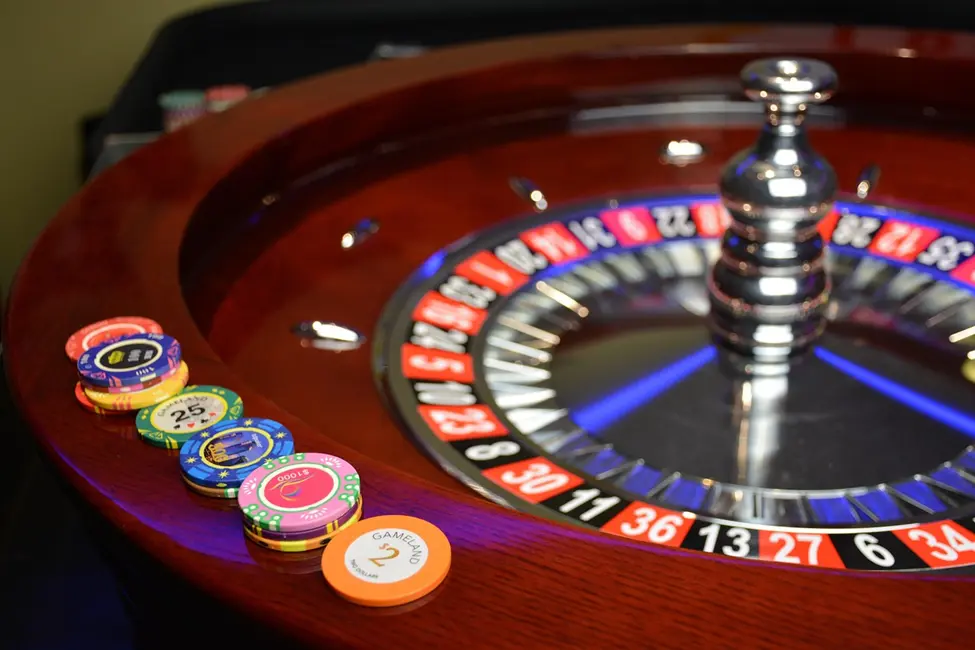
American roulette wasn’t actually invented in America. Even the double zero isn’t an American invention. Both 0 and 00 were already on French roulette wheels in the 1700s. What happened later is the fun part: Europe got rid of one zero, while America kept both and briefly added an Eagle on top.
From there, the two versions went their separate ways. European casinos settled on a single zero, while the American game kept changing as it moved from New Orleans up the Mississippi and later west to California. The 00 survived all of it.
It Started in France, but Not Quite as Roulette
The story usually begins with French mathematician Blaise Pascal in the 17th century. Pascal was working on a perpetual-motion machine, not trying to invent a casino game. His experiments included a spinning wheel, which is often described as an early ancestor of roulette.
The actual game came later. By the late 18th century, roulette was being played in Paris. An early description from 1796 already mentions a wheel with both 0 and 00, so double-zero roulette is much older than its “American” name might suggest.
Those early wheels weren’t identical to the ones sitting in casinos now, but the main idea was already there: bet on where a ball would land on a spinning numbered wheel.
Europe Dropped a Zero
One of the biggest changes came in the 19th century.
François and Louis Blanc introduced a single-zero wheel in Germany in the 1840s. Removing 00 gave their game better odds than competing double-zero tables. The idea caught on, and single-zero roulette later became closely tied to European casinos and Monte Carlo.
The mathematical difference was substantial:
| Version | Total pockets | Zeros | Standard house edge |
| European roulette | 37 | 1 | 2.70% |
| American roulette | 38 | 2 | 5.26% |
Same basic game, same familiar payouts, but a very different edge.
Europe largely stayed with the single-zero format. Across the Atlantic, roulette was heading in another direction.
Roulette Arrived in New Orleans
French settlers brought roulette to the United States, with New Orleans becoming an important early home for the game. From there, it spread along the Mississippi during the first half of the 19th century.
This wasn’t just European roulette moved onto an American table. Local operators began changing it.
Early U.S. versions could have 0 and 00 plus another house symbol: the American Eagle. If the ball landed there, ordinary bets lost. Not surprisingly, three house pockets made the game pretty expensive to play. The Eagle eventually disappeared.
The two zeros didn’t.
Why the American Table Looked Different
There was another problem in early American gambling halls: cheating.
Roulette 77’s history of the game describes cheating by both players and operators after roulette reached New Orleans. One response was to move the wheel onto the top of the table and simplify the betting layout. By the 1840s, that setup was starting to resemble what we’d now call American roulette.
This is where the game’s American identity becomes easier to see. It wasn’t just about keeping 00. The table itself was developing differently.
By the time roulette moved west during the California Gold Rush, the double-zero version was well established in the U.S. The American Eagle was gone, while 0 and 00 had survived.
That Second Zero Ended Up Defining the Game
Today, spotting American roulette takes about a second. Look for the two green pockets.
The wheel has:
- numbers 1 through 36;
- a green 0;
- a green 00.
Those 38 pockets are still the heart of the game. The layout at https://roulette77.us/ is also used by Roulette 77 to show how the American wheel differs from the single-zero version, including the change in RTP from 97.30% to 94.74%.
What’s interesting is that the payouts didn’t grow when the extra zero stayed. A single-number win still pays 35:1. Red or black still pays 1:1. The extra losing pocket is what takes the standard house edge to 5.26%.
Las Vegas Made 00 Part of the Casino Look
By the 20th century, American roulette had found the place most people now associate with it: Las Vegas. Nevada legalized gambling in 1931, helping set the stage for the casino boom that followed.
Double-zero wheels became common on casino floors, while single-zero tables were harder to find and often came with higher minimum bets. That helped keep American roulette in front of casual players even though the European game had the lower house edge.
The difference wasn’t hidden, but it wasn’t exactly dramatic to look at either. Both wheels had red and black numbers. Both offered familiar bets such as straight-up numbers, dozens, and red or black. Unless you checked the zeros, they looked like close relatives.
For generations of U.S. casino visitors, the version with 00 was simply the one they saw most often.
Then Roulette Moved Onto a Screen
The internet changed where roulette could be played, but it didn’t erase the old versions.
American, European, and French roulette all made the jump to online casinos. Digital games reproduced the wheel with software, while live dealer games later brought real wheels and dealers onto video streams.
American roulette kept the same basic numbers through that move:
| Feature | Traditional American roulette | Online American roulette |
| Pockets | 38 | 38 |
| Green pockets | 0, 00 | 0, 00 |
| Straight-up payout | 35:1 | 35:1 |
| Standard RTP | 94.74% | 94.74% |
Modern interfaces can add statistics, rebet buttons, saved wagers, and faster rounds. Some games use animated wheels; others stream physical ones. None of that requires changing what makes American roulette American.
The Old Wheel Has Survived Pretty Well
Roulette has changed plenty since its early days in France. Europe dropped 00, America kept it, the Eagle came and went, and rules such as Surrender appeared much later.
Then the whole game moved online without losing the basic wheel.
That’s probably the most interesting part of its history. American roulette today would look strange to someone walking into a New Orleans gambling hall two centuries ago, especially on a phone. But show them the 0 and 00, and at least one part of the table would be surprisingly familiar.
Also Read-Modern Slot Providers: How Developers Create Different Gaming Styles