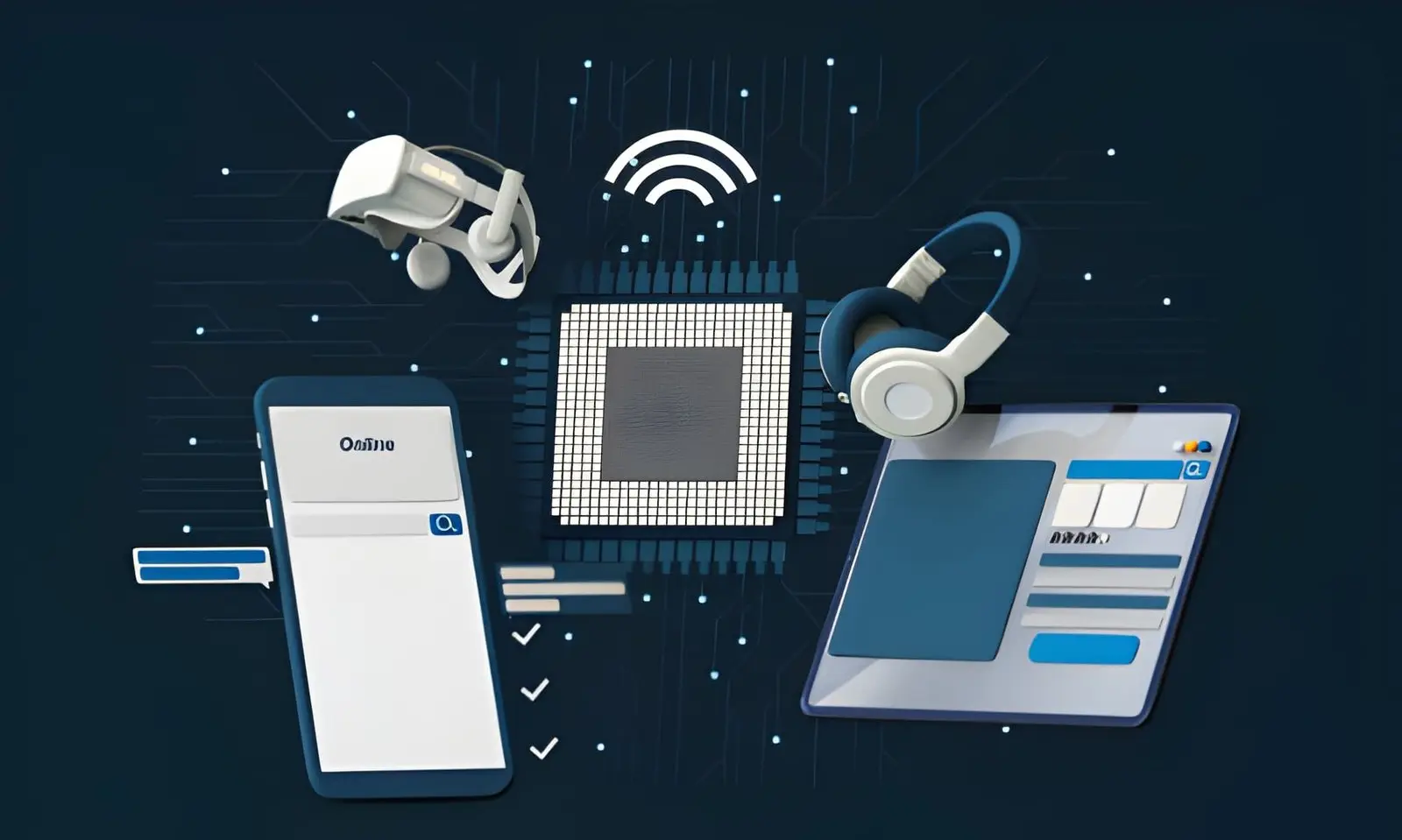
From wearable health monitors and connected vehicles to industrial robots and smart home devices, today’s technology is expected to do more than ever before. Consumers and businesses alike demand devices that are smaller, faster, smarter, and more energy-efficient, all while delivering flawless reliability. This growing expectation has transformed product development into a complex engineering challenge where every millimeter of space and every milliwatt of power matters.
At the center of this transformation lies the embedded system. Once designed to perform a single dedicated function, modern embedded solutions have evolved into intelligent platforms capable of processing real-time data, enabling AI-driven decisions, and supporting seamless connectivity across diverse environments. As products become increasingly compact, engineers are tasked with integrating advanced functionality without compromising performance, security, or manufacturability. Meeting these expectations requires a holistic engineering approach that combines hardware expertise, software optimization, and system-level innovation.
The Shift from Functionality to Intelligence
Embedded technology has undergone a remarkable evolution over the past decade. Earlier generations of embedded products focused on executing predefined tasks with limited processing capabilities. Today’s devices, however, operate in highly dynamic environments where they must collect data, analyze it instantly, communicate with other systems, and continuously adapt to changing conditions.
Whether it is a medical device monitoring patient vitals, an electric vehicle managing battery performance, or an industrial controller optimizing production lines, intelligent processing has become a defining characteristic of modern products.
This evolution introduces new engineering priorities, including:
- Real-time data processing
- AI and machine learning at the edge
- Low-power operation
- Functional safety
- High-speed connectivity
- Robust cybersecurity
- Long-term reliability
Why Smaller Devices Create Bigger Engineering Challenges
Miniaturization has become one of the most influential trends across electronics manufacturing. While reducing device size improves portability, aesthetics, and user experience, it significantly increases engineering complexity.
Every reduction in board size limits the available space for processors, memory, sensors, communication modules, and power management circuits. Thermal management becomes more difficult, signal integrity becomes increasingly critical, and electromagnetic interference requires careful mitigation.
Engineers must simultaneously optimize:
- Processing performance
- Battery efficiency
- Heat dissipation
- Mechanical durability
- Manufacturing feasibility
- Cost targets
The Growing Importance of System-Level Engineering
Modern product development can no longer rely solely on component selection. Instead, engineering teams must optimize the complete ecosystem, ensuring that hardware, firmware, operating systems, and application software function together as one cohesive platform.
This integrated approach becomes especially valuable in industries where failure is not an option, including:
- Automotive electronics
- Medical technology
- Aerospace and defense
- Industrial automation
- Telecommunications
- Consumer electronics
Designing for Performance Without Sacrificing Efficiency
Today’s intelligent devices are expected to deliver desktop-level capabilities while operating within extremely limited power budgets. Battery-powered products, for example, must maximize runtime without increasing battery size. Industrial controllers must process complex workloads while maintaining thermal stability in harsh operating environments. Automotive electronics require deterministic real-time performance under continuously changing operating conditions.
Achieving this balance involves careful optimization across multiple engineering disciplines. Processor selection, memory architecture, software scheduling, peripheral integration, and power management strategies all influence overall system efficiency. Even seemingly minor architectural decisions can significantly affect long-term reliability and product performance.
Hardware Design Has Become More Sophisticated Than Ever
The increasing complexity of semiconductor technologies has elevated hardware development into one of the most specialized aspects of product engineering.
Modern electronic products frequently combine:
- Multi-core processors
- High-speed interfaces
- Wireless communication modules
- AI accelerators
- Mixed-signal components
- Advanced sensors
- Precision power management circuits
One critical aspect involves the ability to design PCB layouts that maintain signal integrity while minimizing electromagnetic interference and thermal hotspots. PCB architecture directly influences system stability, manufacturability, and long-term product reliability.
As interface speeds continue increasing, routing strategies, impedance control, stack-up planning, and component placement have become just as important as selecting the right electronic components themselves. Organizations investing in advanced PCB engineering often experience fewer redesign iterations, faster certification processes, and improved production yields.
Edge Intelligence Is Raising the Bar
Artificial intelligence is rapidly moving away from centralized cloud computing toward edge devices capable of processing information locally. However, deploying intelligent algorithms within compact hardware platforms introduces additional engineering constraints. Memory limitations, processor efficiency, thermal performance, and software optimization all determine whether edge AI delivers meaningful business value.
Running AI workloads directly on embedded hardware enables:
- Faster decision-making.
- Lower communication latency.
- Reduced bandwidth consumption.
- Improved privacy.
- Greater operational reliability.
Reliability Begins Long Before Deployment
As embedded products become more sophisticated, validating their reliability has become just as critical as designing them. Every hardware component, software module, and communication interface must work together flawlessly under a wide range of operating conditions.
This is particularly important in safety-critical industries where even minor failures can have significant consequences. Automotive control units, medical devices, aerospace electronics, and industrial automation systems are expected to operate continuously while maintaining high levels of accuracy and dependability.
Comprehensive verification and validation help engineering teams identify design flaws before products reach manufacturing. Functional testing, environmental stress analysis, signal integrity verification, compliance testing, and software validation all contribute to building products that perform consistently throughout their lifecycle. A successful embedded system is therefore measured not only by its features but also by its ability to deliver predictable, reliable performance in real-world environments.
Security Can No Longer Be an Afterthought
The rapid growth of connected devices has expanded the potential attack surface for cyber threats. Every wireless connection, cloud interface, firmware update, and communication protocol introduces new security considerations.
Modern embedded products must safeguard sensitive data while ensuring uninterrupted operation. Achieving this requires security to be integrated throughout the design process rather than added after development is complete.
Key security measures include:
- Secure boot mechanisms.
- Hardware-based encryption.
- Trusted execution environments.
- Authentication protocols.
- Secure firmware updates.
- Runtime threat detection.
Designing security into hardware and software from the earliest stages significantly reduces vulnerabilities while supporting long-term product resilience.
Collaboration Is the New Competitive Advantage
The increasing complexity of embedded technologies means that no single engineering discipline can work in isolation. Hardware designers, firmware developers, PCB specialists, silicon engineers, validation experts, and manufacturing teams must collaborate throughout the development lifecycle.
Early cross-functional collaboration delivers measurable benefits, including:
- Shorter development cycles
- Reduced engineering rework
- Faster regulatory compliance
- Lower production costs
- Improved product quality
- Accelerated time-to-market
Looking Beyond Performance
As industries adopt AI, edge computing, advanced connectivity, and intelligent automation, customer expectations will continue to rise. Future products will not simply perform specific functions, they will learn, adapt, communicate, and make decisions autonomously.
Meeting these expectations requires engineering teams to think beyond individual components and focus on complete system optimization. From silicon architecture and hardware integration to firmware development and lifecycle validation, every design decision contributes to the final product experience.
This is where embedded designing evolves from a conventional engineering activity into a strategic business capability. Success depends on creating scalable, secure, and future-ready platforms that can adapt to changing technologies without sacrificing reliability or efficiency. Organizations that invest in advanced engineering methodologies today will be better positioned to deliver the intelligent products of tomorrow.
Conclusion
The demand for compact yet highly capable electronic products is redefining how modern technology is engineered. Delivering intelligent, connected, and dependable solutions requires a balanced approach that combines innovation with precision at every stage of development. As expectations continue to grow, successful embedded designing will depend on multidisciplinary expertise, robust validation processes, and a commitment to engineering excellence that extends from concept through production.
Companies seeking an experienced embedded system company for advanced semiconductor and product engineering can look to Tessolve, which provides comprehensive expertise across AMS Design, VLSI circuit engineering, embedded solutions, silicon validation, testing, and product development. Their end-to-end engineering capabilities help global organizations accelerate innovation while delivering reliable, high-performance electronic systems for next-generation applications.
Also Read-How to Avoid Buying a Clocked Car Mileage Fraud in the UK Explained