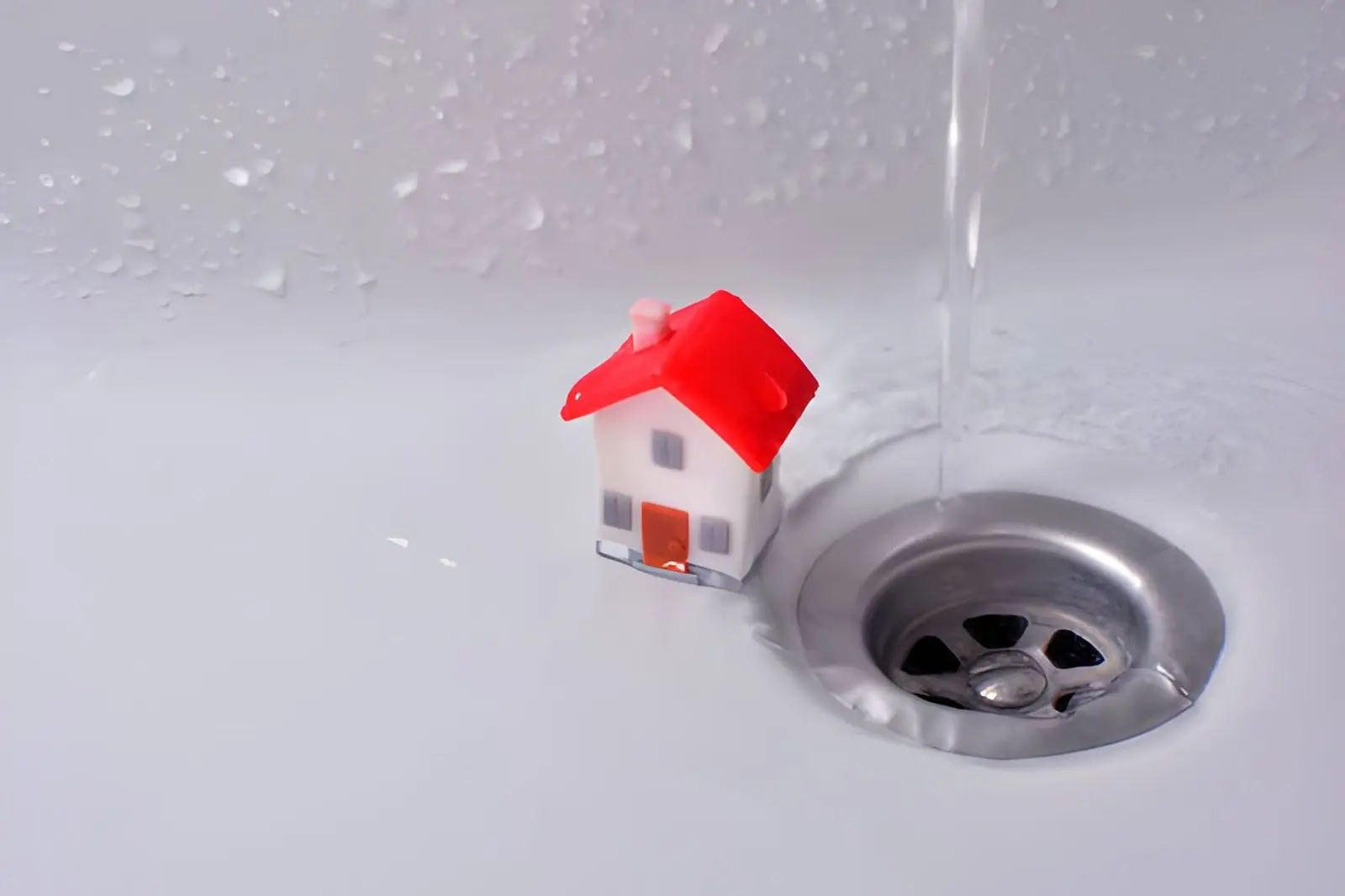
That sink draining just a little slower than it used to? Most homeowners file it under “annoying but fine.” That’s the wrong call. A slow drain is your plumbing system telling you something is building up inside the pipe, and buildup doesn’t stay put. It grows, narrows the passage further, attracts grease and debris, and eventually turns a 20-minute service call into a several-hundred-dollar emergency. The real cost of ignoring a slow drain isn’t just the clog. It’s water waste, structural damage, and the compounding repair bill that follows.
The Quiet Waste Behind Every Sluggish Sink
Here’s a number most homeowners never connect to their drains: the average family wastes 9,400 gallons of water annually from household leaks and plumbing inefficiencies, according to the EPA’s WaterSense program. That figure covers dripping faucets and running toilets, but partial blockages are a key contributor too. When a drain is slow, water pools and pressure shifts throughout the system. Fittings that were sealed fine under normal flow can start weeping under the backpressure a partial clog creates.
You’re not just wasting time standing over a slowly emptying tub. The average family spends more than $1,000 per year in water costs, and even small inefficiencies across the plumbing system add up fast. Fixing the problem early is almost always cheaper than absorbing both the repair and the inflated utility bills that follow months of neglect.
Check your water usage data from the last three months. If you see a creeping uptick with no obvious explanation, your drains are worth a closer look before anything else.
What’s Actually Inside the Pipe
The science of a clog is pretty unglamorous. “Drain clogs typically develop from everyday buildup like grease, hair, soap residue, and food waste that slowly narrows the pipe over time,” as Armando Ramos, Operations Manager at Plomero EN Phoenix, put it in a 2026 Redfin report. That gradual narrowing is exactly why a slow drain rarely announces itself as an emergency. The pipe still drains. It just drains badly. And every day it drains badly, more material sticks to the existing buildup.
Kitchen drains get it worst. Cooking grease goes down warm and liquid, cools against the pipe wall, solidifies, and then catches every food particle that follows. When you pour cooking grease, fat, or oil down the drain, it may be liquid at first, but as it cools, it solidifies and coats the inside of the pipes. Over time, this buildup narrows the pipe opening and traps food particles, creating a stubborn blockage. Bathroom drains have their own version of this: hair bonds with soap scum and mineral deposits to form a dense, rubbery mat that no amount of boiling water will clear.
The honest problem with DIY chemical drain cleaners is that they eat at clogs chemically but leave the pipe walls coated in residue and, in older homes, can accelerate corrosion in pipes that are already thinning.
Older Homes Carry a Much Higher Drain Risk
If your home was built before the mid-1980s, the slow drain conversation is even more urgent. The median age of U.S. homes reached 43 years in 2024, and according to data from the U.S. Census Bureau, both the likelihood that a home is in inadequate condition and the typical costs of routine maintenance increase with age. That 43-year-old median home has pipe systems that were never designed to last forever, and many of them are now past their design lifespan for cast iron and galvanized steel drain lines.
Older cast iron pipes develop internal pitting over decades. That rough interior surface catches buildup far faster than smooth PVC does. A drain that clears itself marginally in a newer home might back up completely in an older one within weeks of the same usage pattern. Older homes often require more frequent maintenance and may need significant updates to major systems such as plumbing, electrical, and HVAC. Drain lines are one of the first systems to show their age, and they do it quietly.
If you bought a home in the last few years and the inspection flagged any slow drains or corrosion, don’t wait for the backup to force the issue. Get a camera inspection. It costs very little compared to a sewer line repair or a pipe replacement after a collapse.
The Drain Delay Cost Ladder
Most homeowners don’t realize there’s a direct relationship between how long they wait and how much they pay. Think of it this way:
| Stage | What’s Happening | Typical Outcome |
| Stage 1: Slow drain | Buildup narrowing the pipe by 30–50% | Routine professional cleaning resolves it fast |
| Stage 2: Recurring slow drain | Buildup is hardened and layered; partial clogs repeat within weeks | Hydro jetting or augering required; higher cost |
| Stage 3: Full backup | Pipe is fully or near-fully blocked | Emergency call, potential water damage to cabinetry or floors |
| Stage 4: Pipe damage | Prolonged backpressure or chemical exposure has compromised the pipe | Section repair or full repiping; costs multiply significantly |
The jump from Stage 1 to Stage 3 typically takes anywhere from a few weeks to a few months depending on usage. Most homeowners spend Stage 2 buying store-brand drain cleaner and hoping for the best. That rarely works and sometimes makes Stage 4 arrive sooner.
A Concrete Scenario Worth Considering
Picture a home in the Inland Empire, built in 1978, cast iron drain lines throughout, a family of four using the kitchen heavily. The kitchen drain has been running slow for two months. The homeowner pours a bottle of chemical drain cleaner in. It drains faster for about a week, then slows again. A month later, it backs up entirely on a Sunday evening. Now they’re looking at an emergency service call, potential cabinet damage from the overflow, and a camera inspection to figure out if the pipe is intact. What started as a $120 cleaning job has become a $600-plus situation, minimum.
That exact scenario plays out every day across Southern California. Residents who need drain cleaning in riverside and the surrounding Inland Empire often wait until Stage 3 or 4, at which point the fix is rarely simple or cheap.
What You Can Actually Do Right Now
You don’t need to wait for a backup to take action. Here’s a practical framework for managing your drains before they manage you:
- Install mesh drain covers on every shower and tub. Hair is the primary cause of bathroom drain failure. A $3 cover catches it before it ever reaches the pipe.
- Never pour grease down any drain. Cool it in a container and trash it. This one habit eliminates the most stubborn class of kitchen clogs.
- Run hot water for 30 seconds after every dish cycle. It flushes residual soap and food particles past the P-trap before they can accumulate.
- Schedule a professional drain cleaning once a year if your home is over 20 years old, or twice a year for the kitchen drain if you cook frequently. The cost is a fraction of any emergency call.
- Book a camera inspection if any drain is slow and you don’t know why. Guessing at the cause is how Stage 2 becomes Stage 4.
None of these steps are complicated. The difficult part is doing them before you have a reason to panic.
The Bottom Line on Slow Drains
A slow drain isn’t a minor inconvenience waiting to stay minor. It’s a system telling you that buildup has started, that pipe capacity has already dropped, and that the gap between “manageable” and “emergency” is closing. The water waste, the structural risk in older homes, and the compounding repair costs all point in the same direction: the time to act is when the drain first slows, not after the kitchen cabinet is wet. Catch it early, fix it properly, and you’ll never have to think about it again.
Also Read-How Blockchain Technology Works in Simple Terms