A Glow Worm boiler that won’t ignite is usually caused by one of seven issues: a gas supply problem, a faulty igniter, low water pressure, a blocked condensate pipe, a failed pilot light, a tripped thermal cutout, or a lockout error code. Most of these can be identified with a few quick checks before you pick up the phone to an engineer.
You wake up on a cold morning, turn on the heating, and nothing happens. No familiar click of ignition, no whoosh of the burner firing up. Just silence, and maybe a flashing fault code on the display. If you own a Glow Worm boiler, this situation is more common than you might think.
Before you assume the worst, there are several things you can check yourself. Some are simple enough to fix in minutes. Others will confirm you genuinely need a Gas Safe engineer. Either way, knowing what to look for saves you time and money.
This guide walks you through seven of the most likely causes, in plain language, with practical steps you can take right now.
If you want a broader overview of common faults and quick fixes, this guide to Glow Worm boiler troubleshooting covers the full picture and is worth bookmarking.
1. Gas Supply Problems
This is always the first thing to rule out. If your boiler is not getting gas, it cannot ignite.
Check whether other gas appliances in your home are working. Light a gas hob, if you have one. If that is also not working, the issue is likely with your gas supply rather than the boiler itself.
Also check that your gas meter has not run out, particularly if you are on a prepayment meter. Contact your gas supplier if you suspect a supply interruption to your property.
If other appliances work fine but the boiler still fails to ignite, the problem is somewhere specific to the boiler’s gas valve or burner assembly. That will need a Gas Safe engineer.
2. Faulty Ignition Electrode or Lead
The ignition electrode creates the spark that lights the gas. Over time, the electrode can become coated in residue, crack, or shift out of position. The ignition lead that connects it can also degrade.
You might hear the boiler clicking repeatedly without the burner lighting. That clicking is the igniter trying to work but failing to produce a spark strong enough to ignite the gas.
This is not a DIY repair. The electrode and lead are accessible only by removing the boiler casing, which should only be done by a registered engineer. However, identifying the sound helps you describe the fault accurately when you call.
3. Low Boiler Pressure
Most Glow Worm boilers require a water pressure of between 1 and 1.5 bar to operate correctly. Below 0.5 bar, the boiler will typically refuse to ignite as a safety measure.
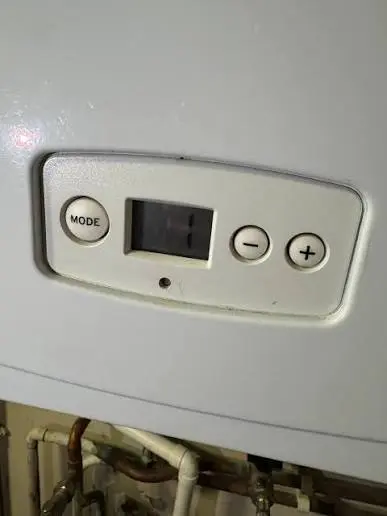
Look at the pressure gauge on the front of the boiler. It is usually a small dial or a digital reading on the display. If it reads below 1 bar, the system needs repressurising.
How to Repressurize a Glow Worm Boiler
1. Turn off the boiler and wait for it to cool.
2. Locate the filling loop, usually a flexible silver hose underneath the boiler with two valves.
3. Open both valves slowly until you hear water entering the system.
4. Watch the pressure gauge and stop when it reaches 1.2 to 1.5 bar.
5. Close both valves firmly.
6. Turn the boiler back on.
If the pressure drops again within a few days, you likely have a leak in the system that needs professional attention.
4. Frozen or Blocked Condensate Pipe
Condensing boilers, which includes most modern Glow Worm models, produce acidic condensate water that drains away through a plastic pipe. In cold weather, this pipe can freeze solid, causing the boiler to shut down.
The pipe is usually white or grey plastic, around 22mm wide, and runs from the boiler to an outside drain or soil stack. If it is freezing outside, this is one of the first things to check.
How to Thaw a Frozen Condensate Pipe
• Pour warm, not boiling, water over the frozen section of the pipe.
• You can also use a hot water bottle or a heat wrap.
• Never use a naked flame on the pipe.
• Once thawed, reset the boiler by holding the reset button for a few seconds.
If your condensate pipe runs fully outside and keeps freezing, an engineer can lag it with insulation to prevent repeat problems.
5. Pilot Light Has Gone Out (Older Models)
Older Glow Worm boilers used a standing pilot light. If this goes out due to a draught or a minor gas fluctuation, the main burner cannot ignite.
Relighting a pilot light is described in your boiler manual and involves holding the pilot button while using a long match or igniter to light the flame. However, if the pilot goes out repeatedly, there may be an issue with the thermocouple, a small safety device that senses the flame and keeps the gas valve open.
A faulty thermocouple is a common Glow Worm boiler fault on older units and requires replacement by an engineer.
6. Thermal Cutout or Overheating
Glow Worm boilers have a thermal cutout device that triggers if the boiler overheats. Once activated, it prevents the boiler from igniting again until the fault is resolved.
Common causes include a blocked or airlocked pump, scale buildup on the heat exchanger, or restricted flow through the system due to closed radiator valves or a dirty filter.
You may see a specific fault code on the display. Check your boiler manual to identify what the code means. Some basic fixes, such as opening radiator valves or bleeding radiators, are within a homeowner’s ability. Others, such as descaling the heat exchanger, need a professional.
7. Boiler Lockout and Error Codes
Glow Worm boilers enter a lockout state when they detect a fault. The boiler will display a fault code and refuse to ignite until either the fault is cleared or the boiler is manually reset.
A simple reset often clears a temporary lockout. Press and hold the reset button for 2 to 3 seconds. If the boiler fires up and runs normally, the fault may have been a one-off event, possibly a momentary gas pressure dip or a sensor reading spike.
If the boiler locks out again shortly after, the underlying fault is still present. Repeatedly resetting a boiler without fixing the root cause can cause further damage.
Quick Reference: Fault Causes at a Glance
| Symptom | Most Likely Cause | DIY Fix Possible? |
| No ignition, no gas from hob either | Gas supply interruption | Contact gas supplier |
| Clicking but no flame | Faulty ignition electrode | No, engineer needed |
| Pressure below 1 bar | Low system pressure | Yes, repressurize |
| Fault code in cold weather | Frozen condensate pipe | Yes, thaw and reset |
| Pilot light keeps going out | Faulty thermocouple | No, engineer needed |
| Boiler shuts off on overheating | Blocked pump or heat exchanger scale | Partial, check valves |
| Lockout fault code displayed | Various, check code | Reset only, then engineer |
When to Stop DIYing and Call an Engineer
Some of these checks are genuinely safe and sensible for a homeowner. Others are not. Here’s a clear line:
Stop and call a Gas Safe engineer if:
• You smell gas at any point
• Your boiler is locking out repeatedly with the same fault code
• You’ve checked pressure and gas supply and everything looks fine
• Your boiler is making unusual sounds alongside the ignition failure
• The fault has persisted for more than 24 hours
A Glow Worm boiler not working correctly after basic checks should always be assessed by a qualified professional. Attempting to bypass safety systems or interfere with gas components is illegal and genuinely dangerous.
Frequently Asked Questions
1. Why does my Glow Worm boiler click but not ignite?
Repeated clicking without ignition usually points to a faulty ignition electrode or lead. The boiler is attempting to spark but cannot generate a strong enough arc to light the gas. This requires a Gas Safe engineer to inspect and replace the components.
2. What does it mean when my Glow Worm boiler shows an F1 fault code?
On most Glow Worm models, F1 indicates low water pressure. Check the pressure gauge and repressurize the system if it reads below 1 bar. If the pressure drops again quickly, there is a leak somewhere in the system.
3. Can I reset my Glow Worm boiler myself?
Yes. Press and hold the reset button, usually marked with an arrow or flame symbol, for 2 to 3 seconds. The boiler will attempt to restart. If it locks out again after running briefly, call an engineer.
4. How do I know if my condensate pipe is frozen?
A frozen condensate pipe is most common when outdoor temperatures drop below zero. The boiler typically displays a fault code and the pipe may have visible frost or ice on the external section. Applying warm water to the frozen section and then resetting the boiler usually resolves it.
5. What pressure should a Glow Worm boiler be at?
When cold, a Glow Worm boiler should sit between 1 and 1.5 bar. When the heating is running and the system is warm, pressure can rise slightly to around 2 bar, which is normal. Above 2.5 bar or below 0.5 bar indicates a problem.
6. How long do Glow Worm boilers last before needing repair?
A well-maintained Glow Worm boiler typically lasts 10 to 15 years. Annual servicing significantly extends the lifespan and reduces the chance of unexpected breakdowns. Ignition-related faults are more common in older units with worn components.
7. Is a Glow Worm boiler not working covered under warranty?
Glow Worm boilers come with a manufacturer’s warranty, typically between 2 and 7 years depending on the model and whether it was registered at the time of installation. Check your documentation or the Glow Worm website for warranty terms before booking a repair.
8.Can I use my boiler if it smells of gas?
No. A gas smell is an emergency. Turn off the gas supply at the meter, avoid using any switches, open windows, and leave the property immediately. Call 0800 111 999 (National Gas Emergency Service) from outside or from a neighbour’s phone.
Final Thoughts
A Glow Worm boiler not igniting is frustrating, but it is rarely a mystery. Working through these seven causes in order gives you a clear idea of what is happening before spending any money.
Low pressure and a frozen condensate pipe are things most homeowners can sort out quickly. An electrode fault or a gas valve issue needs a professional, but at least you will understand what you are paying for.
For straightforward help from a team that knows heating systems inside out, 0800 Homefix provides reliable, no-nonsense service from Gas Safe engineers. Whether it is a quick diagnostic visit or a full repair, they are the kind of team worth having on speed dial when the heating stops cooperating.