An outdoor kitchen can make a patio or backyard much more useful, but keeping everything organized is not always easy. Grilling tools, plates, pans, sauces, cleaning supplies, and other accessories can quickly take over the countertop. Choosing the best outdoor kitchen storage helps keep these essentials close at hand while leaving enough workspace for food preparation and serving.
The good news is that you do not necessarily need a huge outdoor kitchen to create plenty of storage. With the right layout, even a compact cooking area can hold a surprising amount of equipment. From built-in cabinets to clever drawer arrangements, these outdoor kitchen storage ideas can help you make better use of every available space.
1. Add Cabinets Under the Countertop
The area directly beneath the countertop is often the easiest place to add useful storage. Instead of leaving this space empty, install cabinets that can accommodate larger items such as pots, pans, cutting boards, serving trays, and grilling accessories.
Cabinets are particularly useful because they hide clutter and give the kitchen a cleaner appearance. If your outdoor kitchen is exposed to the weather, choose materials designed for outdoor conditions. Stainless steel is a popular option because it is durable, easy to clean, and resistant to corrosion when properly maintained.
Before installing cabinets, think about what you will store inside them. A deep cabinet might be perfect for large cookware but less convenient for small utensils. Combining different cabinet sizes can make the space much more practical.
2. Use Drawers for Small Grilling Accessories
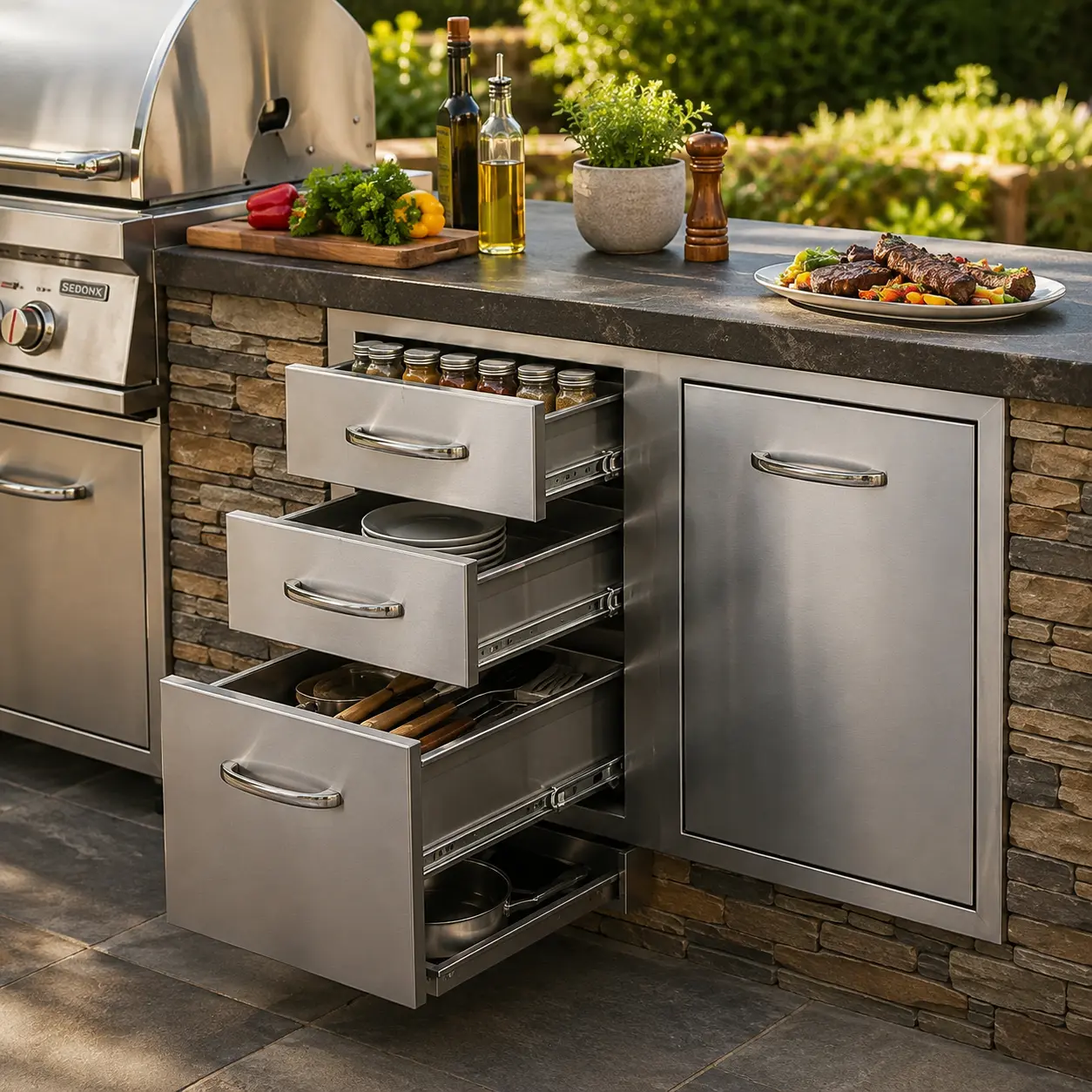
Small tools have a habit of disappearing when they are stored together in one large cabinet. Tongs, spatulas, bottle openers, thermometers, brushes, skewers, and kitchen scissors are much easier to find when they have their own drawers.
Shallow drawers are ideal for these smaller items because everything remains visible when the drawer is opened. You can also use dividers to separate different types of tools.
Consider placing a drawer close to the grill if you use grilling tools frequently. This simple arrangement can save you from walking around the kitchen looking for equipment while cooking.
3. Create a Dedicated BBQ Storage Area
If you regularly grill, it is worth giving your barbecue accessories their own storage section. Keeping everything near the grill makes cooking more convenient and prevents the countertop from becoming crowded.
A dedicated compartment can hold grill brushes, replacement grates, skewers, heat-resistant gloves, thermometers, and other accessories. Larger equipment can be placed in deeper cabinets, while frequently used tools can go into a nearby drawer.
This approach also makes cleanup easier because BBQ accessories have a designated place to return to after every use.
4. Make Use of Corner Spaces
Corners are easy to overlook when planning an outdoor kitchen. However, they can provide valuable storage if the layout is designed carefully.
Corner cabinets can be used for larger or less frequently used items. You can also consider pull-out shelves or rotating organizers to make items at the back easier to reach.
The key is to avoid creating a storage area that looks spacious but is difficult to access. A little extra planning can turn an awkward corner into useful storage without increasing the overall footprint of the kitchen.
5. Install Pull-Out Storage
Pull-out storage is particularly useful when space is limited. Instead of reaching deep into a cabinet, you can simply slide the shelf or basket toward you.
Narrow pull-out compartments can be used for bottles, sauces, spices, cleaning supplies, or other slim items. Wider pull-outs can accommodate cutting boards, trays, or cookware.
This type of storage works especially well in gaps between larger cabinets or appliances. Even a narrow unused section can become functional with the right pull-out design.
6. Use the Space Around the Grill
The grill is usually the main feature of an outdoor kitchen, but the surrounding space can also contribute to organization.
Depending on the layout, you might add drawers underneath or cabinets beside the grill. This provides a convenient location for cooking tools and supplies without requiring extra walking between different parts of the kitchen.
However, storage should be installed according to the grill manufacturer’s requirements. Adequate clearance and ventilation are important, particularly around gas appliances and other heat-producing equipment.
The goal is to create a practical workflow: preparation area, cooking area, and storage should all work together rather than feeling like separate sections.
7. Add a Dedicated Trash and Recycling Compartment
Trash bins can take up considerable space and are not particularly attractive when left in the middle of an outdoor kitchen. A built-in compartment can keep them concealed while making waste disposal convenient during food preparation.
A pull-out trash and recycling system is often a practical solution. Separate containers can make it easier to manage general waste and recyclable materials.
Place the compartment somewhere that is easy to reach from both the preparation and cooking areas. It should also be easy to remove and clean when necessary.
8. Use Vertical Storage Where Possible
When floor and countertop space are limited, look upward. Vertical storage can provide additional capacity without making the kitchen wider.
Depending on the design, you could use shelving or dedicated compartments for items that are frequently needed. Plates, cups, serving accessories, or decorative items can sometimes be stored vertically rather than taking up valuable countertop space.
However, exposed shelving requires more cleaning than enclosed cabinets. Dust, pollen, and weather can accumulate on outdoor surfaces, so use open shelving selectively and keep weather-sensitive items protected.
9. Create a Storage Zone for Cleaning Supplies
Cleaning supplies are essential for maintaining an outdoor kitchen, but they should not be mixed with food preparation equipment.
A small dedicated cabinet can hold sponges, brushes, cloths, surface cleaners, and other maintenance items. Keeping them together means you always know where to find them after a meal.
For safety, cleaning products should be stored appropriately and kept separate from food, cookware, and children’s access. If your outdoor kitchen is used by a family, a secure cabinet can be especially useful.
You can also keep spare paper towels, garbage bags, and other cleaning essentials in the same area.
10. Combine Different Types of Storage
The most effective outdoor kitchens rarely rely on one type of storage. A combination of cabinets, drawers, shelves, and specialized compartments usually provides better organization.
For example, drawers can hold utensils, cabinets can accommodate cookware, and a dedicated compartment can store BBQ accessories. This approach allows each type of item to have an appropriate storage location.
When planning outdoor kitchen storage cabinets, consider the entire workflow of the kitchen. Items used during food preparation should be close to the preparation surface, while grilling accessories should remain near the grill. Cleaning supplies can be positioned farther away from food-related storage.
Think About What You Actually Use
One of the easiest ways to waste storage space is to fill it with things you rarely use. Before purchasing additional cabinets or drawers, take a look at the equipment you already have.
Separate items into three groups: things you use regularly, things you use occasionally, and things that could be stored elsewhere. Frequently used items deserve the easiest-to-reach locations.
For example, there is little reason to keep a large roasting pan in the most accessible drawer if you only use it once or twice a year. That space could instead hold grilling utensils or serving tools that you use every weekend.
Make Small Spaces Work Harder
You do not need a massive outdoor kitchen to have good storage. A narrow cabinet, compact drawer, or corner compartment can make a noticeable difference when it is used effectively.
Measure your available space before buying anything. Take into account appliances, plumbing, electrical connections, doors, drawers, and walking areas. Storage that looks perfect on paper may not work if a cabinet door cannot open fully.
It is also worth considering how your storage needs might change. If you plan to add a refrigerator, pizza oven, sink, or other appliance later, leave some flexibility in the layout.
Choose Materials for Outdoor Conditions
Outdoor storage has to deal with conditions that indoor kitchen furniture does not. Even a covered patio can experience humidity, temperature changes, dust, and occasional rain.
Look for materials and hardware designed for outdoor applications. Stainless steel is a common choice because of its durability and resistance to corrosion. Good hinges, handles, drawer slides, and latches are equally important.
Maintenance also matters. Regular cleaning can help prevent dirt and grease from building up, while checking hardware periodically can help identify problems early.
Final Thoughts
Good storage can completely change the way an outdoor kitchen feels and functions. Instead of leaving tools and cookware on the countertop, you can give everything a dedicated place and keep the cooking area clear.
From under-counter cabinets and pull-out drawers to corner compartments and dedicated BBQ storage, there are plenty of ways to increase capacity without making the kitchen larger. The key is to choose storage based on the way you actually cook and entertain.
With thoughtful planning, even a compact patio kitchen can remain organized and easy to use. Investing in well-designed outdoor kitchen storage cabinets can make everyday cooking more convenient while helping protect your equipment and maintain a clean, uncluttered outdoor space
Also Read-The Technical Precision of Lara Gut-Behrami