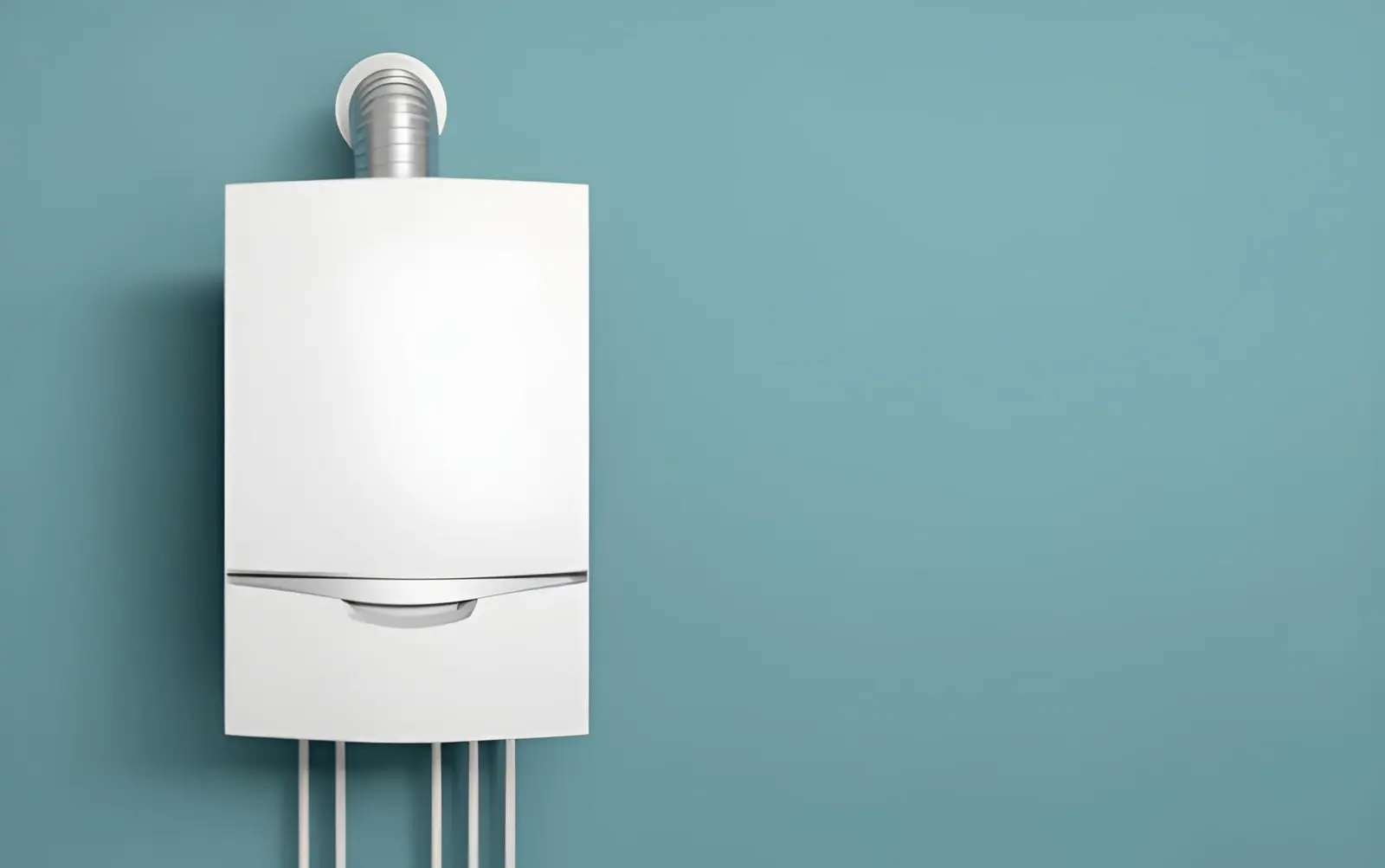
Your water heater will fail. The only question is whether you find out with a cold shower on a Tuesday morning or with three inches of water on your basement floor at midnight. One of those outcomes costs you an hour of inconvenience. The other costs you thousands.
Most tank water heaters give you weeks of warning before they go. The signals are easy to spot once you know what you’re looking for. This guide walks you through exactly what those signals are, how to read them, and how to decide whether a repair buys you more time or whether you’re just delaying the inevitable.
The Number That Should Be on Your Radar First
Before you look at any symptom, check the age of your unit. Look for the serial number on the rating plate, usually a sticker near the top of the tank. The first four characters typically encode the manufacture date. Most manufacturers use a letter for the month (A = January, B = February, and so on) followed by two digits for the year, so “E14” means May 2014.
Why does age matter so much? A conventional tank water heater is designed to last roughly 10 to 12 years. That’s not a warranty claim, that’s the practical reality of metal tanks sitting full of hot water around the clock. Once yours crosses the 10-year mark, every symptom on this list moves from “monitor it” to “take it seriously.” A 7-year-old unit with a small issue might be worth repairing. A 12-year-old unit with that same issue almost certainly isn’t.
Five Warning Signs Your Water Heater Is Sending You Right Now
Rusty or discolored hot water. If your hot water has a brownish or reddish tint, that’s corrosion happening inside the tank. Cold water running clear while hot water runs brown is the tell. That means the rust is coming from the heater, not your pipes. Once the interior of the tank starts corroding, no repair patches it.
Rumbling or popping sounds. Sediment builds up on the floor of the tank over years of heating cycles. When that sediment hardens into a thick layer, you’ll hear rumbling or loud popping as water forces its way through. The noise is annoying, but the real damage is invisible: the sediment makes the burner work harder, the bottom of the tank gets overheated, and tiny cracks form. A one-time flush might help if the unit is young. If it’s already old and noisy, you’re watching the clock run out.
Water pooling around the base. A small puddle near the bottom of your water heater is a big deal. It usually means the tank itself has a micro-fracture. Tanks expand when they heat up, and if there’s a crack, that’s when water escapes. You’ll often only see the puddle when the unit is hot, and it dries up as the metal contracts and cools. A lot of people miss it entirely for months. Check during the day when the unit has been running.
Inconsistent hot water. Getting less hot water than you used to, or noticing the water temperature swings from scalding to lukewarm in a single shower, points to a failing heating element (electric units) or a deteriorating burner assembly (gas units). This one’s worth diagnosing before you assume the worst. An element swap on a 4-year-old unit makes sense. On a 13-year-old unit, it’s like replacing the tires on a car with a blown engine.
The pressure relief valve is dripping. The T&P valve is a safety device designed to release pressure if the tank overheats. Occasional minor dripping can be normal, but consistent dripping or a valve you can’t reset is a red flag. It means either the valve itself has failed (a cheap fix) or the tank is building more pressure than it should (a serious problem). Either way, don’t ignore it.
Repair or Replace? The FLAT Framework
Here’s a simple decision model I’d call the FLAT Framework. Run your situation through these four questions in order:
- F — Fault type. Is the problem mechanical (element, thermostat, valve) or structural (tank corrosion, leaking base)? Mechanical faults are fixable. Structural faults are not.
- L — Life remaining. Is your unit under 8 years old? Repairs make sense. Over 10? Think hard. Over 12? Replace it.
- A — Amount of the repair. A rule of thumb used by most experienced plumbers is that if the repair costs more than 50% of a new unit, you’re throwing good money at a dying appliance.
- T — Track record. Is this the first repair the unit has needed, or the third in two years? A unit that keeps asking for money is telling you something.
If your answers are “structural,” “over 10 years,” “expensive,” and “repeat repairs,” the decision is made for you. Replace the unit. Get ahead of the failure rather than reacting to it.
What Happens If You Wait Too Long
Waiting until the tank fails completely is rarely just an inconvenience. A standard 40-gallon tank holds, well, 40 gallons of water. If the bottom gives out overnight, that water goes somewhere. Subfloor damage, drywall, insulation, stored belongings. According to the U.S. Census Bureau’s 2023 American Housing Survey, 11.2 million occupied U.S. households reported water leakage from inside the home, making interior water intrusion one of the most common housing quality problems the survey tracks. A slow tank failure is a common contributor to that number.
There’s also the energy cost angle. The U.S. Department of Energy notes that water heating accounts for roughly 18% of a typical home’s utility bill, making it the second-largest energy expense after heating and cooling. An aging, sediment-clogged tank can operate significantly less efficiently than a new unit, which means you’re overpaying every month just to keep a failing appliance limping along.
“A well-maintained water heater lasts. A neglected one degrades fast, and the final failure almost always happens at the worst possible time.”
This is the consistent consensus among certified home inspectors, whose professional body, the International Association of Certified Home Inspectors (InterNACHI), notes in its inspection standards that water heater age and maintenance history are among the most reliable predictors of imminent failure.
Water Heater Lifespan by Type: A Quick Reference
| Water Heater Type | Typical Lifespan | Key Maintenance Factor |
| Conventional Gas Tank | 8 to 12 years | Annual flushing; anode rod replacement |
| Conventional Electric Tank | 10 to 15 years | Element inspection; sediment flushing |
| Tankless Gas | 15 to 20 years | Annual descaling in hard-water areas |
| Heat Pump (Hybrid) | 10 to 15 years | Filter cleaning; airflow clearance |
What to Do Right Now
Go find your water heater’s serial number today. Decode the manufacture date. If it’s over 10 years old, schedule an inspection with a licensed plumber this season, not next year. Most inspections are straightforward and give you a clear picture of how much life is left.
If you’re already seeing any of the warning signs above and your unit is aging, the smart move is to get ahead of it. A proactive replacement on your schedule, with time to compare units and installation costs, beats an emergency call on a Friday night every time. Homeowners in Ocean County who need this kind of assessment done right often call on lakehurst plumbers who can inspect, advise, and install without the emergency markup that a sudden failure brings.
Concrete action beats anxious waiting. Check the age, run the FLAT Framework, and make a call. Your future self, standing in a dry basement, will thank you.
Also Read-Top 8 Medical Billing Software Platforms for HME Businesses