A property’s boundary does more than mark where one home ends and another begins. The right fence or gate can define the property, influence privacy and visibility, add a layer of security, and contribute to the overall character of the home. The National Protective Security Authority recognizes fences and gates as important elements of perimeter design, particularly when a property needs a clearly defined physical boundary.
That makes choosing a boundary more involved than simply picking a material or decorative style. Height, spacing, layout, gate design, and the way a fence follows the property can all affect how the finished boundary looks and functions. Some Dallas homeowners may prioritize privacy, while others may want an open view, a stronger sense of security, or a design that complements the architecture of the home.
The challenge is finding an iron boundary that brings those priorities together. With the right combination of structure and design, an iron fence can establish a defined perimeter, provide practical protection and privacy, and still feel like a natural part of the property rather than a barrier added as an afterthought.
Understanding Steel Gauge and Custom Fabrication
The thickness of the metal is one consideration when choosing an iron or steel fence, but it should not be viewed in isolation. Gauge numbers can be confusing because a lower gauge generally indicates thicker material, while the strength of a finished fence also depends on the shape and dimensions of its components, the posts, connections, welds, and overall construction.
For a Dallas residential boundary, the appropriate material depends on how the fence will be used and the conditions of the property. A decorative boundary may have different structural requirements from a taller installation intended to provide greater separation or security. Looking at the entire construction rather than focusing on gauge alone gives homeowners a better basis for comparing options.
Custom fabrication also allows the boundary to respond to the property rather than forcing the property to accommodate a standard panel. Yards can have slopes, changes in elevation, unusual corners, landscaping, driveways, and other features that make a one-size-fits-all approach less practical.
Prefabricated panels can work well for straightforward layouts, but a custom approach offers greater control over dimensions, spacing, transitions, and connections. For properties where the terrain and intended use call for a more precise fit, iron fence installation services in Dallas can adapt the design to the actual site rather than relying on generic panel dimensions.
This flexibility can also make it easier to balance different priorities. A homeowner may want closer picket spacing in one area for privacy or security while keeping another section more open to preserve views and natural light.
Choosing Between Custom Ironwork and Prefabricated Fencing
Cost is naturally part of any fencing decision, but the cheapest option is not necessarily the one that best suits the property. Prefabricated fencing offers convenience and standardized dimensions, while custom ironwork provides greater flexibility when appearance, fit, and long-term use are important considerations.
| Factor | Custom Ironwork | Prefabricated Steel | Chain-Link |
|---|---|---|---|
| Design flexibility | High | Limited | Limited |
| Site adaptability | High | Moderate | High |
| Appearance | Bespoke | Standardized | Functional |
| Privacy options | Design-dependent | Design-dependent | Limited |
| Structural customization | High | Limited | Moderate |
| Upfront cost | Generally higher | Generally lower | Generally lower |
The goal is not necessarily to choose the most expensive material. It is to choose a boundary that provides the combination of appearance, function, durability, and site compatibility that the property actually requires.
Designing an Iron Boundary That Complements Your Home
A boundary is one of the first exterior features people see, so its appearance matters. An otherwise attractive fence can feel out of place if its proportions, ornamentation, or finish conflict with the architecture around it.
Custom Dallas ironwork offers considerable room to adjust those details. Straight lines and simple pickets can suit contemporary homes, while curves, scrollwork, and traditional decorative elements may work better with more established architectural styles.
The proportions matter just as much as the decoration. A fence that is too tall or visually heavy can overwhelm a smaller property, while a low or widely spaced design may look out of scale around a larger home. Matching the fence to the scale of the building, landscaping, driveway, and surrounding structures creates a more cohesive result.
Gates deserve the same attention. Because they are often the most prominent section of a boundary, their shape and detailing can either reinforce or disrupt the overall design. A well-coordinated gate can become an architectural feature rather than simply an entry point.
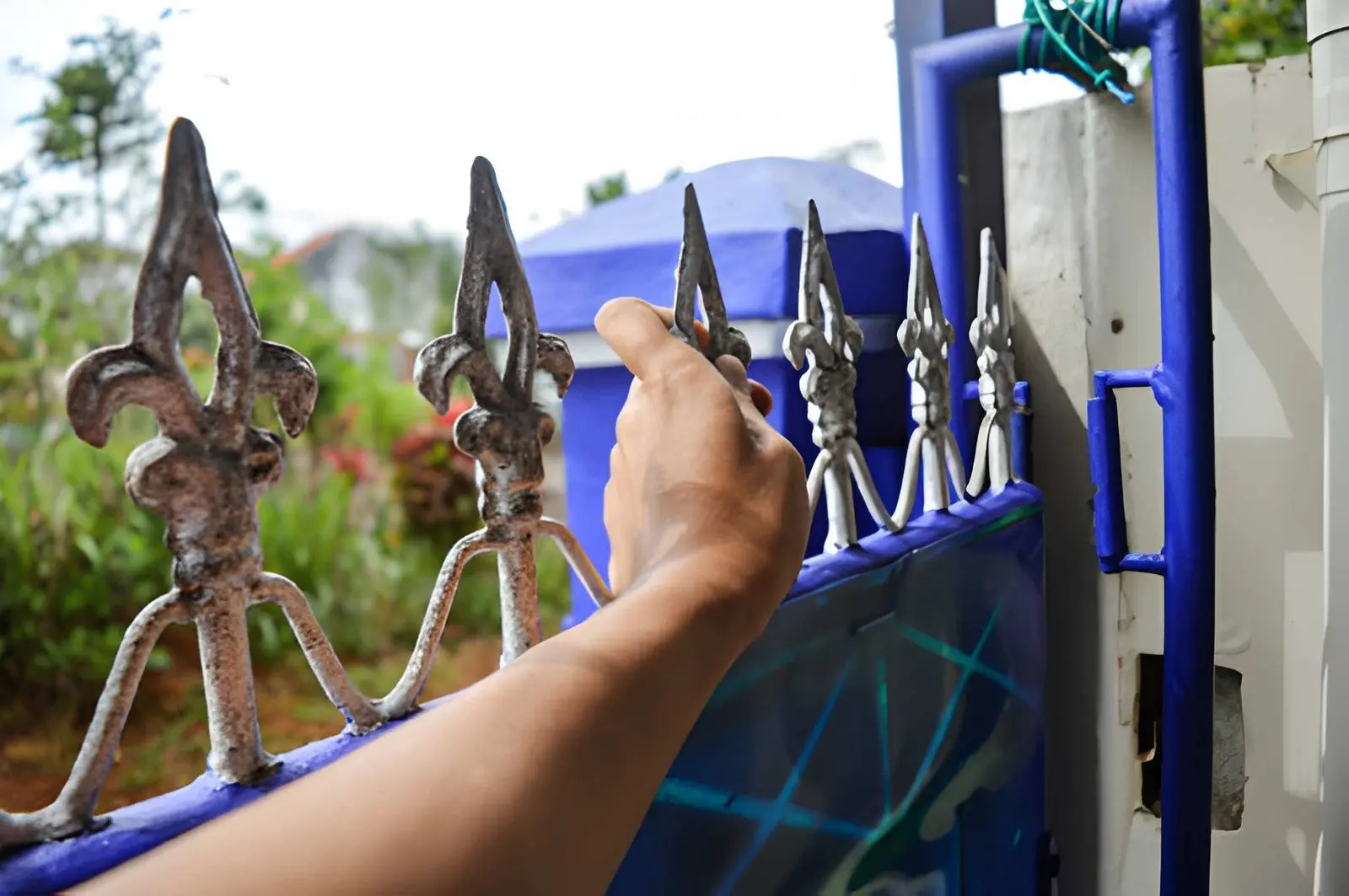
Decorative details can also have a functional role. Closely spaced pickets, carefully considered heights, and certain pointed or curved elements can make climbing more difficult while maintaining an ornamental appearance. The key is to use these features as part of the overall design rather than adding security elements that make the fence feel unnecessarily imposing.
Making the Boundary Work With the Landscape
The best iron boundary designs do not treat the fence as an isolated structure. Landscaping, pathways, driveways, walls, lighting, and the home’s exterior all affect how the finished installation looks.
Following the natural shape of the property can make a fence feel more intentional. On sloped sites, for example, the design may need to step or follow the grade rather than creating awkward gaps or abrupt changes in height.
Plants can also change the balance between privacy and openness. Low planting can soften a boundary without blocking visibility, while taller shrubs or trees can create additional screening behind an open iron fence. This gives homeowners another way to increase privacy without relying entirely on a solid barrier.
The result can be a boundary that feels integrated with the landscape rather than simply separating the property from its surroundings.
Conclusion
Choosing an iron boundary is ultimately about finding the right balance for the property. The ideal design should suit the home’s architecture, follow the shape of the site, and provide the right combination of privacy, visibility, durability, and security for the homeowner’s needs.
Material thickness, fabrication quality, ground preparation, protective finishes, and thoughtful design all contribute to how well a boundary performs over time. Just as importantly, details such as picket spacing, gate style, height, curves, and decorative elements can determine whether the finished fence feels integrated with the home or simply placed around it.
A well-designed iron boundary can therefore do more than mark a property line. It can give a home a stronger sense of definition, add character to the exterior, provide practical protection and privacy, and create a lasting feature that works with the property rather than against it.
Also Read
- How Blockchain Technology Works in Simple Terms
- How to Tell If a Used Car Dealer Is Worth Your Trust