Straight in May, curved by September
Look along the long side of a metal bed after a full season and it often bows outward near the middle. Nothing broke; the soil simply pushed. That quiet force, and the coating that keeps the steel from rusting while it pushes, are the two things that decide how many years a galvanized raised garden bed lasts in a Canadian garden.
Soil presses sideways, and harder at the bottom
A bed full of soil behaves a little like a container of very thick liquid. The weight of the soil above presses outward on the walls, and that pressure grows with depth, so the lowest part of each panel carries the most load.
Water makes it worse. Soil soaked by fall rain weighs considerably more than dry soil, and a freeze-thaw cycle adds a little outward push each time. On a short bed the corners brace the walls, but along a rectangular galvanized raised garden bed the middle of each long side sits far from any corner and flexes outward first.
Zinc protects the steel by corroding first
Galvanizing coats steel in zinc. Zinc is more reactive than steel, so when moisture reaches both, the zinc corrodes in its place, even around a small scratch where bare steel shows through. Zinc is also a trace nutrient that plants use, and the small amounts released from coated panels are not generally regarded as a concern for vegetable beds.
A powder coat over the zinc adds a physical barrier that keeps water off the zinc in the first place. Together the two last longer than either alone, since the paint slows the zinc’s wear and the zinc covers any chip in the paint.
That protection is easiest to lose during assembly. Dragging panels across concrete, overtightening screws against the coating, or drilling extra holes exposes steel at exactly the points where water collects, so handling the panels gently the first time pays off for years.
Filling a raised planter in fall saves soil and effort
Deep beds need a lot of material, and autumn supplies much of it for free in the form of fallen leaves and cut-back plants. Building the fill in layers lets it settle and begin breaking down over the winter:
- Bottom: coarse branches and woody trimmings
- Middle: shredded fall leaves and spent plants
- Top: compost mixed with good topsoil
- Surface: leaf mulch over newly planted garlic
Garlic planted in October overwinters well in a bed filled this way, and the mulch protects it through freeze and thaw. By spring the lower layers have settled several inches, so a top-up of compost is normal.
Brace the long sides before they bow
Assembling a galvanized raised garden bed kit is straightforward, but cross supports that tie opposite long walls together are easy to skip or leave loose. Fitting them at mid-span, or adding a threaded rod if none is supplied, stops the bulge before it starts.
Checking the walls each spring is a small habit worth keeping. A string pulled tight between the corners shows at a glance whether a long side has started to move, and retightening the fasteners before planting keeps a galvanized raised garden bed square as the soil settles.
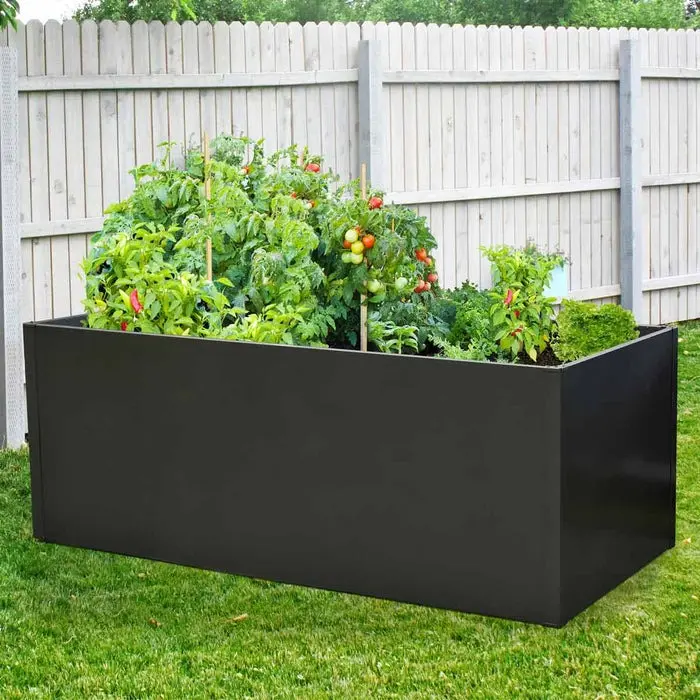
TMG Industrial’s 79 inch rectangular bed combines galvanized steel with a powder coat finish, and on a bed that long, center ties do as much for its shape as the steel itself. Fitted at assembly, they cost minutes and prevent a bulge that is hard to reverse once the bed is full.
Also Read
- How Blockchain Technology Works in Simple Terms
- Financial Terminology: Life Insurance Words Explained
- The Fashion Appeal of High-Top Sneaker Silhouettes