Outdoor events have a special talent for making simple plans complicated. You arrive with neatly packed merchandise, enthusiastic employees, and a carefully prepared display. Thirty minutes later, customers are crowding around your tables, someone needs additional storage space, and the weather forecast suddenly looks suspicious.
Sound familiar?
A 10×20 canopy can make these situations considerably easier to manage.
Offering 200 square feet of covered space, this versatile shelter provides businesses with room for product displays, customer interactions, demonstrations, and essential equipment. Its rectangular footprint works particularly well for outdoor markets, trade shows, corporate promotions, and community gatherings.
However, purchasing the right canopy involves more than choosing a size and clicking the checkout button. Frame construction, fabric quality, customization options, transportation requirements, and long-term durability all deserve attention.
And when your business depends on professional presentation, choosing premium equipment rather than the cheapest available option can be a smart investment.
Let’s explore where this canopy works best, what benefits it offers, and how to select a model that supports your business for years to come.
Why the 10×20 Size Hits the Sweet Spot
Choosing event shelter dimensions can feel like selecting office space. Too small, and everyone is uncomfortable. Too large, and you’re paying for room you don’t actually need.
A 10×20 canopy offers an appealing middle ground for businesses requiring more space than a standard 10×10 shelter.
Its 200-square-foot footprint provides flexibility for arranging merchandise, equipment, and customer service areas without requiring an enormous event site.
For example, a retail vendor could position product displays along both sides while maintaining a central walkway.
A corporate exhibitor might divide the shelter into demonstration and consultation areas.
The rectangular layout also provides a generous presentation frontage when positioned with its longer side facing customers.
However, available space depends on your furniture, equipment, and venue requirements.
A thoughtfully organized canopy can feel considerably more welcoming than a larger structure filled with unnecessary clutter.
The goal isn’t simply having more space. It’s making every square foot useful.
Outdoor Markets: Give Customers Room to Browse
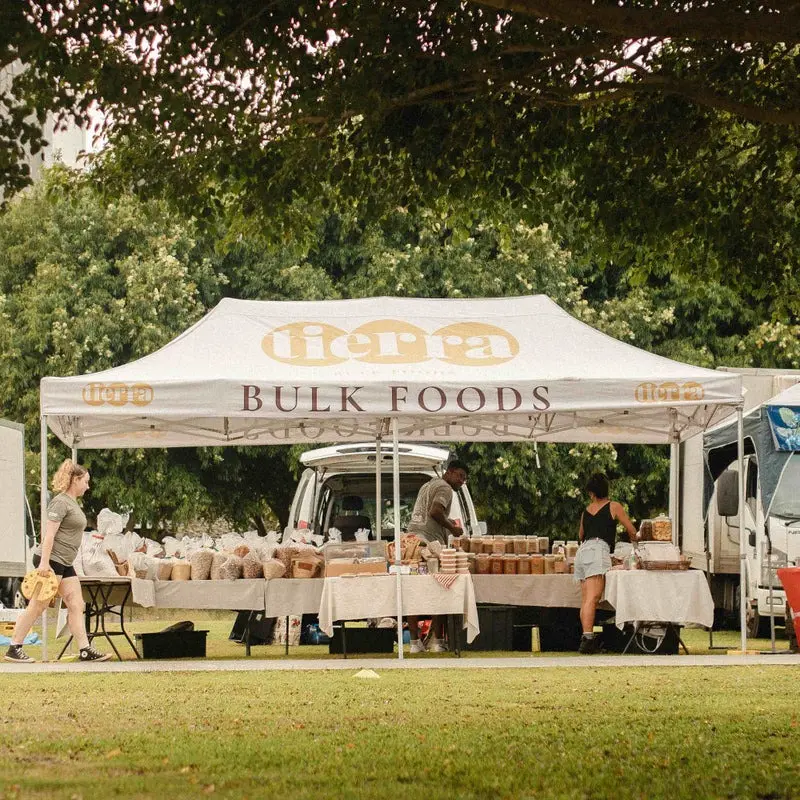
Farmers markets, craft fairs, and seasonal shopping festivals are excellent environments for commercial canopies.
Vendors often need space for merchandise displays, inventory storage, checkout counters, and customer movement.
A 10×20 canopy allows these activities to be organized into separate areas, helping reduce congestion during busy periods.
For businesses selling clothing, accessories, or handmade products, the additional room can accommodate multiple display tables or merchandise racks.
Food vendors may use the space for ordering and pickup stations, subject to applicable health and safety regulations.
The shelter also provides useful overhead shade during suitable weather conditions.
However, effective layouts should preserve accessible pathways and comply with organizer requirements.
Customers appreciate being able to explore products without accidentally knocking over half your inventory.
A Bakery That Turned Crowded Mornings Around
Consider a growing artisan bakery attending weekend farmers markets throughout California.
Initially, the business operates beneath a compact shelter with limited room for pastries, packaged bread, and customer transactions.
As its product range expands, the booth becomes increasingly crowded.
Employees struggle to restock merchandise, while customers form long lines around the display tables.
The bakery upgrades to a 10×20 canopy, arranging its products along one side and creating a dedicated ordering and pickup area.
The additional space allows employees to work more efficiently while customers browse comfortably.
A professionally branded roof also makes the business easier to identify among neighboring vendors.
This illustrative business scenario demonstrates how selecting the right shelter size can improve operational organization and the customer experience.
The pastries still need to taste fantastic, of course. But a better layout gives customers more opportunities to discover them.
Custom Printing: Make Your Canopy Work as a Billboard
A plain shelter provides functional coverage, but a customized canopy can also strengthen brand recognition.
Businesses exploring custom pop up tents 10 x 20 can consider printed roofs, branded valances, coordinated sidewalls, and matching promotional accessories.
These features help create a recognizable identity at crowded outdoor events.
Imagine a beverage company using bright brand colors, prominent logos, and attractive product imagery across its canopy.
Visitors approaching from different directions can identify the business before reaching its booth.
However, successful customization requires thoughtful design.
Choose readable typography, consistent colors, and clear messaging rather than overcrowding every available surface.
High-quality printing also matters, particularly when equipment will be used repeatedly.
Before ordering, confirm artwork specifications, printing areas, and available customization options.
Your canopy should communicate professionalism, not resemble an advertisement assembled during a coffee break.
Trade Shows: Create Space for Better Conversations
Outdoor trade shows require more than attractive displays.
Businesses need room to demonstrate products, answer questions, distribute promotional materials, and engage potential customers.
A 10×20 canopy can accommodate multiple activities without forcing visitors into one congested area.
For example, a technology company could position demonstration stations toward the front while reserving the rear section for consultations.
A construction equipment supplier might organize product samples along the perimeter, leaving central space for discussions.
This separation helps employees manage different visitor needs simultaneously.
The rectangular footprint can also support clear entrances and exits, depending on the event layout.
When customers can explore products comfortably, representatives have better opportunities to explain features and build relationships.
A Technology Startup That Made Demonstrations Easier
Imagine a startup introducing portable charging equipment at regional outdoor exhibitions.
Its products require hands-on demonstrations, explanatory signage, and conversations with potential distributors.
A smaller booth quickly becomes crowded when several visitors arrive simultaneously.
The company selects a 10×20 canopy and establishes two demonstration stations alongside a consultation table.
Branded graphics reinforce its identity, while organized displays make products easier to understand.
Employees can demonstrate equipment without interrupting ongoing conversations.
This illustrative example shows how additional space can support more engaging product presentations.
Rather than simply displaying merchandise, the company creates opportunities for visitors to interact with its technology.
And when customers understand a product better, they’re better equipped to evaluate whether it meets their needs.
When a Smaller Canopy Makes More Sense
Although larger shelters offer flexibility, they aren’t always the best choice.
An 8×8 custom tent provides 64 square feet of covered space, making it suitable for compact promotional booths, registration desks, and sampling stations.
Businesses attending events with restricted vendor allocations may find this smaller configuration more practical.
A canopy 8 x 8 can also serve as a secondary shelter for ticketing, information distribution, or merchandise collection.
By comparison, a 10×20 model offers substantially more room for displays and customer interactions.
Before selecting either size, consider available event space, equipment requirements, transportation capacity, and staffing.
The right choice depends on what your business actually needs rather than which structure looks most impressive in a product photograph.
Premium Construction: Why Quality Matters More Than Price
Let’s address an important purchasing consideration: durability.
Commercial canopies experience repeated transportation, assembly, dismantling, and storage. These activities place considerable demands on frames, connectors, and canopy fabrics.
A premium 10×20 canopy should feature dependable construction, suitable frame materials, reliable locking mechanisms, and quality fabric designed for its intended application.
Aluminum and steel frames offer different advantages, but overall engineering and manufacturing quality matter more than material names alone.
Businesses should also investigate warranty coverage, replacement parts availability, and maintenance requirements.
Premium commercial shelters may cost more upfront, but dependable equipment can provide better long-term value than inexpensive alternatives requiring frequent repairs.
After all, saving a few hundred dollars isn’t particularly helpful if your shelter fails before an important exhibition.
A Sporting Goods Retailer That Improved Event Engagement
Consider a sporting goods retailer sponsoring regional cycling competitions in Colorado.
The company wants to showcase accessories, distribute promotional merchandise, and engage participants after races.
Its previous compact booth provides insufficient space for merchandise displays and customer conversations.
Upgrading to a 10×20 canopy allows the retailer to establish separate browsing, demonstration, and consultation areas.
A branded roof improves visibility, while coordinated signage communicates the company’s product offerings.
Employees can assist customers without constantly rearranging displays.
This illustrative scenario demonstrates how a well-organized shelter can support stronger customer engagement at sporting events.
The canopy becomes more than temporary coverage. It becomes a recognizable destination for visitors interested in the brand.
Transportation, Setup, and Weather: The Practical Checklist
Before purchasing, evaluate how easily your canopy can travel between events.
Review packed dimensions, frame weight, recommended setup crew size, and vehicle compatibility.
A commercial-grade 10×20 canopy may be heavier than a recreational alternative, particularly when designed for frequent professional use.
Protective transportation bags and suitable storage arrangements can help prevent unnecessary damage.
Weather preparation is equally important.
A properly installed canopy provides useful overhead shade and shelter during appropriate conditions, but no portable structure should be considered safe in severe weather.
Always follow manufacturer instructions concerning anchoring, wind limitations, and evacuation procedures.
Regular inspections help identify damaged components before they create problems.
Quality equipment performs best when supported by responsible installation and maintenance.
Calculate Value Beyond the Initial Purchase
A premium canopy represents an investment, so evaluating its cost per event can provide useful perspective.
Suppose a professional shelter costs $2,500 and supports 50 events over several years.
Its initial purchase cost averages $50 per event, excluding maintenance, transportation, and accessories.
A cheaper alternative requiring repeated replacement could ultimately become more expensive.
These hypothetical figures illustrate why businesses should consider expected service life, frequency of use, and total ownership costs.
Professional customization can also provide recurring marketing value through repeated brand exposure.
For frequent exhibitors, dependable construction and consistent presentation often justify investing in higher-quality equipment.
Choose a Canopy That Works for Your Business
A 10×20 canopy offers an excellent combination of generous covered space, practical flexibility, and valuable branding opportunities.
Whether you’re operating a market booth, demonstrating products, or supporting sporting events, selecting the right model can improve organization and customer experiences.
While an 8×8 custom tent remains useful for smaller promotional activities, larger shelters provide additional room for businesses with expanding requirements.
Above all, prioritize quality construction, professional customization, and long-term reliability over the lowest purchase price.
Ready to upgrade your outdoor event setup?
Explore the premium commercial canopy solutions available from Extreme Canopy. Discover durable frames, professional printing options, and practical accessories designed to support your business across multiple events.
Invest in a high-quality canopy that reflects your professionalism, strengthens your brand presence, and helps make every outdoor event a success.
Also Read
- https://englishsharpmind.com/how-to-manage-multiple-expenses-during-the-festive-season-with-the-help-of-a-personal-loan-app/
- https://englishsharpmind.com/the-key-steps-to-designing-a-deck-that-complements-your-home/
- https://englishsharpmind.com/how-cash-home-buyers-speed-up-the-selling-process/