Key Takeaways
- Hands-on practice helps new workers build usable skills, accuracy, and confidence.
- Safety instruction should begin before a worker starts on an active job site.
- Apprenticeships can combine supervised work, mentorship, related instruction, and career progression.
- Construction math, communication, tool care, and digital documentation matter in nearly every trade.
- Quality programs clearly explain their costs, training methods, employer connections, and completion expectations.
Construction is practical work. New workers need more than a passing score on a written test. They need to measure accurately, use tools responsibly, communicate with a crew, recognize hazards, and adjust when a supervisor gives feedback. Strong training creates a safer starting point because it lets learners build those habits before the pressure of a live project is on them.
For people considering plumbing, plumbing apprenticeship training through Associated Builders and Contractors, Inc. can be a useful example of a structured trade pathway. The ABC Heart of America chapter supports workforce education and apprenticeship opportunities, with training locations serving the Kansas City area and Eastern Missouri. Programs connected to experienced contractors can help learners understand both the technical work and the expectations that come with joining a professional construction crew.
What New Construction Workers Need to Learn First
Every trade has specialized knowledge, but beginners usually benefit from the same foundation. They should learn how to read a tape measure, make basic calculations, identify common hand tools, and understand the safe use of power tools. They also need to move materials carefully, keep walkways clear, protect finished work, and ask questions before proceeding when instructions are unclear.
Job sites depend on coordination. A worker may interact with supervisors, inspectors, suppliers, customers, and crews from several trades in one day. Learning how to give a clear update, report a delay, and document completed work is just as valuable as learning how to cut, fasten, assemble, or install a material.
How Hands-On Training Builds Real Job Skills
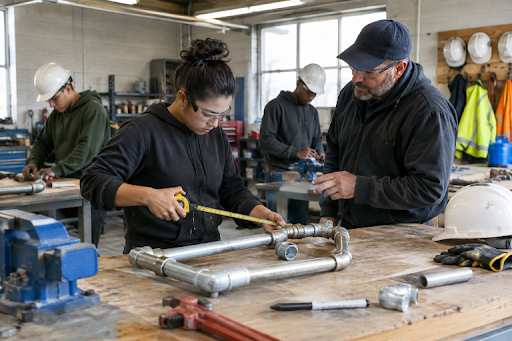
Hands-on learning turns an explanation into a repeatable action. A student can hear how to frame a wall or install a fitting, but practice is where they learn to double-check measurements, position materials correctly, and notice when a result does not look right. Training shops and controlled work areas give learners room to make corrections under supervision.
- A plumbing learner might measure and assemble a practice pipe layout.
- An electrical learner might wire a training panel after reviewing the plan and safety procedures.
- A carpentry learner might lay out, cut, and frame a small section of a wall.
- An equipment learner might practice inspections, controls, and safe operating procedures under an instructor’s guidance.
Repeated practice improves consistency. It also teaches time management without encouraging shortcuts. Cross-trade exposure is helpful because workers who understand sequencing can better protect another crew’s work and avoid creating conflicts that slow a project down.
Safety Skills That Belong in Every Training Plan
Safety is not a one-time orientation. It is a daily habit of looking ahead, using the right controls, and speaking up when conditions change. New workers should understand personal protective equipment, proper clothing, safe lifting, tool inspection, and the importance of securely storing materials and equipment. Construction workers should also receive task-appropriate instruction for ladders, scaffolds, fall protection, electrical hazards, dust, noise, fire risks, and chemicals.
Proper fit matters, too. The construction personal protective equipment requirements published by the Occupational Safety and Health Administration address protection for hazards involving the head, eyes, hearing, feet, hands, and respiratory system. Training should teach workers not only what to wear, but also how to inspect, maintain, and replace equipment when needed.
Workers should know who to contact during an emergency, where to find first-aid supplies, and how to report an injury, a near miss, a damaged tool, or a change in site conditions. Reporting early is a sign of professionalism, not a failure.
Classroom Lessons and Job-Site Practice Work Best Together
Classroom instruction gives learners the language and reasoning behind the work. It can cover construction math, blueprint reading, codes, material properties, and safety principles. Shop projects, site visits, and supervised field experience then show why those lessons matter. Reading a plan becomes more meaningful when a learner uses it to locate an opening, calculate a cut, or plan an installation sequence.
Feedback should follow each project. Instructors can point out what was done safely and accurately, identify where a learner lost time or missed a detail, and assign another practice task. That cycle of instruction, action, review, and improvement prepares workers to accept direction on the job.
Choosing a Quality Apprenticeship or Pre-Apprenticeship Program
A short course can provide useful exposure, while an apprenticeship generally offers a longer path of related instruction and supervised work. Federal Registered Apprenticeship opportunities are designed around paid work experience, mentorship, classroom learning, and recognized credentials. Before applying to any program, ask practical questions:
- Is the program registered, recognized, or connected to established employers?
- How much time is spent in class, in a shop, and on supervised work?
- How are safety skills taught and evaluated?
- What costs are involved for tools, work clothing, transportation, testing, or tuition?
- What are the attendance, wage, advancement, and completion requirements?
- Does the program introduce participants to employers or offer placement support?
- Can you speak with an instructor, graduate, or current participant before enrolling?
Where Plumbing Fits Into a Broader Career Plan
Plumbing work connects with many other parts of construction. Plumbers coordinate with framing crews when routing systems through walls, with concrete crews around underground work, with electricians near shared work areas, and with HVAC professionals in mechanical spaces. That coordination makes plan reading, communication, and respect for other trades especially important.
A learner interested in plumbing should focus on measurement, basic tool safety, material handling, layout awareness, and the discipline to follow approved procedures. Those fundamentals can support future growth in installation, service, maintenance, or specialized systems work.
Soft Skills and Technology That Help Workers Move Forward
Reliability often earns trust before a worker has years of experience. Arrive on time, listen before beginning a task, keep tools organized, and report problems early. Be willing to repeat a task when quality is not right. Respectful communication with people from different backgrounds and trades helps crews work through busy, changing conditions.
Entry-level workers may also use mobile plans, digital timekeeping, photo records, messaging platforms, and scheduling tools. Technology does not replace trade skills, but it can help workers document their work clearly and receive up-to-date information quickly. Good digital habits include checking details before sending a message and using photos only when allowed by site rules.
A Simple 90-Day Preparation Plan
- Days 1 through 30: Research local trades, review entry requirements, and complete basic safety preparation.
- Days 31 through 60: Practice measurements, tool identification, construction math, and workplace communication.
- Days 61 through 90: Visit training centers, prepare a simple resume, speak with employers or instructors, and apply to programs that fit your goals.
Common Questions About Construction Training
Do You Need Experience Before Starting?
Many entry-level programs accept beginners. Applicants can improve their chances by demonstrating reliability, interest in the trade, a willingness to learn, and respect for safety procedures.
What Tools Should a Beginner Learn First?
Start with measuring tools, basic hand tools, fastener tools, and power-tool safety. Safe use and proper storage matter more than owning expensive equipment.
Can Career Changers Start Later in Life?
Yes. Career changers may bring useful strengths in customer service, logistics, problem-solving, communication, and dependable work habits. The key is choosing training that matches their physical abilities, schedule, and long-term goals.
Building a Safer Start in the Trades
Construction careers are built through practice, patience, and steady improvement. The strongest preparation combines technical knowledge, hands-on work, safety awareness, and guidance from experienced professionals. By carefully comparing programs and building dependable habits early, new workers can take a more confident first step toward lasting careers in the skilled trades.
Read more: https://englishsharpmind.com/how-your-local-climate-dictates-your-insulation-needs/