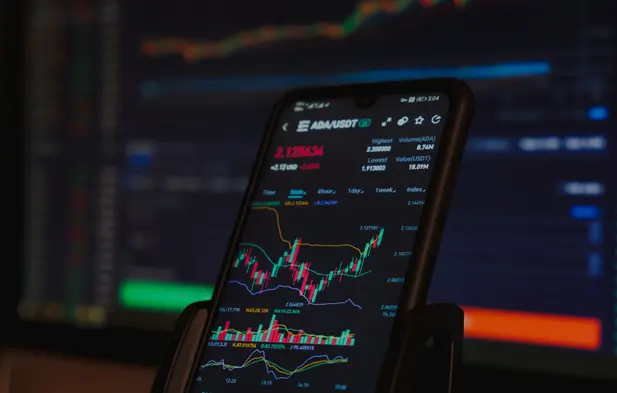
Investing in cryptocurrency can be exciting, but it can also be intimidating.
Prices often rise and fall dramatically within hours, making it difficult to decide when the “right” time to invest is. Many beginners spend weeks waiting for the perfect entry point, only to watch prices continue climbing. Others invest a large amount all at once, only to see the market decline shortly afterward. To reduce the stress of trying to predict short-term price movements, many long-term investors use a strategy known as Dollar-Cost Averaging, or DCA.
Dollar-Cost Averaging is one of the simplest and most widely recommended investment strategies, not only for cryptocurrencies but also for stocks, index funds, and other financial assets. The idea is straightforward: instead of investing all your money at once, you invest a fixed amount at regular intervals, regardless of whether prices are high or low.
Imagine you decide to invest $100 in Bitcoin every month. In January, Bitcoin might be trading at $120,000, allowing you to buy only a small fraction of a coin. In February, the price may drop to $90,000, so your same $100 purchases a larger amount of Bitcoin. If prices rise again in March, your next investment buys a smaller amount. Over time, your average purchase price reflects the market’s overall movement rather than the price on a single day.
This approach removes one of the biggest challenges in investing: market timing. Predicting short-term price movements consistently is extremely difficult, even for experienced professionals. Cryptocurrency markets are influenced by economic data, regulations, technological developments, investor sentiment, institutional activity, and unexpected global events. No one can reliably forecast every market move.
Dollar-Cost Averaging accepts this uncertainty instead of trying to overcome it. Rather than asking, “Is today the best day to buy?” investors simply continue following their schedule. Whether prices are rising, falling, or moving sideways, the investment plan remains unchanged.
One of the greatest benefits of DCA is that it helps reduce emotional decision-making. Cryptocurrency markets are known for their volatility. During bull markets, many investors become overly optimistic and invest aggressively because they fear missing out on future gains. During bear markets, the opposite often happens. Fear takes over, causing investors to delay purchases or sell assets at unfavorable prices.
Dollar-Cost Averaging introduces discipline into the investment process. Because purchases occur automatically according to a predefined schedule, emotions play a much smaller role. Investors are less likely to panic during market declines or become overly enthusiastic during rapid price increases.
This disciplined approach often results in purchasing more cryptocurrency when prices are lower and less when prices are higher. Although the investment amount remains constant, the number of coins acquired changes with the market price. Over long periods, this naturally lowers the average purchase cost compared to buying everything during a market peak.
Consider two investors with $12,000 available to invest. The first invests the entire amount in Bitcoin on a single day. The second invests $1,000 every month for twelve months. If Bitcoin experiences significant volatility during the year, the second investor may achieve a more balanced average purchase price because some investments occur during market corrections. While this strategy does not guarantee higher returns, it reduces the risk of making one poorly timed investment.
Dollar-Cost Averaging is particularly popular in cryptocurrency because digital assets are significantly more volatile than many traditional investments. Bitcoin has experienced multiple price declines exceeding 70% during its history, followed by substantial recoveries. Ethereum and many smaller cryptocurrencies have shown even greater fluctuations. For investors who believe in the long-term potential of blockchain technology but cannot predict short-term price movements, DCA offers a practical way to gradually build a position.
Modern cryptocurrency exchanges have made Dollar-Cost Averaging easier than ever. Many platforms now offer recurring purchase features that automatically buy a selected cryptocurrency daily, weekly, or monthly. Investors simply choose the amount, schedule, and preferred asset, allowing the platform to execute purchases automatically without requiring constant monitoring.
Dollar-Cost Averaging also encourages long-term thinking. Instead of focusing on hourly price charts or daily market news, investors concentrate on gradually accumulating assets over months or years. This perspective aligns well with the philosophy of many Bitcoin and Ethereum supporters who view blockchain technology as a long-term innovation rather than a short-term trading opportunity.
However, Dollar-Cost Averaging is not a perfect strategy for every situation. During prolonged bull markets where prices rise steadily over time, investing a lump sum immediately may produce higher returns because more capital enters the market earlier. Numerous studies involving traditional financial markets have shown that lump-sum investing often outperforms DCA when markets trend upward over long periods.
Even so, many investors continue to prefer Dollar-Cost Averaging because it reduces psychological stress and lowers the risk of investing immediately before a major market correction. The strategy prioritizes consistency and risk management rather than maximizing returns under ideal market conditions.
It is also important to recognize that DCA does not eliminate investment risk. If a cryptocurrency ultimately loses value permanently because the underlying project fails, regularly purchasing more of it will not produce positive returns. For this reason, investors should still research the projects they choose carefully. Dollar-Cost Averaging works best when applied to assets that investors believe have strong long-term potential rather than highly speculative tokens with uncertain futures.
Many experienced cryptocurrency investors combine DCA with portfolio diversification. Instead of purchasing only Bitcoin, they may allocate recurring investments among Bitcoin, Ethereum, and several carefully selected blockchain projects. This approach spreads risk while maintaining the consistency that makes Dollar-Cost Averaging attractive.
Some investors even increase their investments during major market downturns while maintaining their regular schedule. Although this technically goes beyond a strict DCA strategy, it reflects the belief that significant price declines may present long-term buying opportunities. Others simply continue their fixed purchases regardless of market conditions, trusting the discipline of the process.
Ultimately, Dollar-Cost Averaging is less about predicting markets and more about building good investing habits. It acknowledges that nobody consistently buys at the absolute bottom or sells at the exact top. Instead of chasing perfect timing, it focuses on steady progress, patience, and long-term accumulation.
As cryptocurrency markets continue to mature, Dollar-Cost Averaging remains one of the most accessible strategies for beginners and experienced investors alike. Its simplicity, consistency, and ability to reduce emotional decision-making have made it a cornerstone of long-term investing. While no strategy can guarantee profits, regularly investing fixed amounts over time allows investors to participate in the growth of the cryptocurrency market without becoming overwhelmed by its day-to-day volatility. For many people, that combination of discipline and simplicity is exactly what makes Dollar-Cost Averaging such a powerful investment approach.
Also Read
- How Blockchain Technology Works in Simple Terms
- When to Schedule Industrial Painting to Reduce Business Downtime
- The Secret to Stress-Free Furniture Storage Dubai and Self Storage Dubai