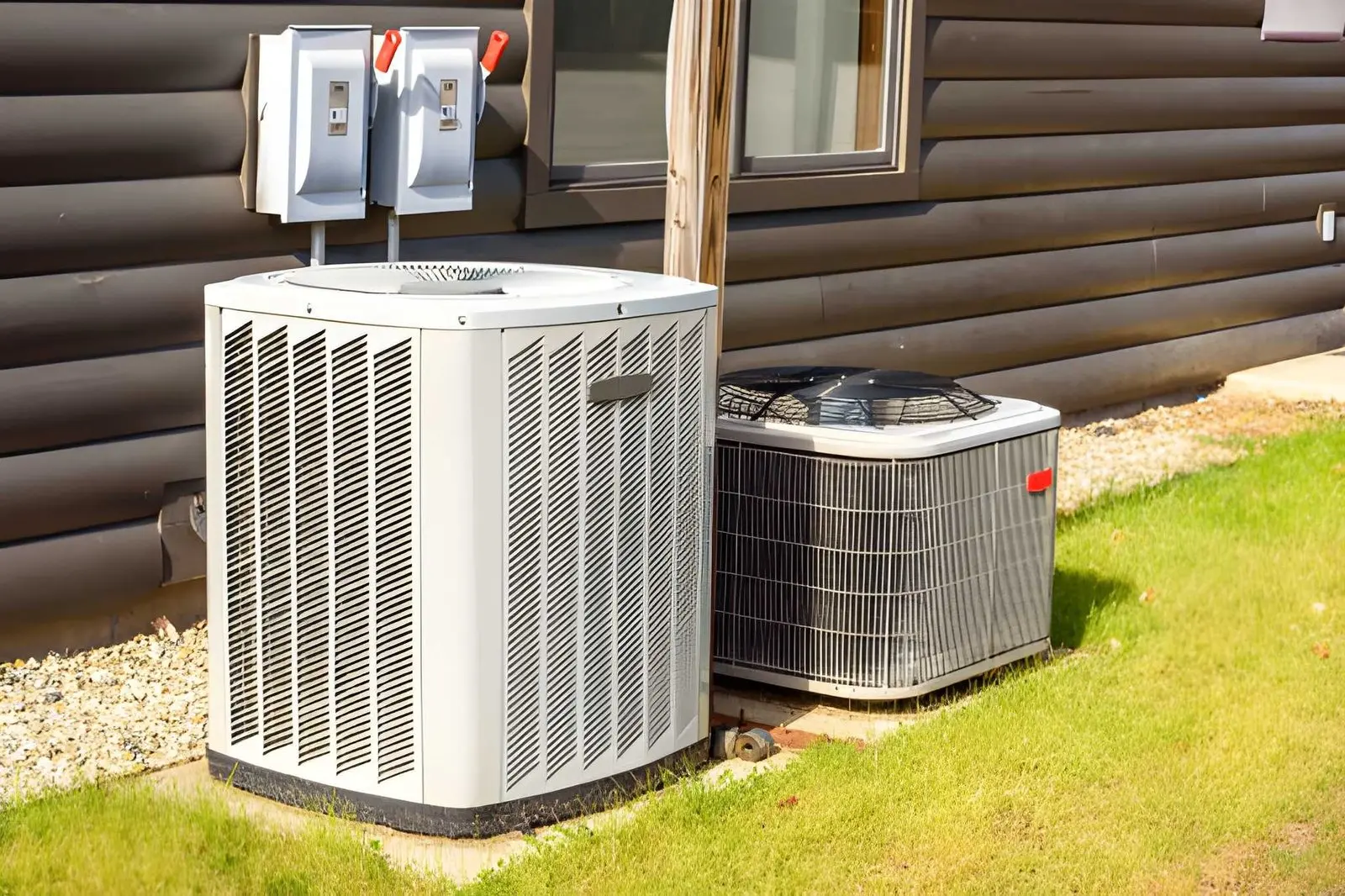
Your air conditioner dies on the hottest Saturday of August. The repair quote lands at $1,800. And your system is already 16 years old. That moment, right there, is where most homeowners get it wrong. They pay the repair bill, breathe a sigh of relief, and do the same thing again 14 months later. There’s a smarter way to think about this.
Replacing an HVAC system is one of the largest purchases a homeowner ever makes outside of the structure itself. Getting the timing right saves money, prevents unnecessary discomfort, and gives you the chance to plan financially instead of scrambling. This guide walks you through exactly when to pull the trigger on replacement and how to make the decision without second-guessing yourself for the next three years.
The Age Threshold Is More Precise Than You Think
Most homeowners have heard some version of “replace it after 15 years.” That’s roughly right but incomplete. The U.S. Department of Energy’s appliance standards analyses set average product lifetimes at 15 years for central air conditioners, 14 years for heat pumps, and 18 years for gas furnaces. Those figures are used in federal cost-benefit calculations, not marketing copy, so they carry real weight.
Here’s what the age threshold actually tells you: once your system crosses those benchmarks, every repair dollar is borrowed against time you may not get back. A 17-year-old AC that needs a $900 compressor repair isn’t just an expensive fix. It’s a gamble that the condenser coil, capacitor, and refrigerant lines all hold on for another few seasons while the compressor warranty on a used replacement part probably runs 90 days.
Age alone doesn’t demand replacement. But age combined with any one of the signs below almost always does.
Six Signs Your System Is Done
- Repair costs are climbing year over year. One call per season becomes two, then three. If your annual repair bills are trending up, the system is entering a cascade failure pattern.
- The system uses R-22 refrigerant. R-22 was phased out in 2020. Any system still running on it requires expensive, increasingly scarce refrigerant whenever it leaks.
- Rooms heat or cool unevenly. Hot second floors and cold basements signal a system that’s lost the capacity to distribute air correctly, often because the blower or ductwork is compromised.
- Monthly energy bills have crept up without explanation. Degraded efficiency is quiet and expensive. According to the U.S. Energy Information Administration’s 2020 Residential Energy Consumption Survey, space heating and air conditioning together account for 52% of a household’s annual energy consumption. When a system loses efficiency, that 52% gets heavier fast.
- The system runs almost constantly but barely keeps up. Short cycling or nonstop runtime usually means the equipment is undersized for the load, or it’s too degraded to meet specs.
- Humidity control has gotten worse. Proper HVAC removes moisture. If your home feels clammy even with the AC running, the system is no longer doing half its job.
The 5,000-Rule: A Framework for the Repair vs. Replace Decision
Here’s an original way to cut through the noise. Multiply your system’s age in years by the quoted repair cost. If that number exceeds 5,000, replacement is almost certainly the better financial move. If it’s well below 5,000, repair probably buys you meaningful time.
Call it the 5,000-Rule. It’s not a formula from a manufacturer’s brochure. It’s a practical screen that accounts for both the cost of the fix and how far into the depreciation curve the equipment sits.
Say you have a 14-year-old heat pump and a $600 repair quote. 14 multiplied by 600 equals 8,400. That’s well above 5,000, and the heat pump is past its average DOE lifespan of 14 years. The repair math is telling you to replace. Now flip it: a 6-year-old furnace with a $400 repair quote gives you 2,400. Repair it without hesitation.
The 5,000-Rule won’t make the decision for you in every edge case, but it gets you to a rational default position in under 30 seconds. That’s the point.
What Happens When You Wait Too Long
Consider the Reyes family in a mid-Atlantic suburb. Their furnace and AC were both 18 years old. They’d been patching the AC for three summers running, spending a combined $2,200 on repairs. In August of the fourth summer, the compressor died completely. The replacement quote came back at $14,200 for a full system swap. Because the failure happened mid-heat wave, no contractors had availability for 11 days. Their family of four spent over a week rotating between a neighbor’s house and a hotel.
That’s the cost of waiting: not just the repair bills, but the compounded stress and out-of-pocket expenses that pile on when a failure is unplanned. According to the U.S. Census Bureau’s 2023 American Housing Survey, about 10% of the nation’s households reported being uncomfortably hot for 24 hours or more at least once in the previous year, with 13.2 million households saying they experienced this. The major culprit was a breakdown of the main cooling equipment, according to respondents in nearly 42% of those affected housing units. A planned replacement on your schedule beats a forced one on July 20th.
Planning the Replacement: Timing, Cost, and Budgeting
The best time to replace is spring, before the heat peaks, or fall, before heating season hits. Contractor availability is better, lead times for equipment are shorter, and you’re not negotiating in desperation.
Budget realistically. A full system replacement for a 2,000-square-foot home typically runs between $7,500 and $15,000 depending on system type, efficiency rating, and local labor costs. High-efficiency heat pump systems or installations requiring new ductwork push toward the higher end. That’s a number that catches most homeowners off guard, which is exactly why planning a year or two ahead changes the financial picture entirely. When the bill arrives, you can choose a payment path that fits your household instead of reaching for the first option available.
Plenty of homeowners in this position turn to HVAC financing to spread the cost into predictable monthly payments, which makes a planned replacement far less disruptive than an emergency one paid for on credit at 29% APR.
Also check for federal tax credits. The Inflation Reduction Act provides energy efficiency home improvement credits that can apply to qualifying heat pump installations. A tax professional can confirm eligibility for your specific situation.
A Quick Decision Table
| Scenario | System Age | 5,000-Rule Score | Recommended Action |
| Minor refrigerant recharge | 7 years | 2,100 | Repair |
| Blower motor replacement | 12 years | 4,800 | Repair, then plan replacement within 2 years |
| Compressor failure | 15 years | 13,500 | Replace |
| Heat exchanger crack on furnace | 18 years | Any cost | Replace immediately |
| Full system at or past DOE average lifespan | 15+ years | Irrelevant | Begin replacement planning now |
What to Look for in a Replacement System
Efficiency ratings matter more than brand names. For air conditioners, look for SEER2 ratings of 16 or higher. For heat pumps, an HSPF2 rating above 7.5 signals meaningful cold-weather efficiency. Ducted systems require proper load calculations (Manual J) from your contractor. If a contractor skips that step and sizes by square footage alone, find a different contractor.
Ask about extended warranties on both the equipment and the labor. A 10-year parts warranty is standard on most major brands today. Labor warranties vary wildly, so get that in writing before you sign anything.
“I’ve met people whose systems are 30 years old and still running. I’ve also seen equipment die in less than 10 years. There are a lot of things you can’t control. HVAC systems are mechanical, with many moving parts.”
— Samantha Houchin, owner of The Weather Changers, as cited by Bryant Heating and Cooling’s homeowner resource guide
Houchin’s observation cuts to the heart of this whole topic. You can’t predict every failure, but you can stop letting age and math surprise you. Once your system is in the zone, get a quote, understand your financing options, and decide on your terms. Your future self in August will thank you.
Also Read-Financial Terminology: Life Insurance Words Explained