As Australian households face rising living costs and a heightened awareness of environmental sustainability, the focus of residential design has shifted significantly. Property upgrades are no longer just about visual appeal. Today, smart homeowners are prioritising functional improvements that reduce utility bills and improve daily comfort. Recent market analysis indicates that the average electricity price for households rose by over 7.6 percent between 2023 and 2025. This has drastically increased the financial incentive for passive temperature control, making strategic window styling one of the most effective ways to manage an indoor climate.
Mastering Thermal Control with Passive Design
To understand why window treatments matter so much, it is essential to look at how energy escapes through bare glass. A single pane of bare glass can gain or lose up to ten times more heat than an equivalent area of an uninsulated wall. Without adequate barriers, heating and cooling appliances are forced to work constantly to compete with the outside elements.
According to the Australian Government Department of Climate Change, Energy, the Environment and Water, almost 90 percent of a home’s heat is gained and up to 40 percent of heating energy is lost through its windows. This staggering statistic highlights the urgent need for physical interior layers that stop thermal transfer before it compromises indoor temperatures.
The National Construction Code 2022 update, largely implemented across Australian states recently, officially raised the minimum energy efficiency requirement for new residential builds from 6 to 7 stars. Achieving this higher standard requires prioritising passive design elements over expensive mechanical systems. Upgrading your window furnishings is a simple yet highly effective way to meet these modern efficiency standards without embarking on major structural renovations.
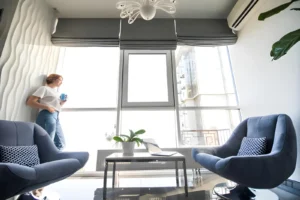
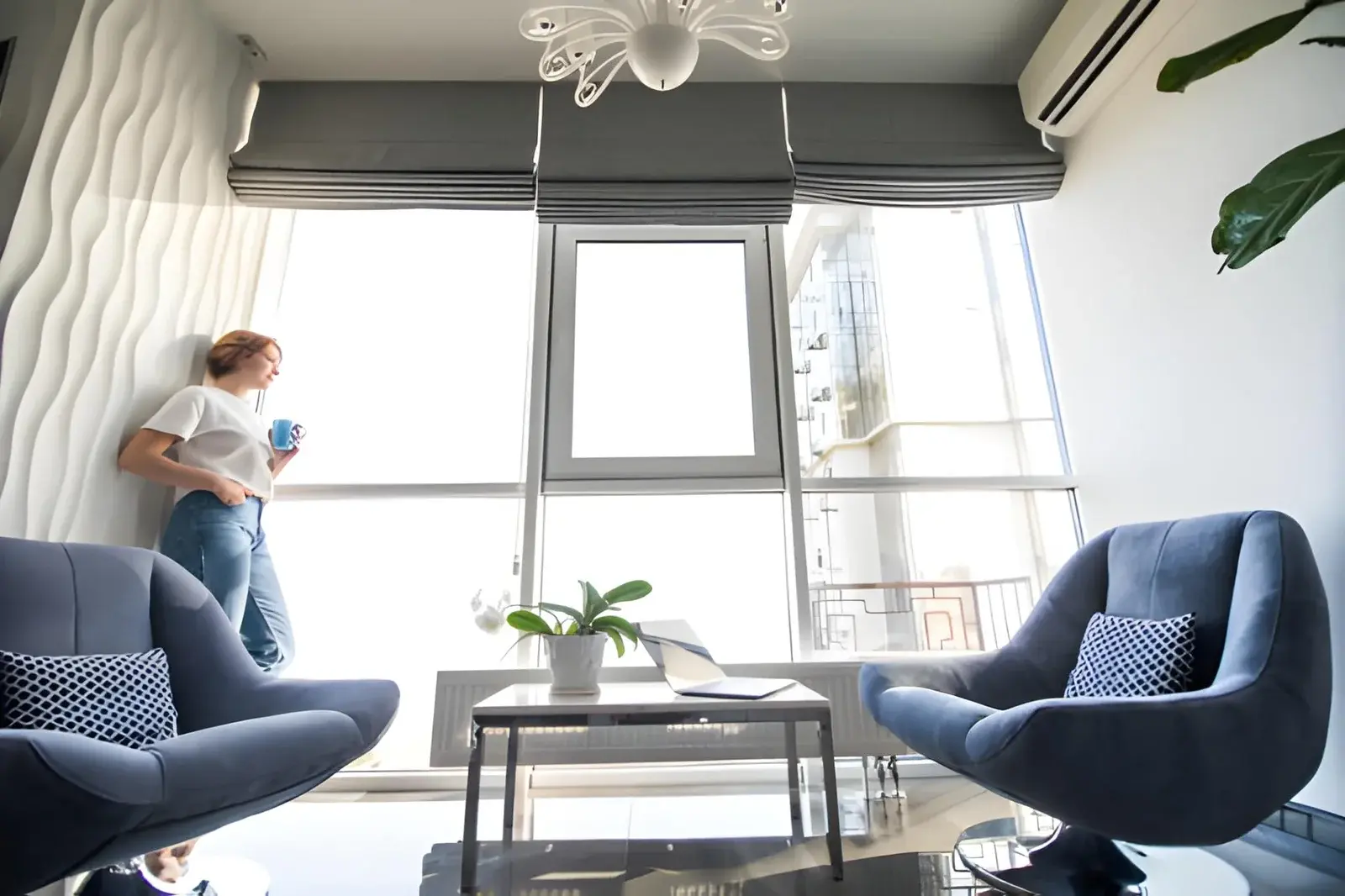
For example, installing custom-fitted Roller Blinds serves as a practical and stylish solution. Because they sit close to the glass and provide a minimalist profile, they create an effective seal that significantly reduces drafts and heat transfer. This simple physical barrier helps keep living spaces noticeably cooler in summer and warmer in winter.
Finding the Right Fabric for Your Needs
Selecting the appropriate window furnishings is crucial for maximising both aesthetic value and thermal performance. Modern solutions are designed to cater to different functional needs, ensuring that homeowners do not have to compromise on style to achieve true energy efficiency. When planning your interior design, consider the following popular fabric options:
- Blockout Fabrics: Ideal for bedrooms and home cinemas, these heavy-duty fabrics stop natural light entirely. They offer the highest level of privacy and serve as an exceptional thermal barrier against extreme outdoor temperatures.
- Light-Filtering Fabrics: Perfect for living rooms and dining areas, these materials soften harsh sunlight while maintaining daytime privacy. They reduce the reliance on artificial lighting during the day, further cutting down electricity usage.
- Sunscreen Fabrics: Designed to manage intense UV exposure, sunscreen materials allow you to retain your outside view while blocking harmful glare and heat. They are particularly beneficial for north-facing and west-facing rooms that endure harsh afternoon sun.
By matching the specific fabric to the room’s orientation and purpose, you can optimise your property’s natural lighting and passive cooling capabilities. Independent rating programs scientifically measure these materials, proving that high-quality window coverings drastically improve the overall thermal resistance of standard residential glazing.
The Financial Impact of Energy-Efficient Features
Beyond daily comfort, investing in high-quality window treatments has a measurable impact on a home’s market value. The Australian real estate market has seen a rapid transformation in what buyers consider essential. According to recent sustainability reports within the property sector, over half of all houses sold across the country explicitly highlighted energy-efficient features to attract potential buyers.
Data consistently shows that energy-efficient houses command a notable price premium, often adding significant value to a property’s sale price compared to non-efficient homes. Buyers are actively seeking future-proofed properties that can maintain comfortable indoor climates without relying entirely on mechanical heating and cooling. Moving a property toward a 7-star energy rating reduces the home’s overall heating and cooling energy load by approximately 24 percent, a selling point that resonates strongly with budget-conscious families.
When evaluating a complete property makeover, passive temperature control directly complements other major investments. For instance, when exploring architectural trends and broader home improvement plans, it becomes clear that HVAC systems operate much more cost-effectively when a home is properly insulated. A well-insulated room reduces the overall energy load, meaning your heating and cooling units do not have to work as hard or run as long to reach the desired temperature.
Ultimately, modern window treatments are far more than a decorative finishing touch. They are a strategic, value-adding investment that protects your home from the harsh Australian climate while ensuring long-term financial returns and everyday comfort.
Also Read
- From Samples to Factory Acceptance: Keeping Custom Automation Decisions Clear
- Mrf Plastic Bottlenecks: A Plant-Level Guide for Public-Private Mrfs
- Can a Power Station Power a Home Office All Day?