When people hear the word “investment,” they usually think of stocks, bonds, property, or perhaps a business that can generate income over time. Yet the digital economy has created many alternative ways of allocating capital, some of which do not fit comfortably into traditional financial categories.
Sports arbitrage, commonly known as surebetting, is one example. At first glance, the concept can resemble an investment strategy because it involves allocating money across different positions and looking for a mathematical advantage rather than simply predicting an outcome. However, there are important differences between arbitrage betting and conventional investing.
Understanding those differences is essential before describing surebets as an investment.
The business logic behind arbitrage
Arbitrage itself is not unique to sports betting. The basic concept exists throughout finance and commerce.
A trader might notice that the same asset is temporarily priced differently in two markets. A retailer may buy a product where it is cheaper and sell it where demand supports a higher price. In both situations, the opportunity comes from a pricing discrepancy rather than an expectation that the underlying asset will increase in value.
Surebets follow a broadly similar economic principle. Differences between prices offered by betting operators can occasionally create situations in which the combined pricing of possible outcomes does not align perfectly.
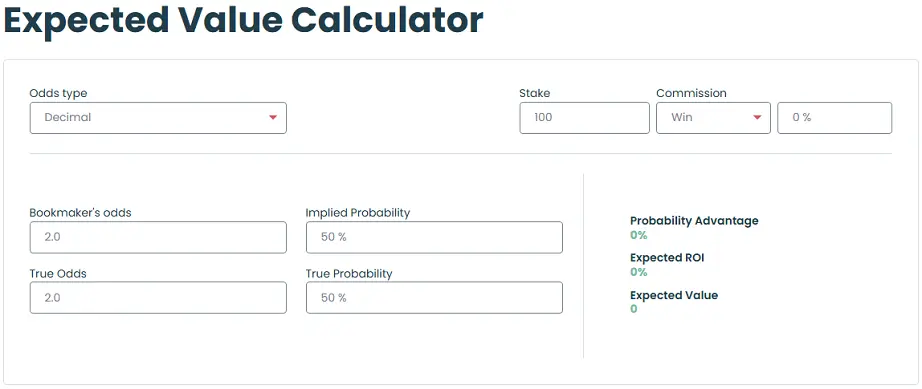
From a business perspective, the interesting element is therefore not the sporting prediction itself but market inefficiency. This approach makes surebets more effective in individual bets than valuebets (ev betting). But on long distances, punters often prefer ev betting combined with an ev calculator.
Capital allocation rather than traditional forecasting
Traditional betting generally depends on making a prediction about what will happen. Arbitrage approaches are conceptually different because the focus is on the relationship between available prices.
That distinction makes surebetting resemble certain forms of financial arbitrage more than ordinary speculative betting.
However, calling it an “investment” can still be misleading.
An investor who buys shares acquires an asset that may appreciate, pay dividends, or provide ownership rights. Property can generate rent and retain long-term economic value. Bonds represent a contractual financial obligation.
A surebet position does not create a productive asset. Capital is temporarily committed to a transaction and released after the underlying event is settled.
The economic structure is therefore closer to short-term capital deployment than traditional wealth-building investment.
Turnover matters as much as margin
One useful business concept that applies to arbitrage is capital turnover.
A company does not evaluate an opportunity only by looking at the margin earned on a single transaction. It also considers how quickly the same capital can be reused.
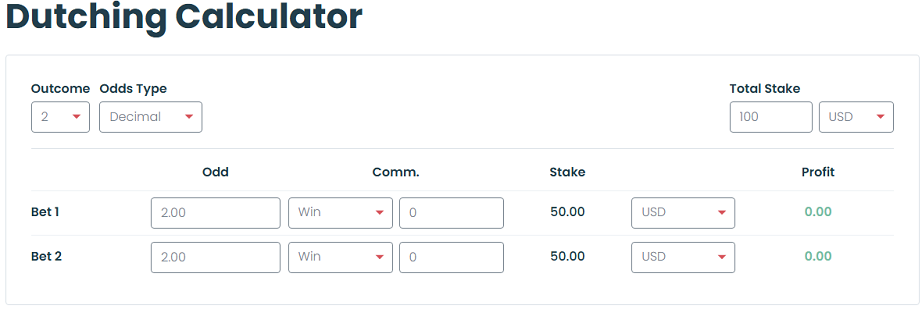
The same logic explains why turnover is relevant when examining arbitrage models. A relatively small margin may have very different implications depending on how long funds remain committed. To streamline this capital allocation across simple two-outcome markets and instantly determine optimal stake proportions without manual errors, operators frequently use a specialized 2 way dutching calculator to maintain precise balance.
This is similar to retail and other high-turnover businesses, where modest margins can still matter when capital circulates efficiently.
But faster turnover should never be confused with guaranteed growth. Operational problems, changing prices, transaction costs and restrictions can all alter the expected result.
Operational risk cannot be ignored
This is one of the biggest differences between a mathematical model and real-world execution.
A calculation may appear straightforward on paper, but businesses rarely operate under perfect conditions. The same applies to arbitrage.
Prices can change, transactions may not be completed as expected, different platforms can apply different rules, and technical delays can affect the outcome. Capital may also remain unavailable longer than anticipated.
These are essentially forms of operational risk.
In traditional business, companies manage similar challenges through procedures, technology, diversification and risk controls. The broader lesson is that a theoretical margin means little without reliable execution.
Technology changes the economics
Modern software has transformed many industries by making it possible to process large volumes of information faster than humans could manually.
Arbitrage markets illustrate the same trend.
The important business takeaway is broader than betting itself: wherever opportunities depend on identifying temporary pricing differences, information speed becomes economically valuable.
Automation can reduce the time required to compare large datasets, while analytical tools can help users understand relationships that might otherwise be difficult to identify manually.
This same principle can be seen in financial markets, e-commerce pricing, logistics and advertising.
Is surebetting really an investment?
From a strict financial perspective, describing surebets as traditional investments is questionable.
They do share several concepts with investment and business activity: capital allocation, return on deployed funds, efficiency, data analysis and risk management.
However, they lack one of the defining characteristics of many conventional investments – ownership of an asset capable of producing long-term economic value.
A more accurate description is therefore an alternative form of short-term capital deployment based on temporary pricing inefficiencies.
Conclusion
Surebets are interesting from a business perspective because they demonstrate how pricing differences, technology and capital allocation can interact.
The concept also highlights an important lesson that applies far beyond sports markets: identifying an apparent mathematical advantage is only the beginning.
Real economic results depend on execution, liquidity, costs, rules and operational risk.
For that reason, surebetting may share some characteristics with investment strategies, but it should not be viewed as a direct substitute for traditional investing. Its greatest relevance to business may instead be as an example of how data and market inefficiencies can create short-lived economic opportunities.
Also Read
- https://englishsharpmind.com/rebuilding-trust-in-yourself-after-a-difficult-chapter/
- https://englishsharpmind.com/thai-vs-english-school-in-koh-samui-which-is-better-for-a-long-term-expat-stay/
- https://englishsharpmind.com/the-role-of-clear-communication-in-intellectual-property-disputes/