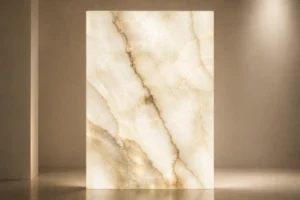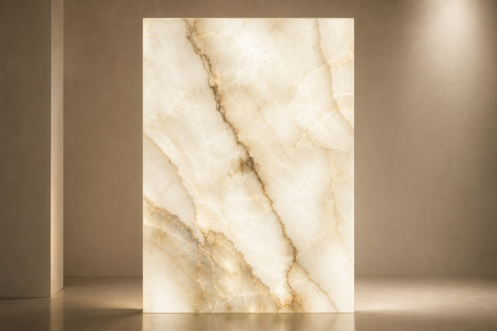
In Sydney, NSW, interiors often need to work across bright coastal daylight, compact urban floor plans, and evenings when softer artificial light makes a room feel more settled. Translucent stone meets that brief beautifully, as it can serve as both a hard surface and a source of visual warmth. A carefully placed panel of white onyx marble can turn a bar, vanity front, or entry wall into a focal point without requiring every finish in the room to compete for attention. The practical approach is to treat translucent stone as a feature material rather than an all-purpose one. Its natural bands, clouding, and veining respond differently to daylight and backlighting, so success depends on choosing the right location, inspecting the actual slab, planning the lighting before fabrication, and allowing for the care the surface will need over time.
Why Translucent Stone Stands Out
Unlike opaque surfaces, translucent stone can allow light to pass through thinner areas of the slab. Onyx is particularly valued for this effect, with mineral layers that can appear quiet in natural light and much more dramatic when illuminated from behind. Each slab is naturally variable, which means full-slab viewing matters. A small sample may show the base color, but it cannot fully reveal movement, denser sections, open-looking areas, or the likely vein direction across a finished wall. For Sydney homes and hospitality spaces, this character works especially well in foyers, powder rooms, reception desks, home bars, display cabinetry, and feature walls. It can bring a gentle glow to an apartment with limited daylight or add evening atmosphere to a larger home without relying on multiple decorative finishes.
Choose The Right Application
Start with the room and how it is used before choosing a stone color or finish. The most successful translucent-stone installations are usually decorative vertical surfaces or protected joinery details, where people can enjoy the pattern without subjecting it to constant impact, food preparation, or abrasive cleaning.
Good Locations
- Feature walls in living rooms, bedrooms, hotel lobbies, and entrance halls.
- Powder room walls, vanity faces, and mirror surrounds.
- Bar fronts, reception counters, and display cabinet back panels.
- Fireplace surrounds designed and installed with suitable heat clearances and materials.
- Decorative splashbacks that are not expected to receive heavy cooking impact.
Locations That Need More Care
- Busy kitchen benchtops used for chopping, food preparation, and frequent cleaning.
- High-traffic floors, where grit and impact can affect the finish.
- Outdoor installations exposed to weather, moisture, and temperature changes.
- Areas regularly exposed to citrus, wine, vinegar, cosmetics, or strong cleaning products.
When visual drama is the priority, a vertical panel often makes more sense than a work surface. It provides a larger, uninterrupted view of the stone while reducing everyday wear.Plan The Lighting First
Lighting should be resolved before the slab is cut. A showroom sample can look evenly lit, but the finished result is affected by stone thickness, backing material, joins, distance from the light source, and the placement of electrical components. If these elements are considered too late, bright spots, shadowy patches, or inaccessible fittings can undermine an otherwise beautiful installation.
Key Lighting Questions
- Will the stone be backlit, side lit, or lit only by the room?
- How much cavity space is available behind the panel?
- Can drivers, wiring, and fittings be reached for future maintenance?
- Does the selected light temperature complement the stone’s natural color?
- Would dimming improve the room’s use from day to night?
Request a representative lighting test where possible, ideally using a substantial offcut rather than a tiny chip. Dimmable LED lighting and a diffuser can help create a more even appearance. The electrician, cabinetmaker, stone fabricator, and designer should agree on the cavity depth and access points before installation begins.
Compare Stone Options Carefully
No surface material is best for every Sydney renovation. Compare options according to appearance, maintenance expectations, and the demands of the location.
- Translucent natural stone: Best for illuminated feature panels, bars, vanities, and decorative walls. Its major advantage is depth and light transmission, while its key requirement is careful placement and fabrication.
- Marble: Well-suited to walls, vanities, floors, and selected benchtops. It offers classic veining, but some varieties are sensitive to acids and need thoughtful daily care.
- Granite: A practical option for high-use benchtops and floors. It is generally chosen for durability rather than a backlit effect.
- Quartzite: Often selected for busy kitchens because it can provide a natural-stone appearance with strong performance, though each variety should still be assessed individually.
- Porcelain: Useful where consistent sizing and straightforward upkeep are priorities, although it does not reproduce the same natural depth as a translucent slab.
Balance Style And Daily Use
One statement surface is usually more effective than several. Pair a luminous stone panel with restrained cabinetry, plain painted walls, timber, and matte metal hardware so the stone has room to be noticed. Repeating one subtle tone from the slab in upholstery, joinery, or tapware can make the room feel connected rather than themed. A backlit panel behind a home bar is a useful example. The stone can carry the visual weight, while simple timber joinery, uncluttered shelving, and a calm floor finish keep the entertaining area comfortable and functional. In bathrooms, softer neutral lighting can support a relaxing mood without making the stone appear overly theatrical.
Care And Maintenance Basics
Care depends on the stone’s composition, finish, placement, and any protective treatment applied. The recommended care for natural stone includes using neutral cleaners or mild dishwashing detergent where appropriate and avoiding acidic products that can dull or etch acid-sensitive surfaces.
Simple Care Steps
- Blot spills promptly with a soft cloth rather than spreading them across the surface.
- Use a neutral stone cleaner or mild soap when advised for the specific stone.
- Avoid vinegar, lemon-based products, abrasive powders, and harsh chemicals.
- Use trays, coasters, and mats near drinks, cosmetics, and serving areas.
- Ask the fabricator whether an impregnating sealer is suitable for the application.
- Follow professional advice for repairs, polishing, and any resealing schedule.
Common Mistakes To Avoid
- Choosing from a small sample only: Inspect full slabs and approve the layout before cutting.
- Adding lighting too late: Plan backing, ventilation, wiring, and access before fabrication.
- Expecting identical pieces: Natural variation is part of the material and should be embraced.
- Using stone in a harsh location: Match the surface to realistic levels of impact and chemical exposure.
- Overusing statement finishes: Let one carefully chosen stone feature lead the room.
A Simple Buying Checklist
- Confirm the exact stone type and its suitability for the intended location.
- View full slab images or the slabs in person before approval.
- Discuss thickness, reinforcement, edge profiles, and visible joins.
- Test the intended lighting against a representative piece of stone.
- Approve vein direction and slab layout before fabrication starts.
- Confirm access for future lighting repairs and replacement.
- Ask for written guidance on suitable cleaners, sealers, and daily care.
Final Thoughts
Translucent stone can give a Sydney, NSW interior depth, warmth, and a memorable sense of light without making the space difficult to live with. Its ability to interact with natural or carefully planned artificial lighting can create a distinctive feature in areas such as kitchen splashbacks, bathroom vanities, bar fronts, feature walls, or reception spaces. However, the stone should be selected according to the demands of the application, including moisture, impact, cleaning, and everyday use. Choose a protected application, view the real slab to understand its natural variation, and test the illumination early so the final effect matches the intended design. Keeping surrounding cabinetry, flooring, hardware, and decorative finishes relatively restrained can also allow the stone to remain the visual focus without making the room feel overly busy. With these decisions in place, a dramatic translucent stone feature can provide visual interest while remaining practical and suitable for everyday living long after the renovation is complete.
Read more: https://englishsharpmind.com/how-modern-window-treatments-enhance-comfort-and-property-value/
https://englishsharpmind.com/what-an-ip-resolver-does-in-simple-terms/
https://englishsharpmind.com/what-victorian-businesses-should-check-before-going-solar/