Tires are one of the most important safety features on your vehicle, yet the words used to describe them can feel like a foreign language. If you’ve ever stared blankly at a sidewall full of numbers, wondered when your tread is too worn, or nodded along at the shop without fully understanding what “load index” or “TPMS” means, you’re not alone.
This guide breaks down tire terminology into plain, simple explanations that any driver can grasp. You’ll learn how to decode tire size, understand pressure ratings, spot damage before it becomes dangerous, and much more. Mastering the language of tires gives you control every time you get behind the wheel.
Why Tire Vocabulary Matters
Tires are the only part of your vehicle that touches the road. Knowing how to describe a concern (a vibration, uneven wear, or a bulge) helps you get faster, more accurate service. It also prevents unnecessary upsells.
When you understand terms like tread depth, PSI, and load index, you can read your owner’s manual, interpret tire sidewall markings, and decide when maintenance is truly due. Tire literacy keeps you safer, extends the life of your tires, and saves money. You don’t need to memorize every technical detail, just the basics that impact daily driving.
Basic Tire Anatomy
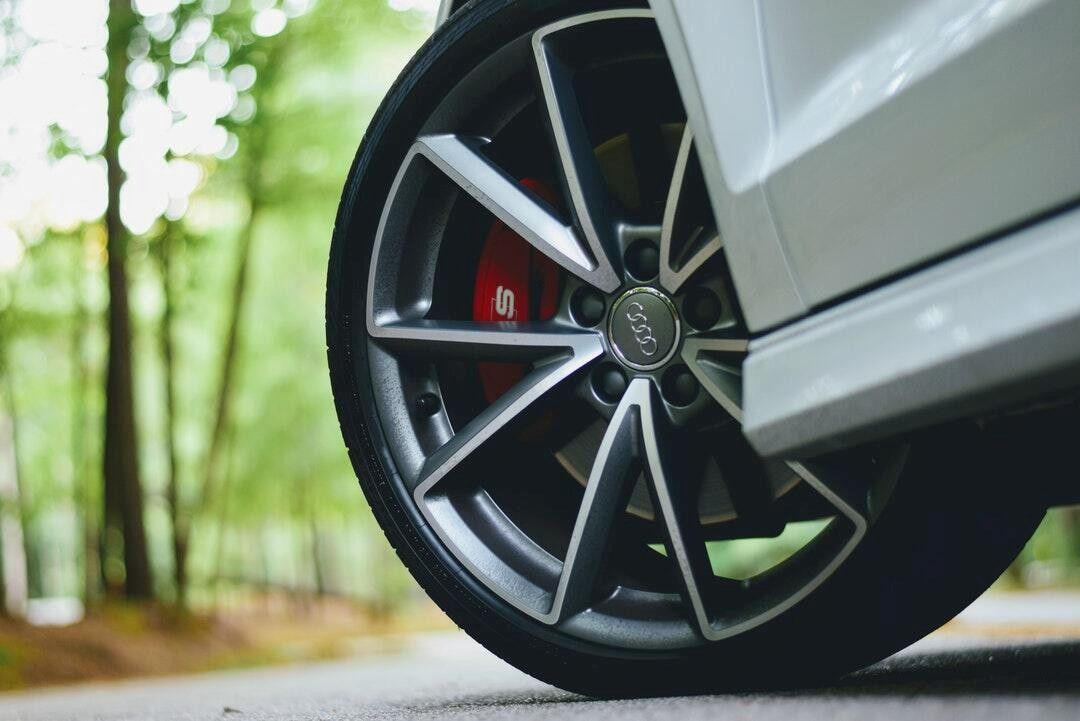
Every tire has three major zones. The tread is the patterned rubber that meets the road. Its grooves channel water away to prevent hydroplaning, and its depth determines how well your car grips in rain or snow. The sidewall is the smooth, vertical area between the tread and the wheel rim. It displays important information like tire size, brand, and safety warnings.
The bead is a thick inner ring of steel cable wrapped in rubber and locks the tire onto the wheel and creates an airtight seal. Understanding these parts helps you spot damage like cracks in the sidewall, uneven tread wear, or a bent bead after hitting a pothole.
Tire Shopping and Professional Help
When it’s time for new tires, knowing the vocabulary puts you in control. Here’s what to look for:
- Research speed ratings
- Treadwear grades (the UTQG rating)
- Load capacities online
UTQG, or Uniform Tire Quality Grading, includes a treadwear number (higher means longer expected life), a traction grade (AA, A, B, C), and a temperature grade (A, B, C). Discussing these terms shows the technician you’re an informed customer. For complex services, professional equipment is a must-have. If you’re in Northern Colorado, a trusted Fort Collins tire shop can help you decode your options, perform accurate installations, and keep your vehicle driving safely through every season. A good shop will always welcome your questions and explain their recommendations clearly, using the same language you now understand.
Understanding Tire Size
Look at a sidewall, and you’ll see something like P215/55R17. Here’s what that string means in simple terms. “P” stands for passenger vehicle. “215” is the tire’s width in millimeters from sidewall to sidewall. “55” is the aspect ratio: the sidewall height as a percentage of the width. So the sidewall is 55% of 215 mm tall. “R” means radial construction, the standard for modern cars. “17” is the wheel diameter in inches.
Some tires also show a letter before the width, like “LT” for light truck. Being able to read these numbers guarantees that you buy the right replacement tire and helps you understand how changes in size might affect speedometer accuracy or handling.
Tire Types
Tires aren’t one-size-fits-all. All-season tires balance moderate performance in wet, dry, and light winter conditions. Winter tires (often marked with a mountain-snowflake symbol) use softer rubber compounds and deeper tread patterns to grip ice and snow. They should be swapped off when temperatures consistently stay above 45°F.
Summer tires prioritize dry and wet grip at warmer temperatures but harden and lose traction in cold weather. All-weather tires carry the snowflake symbol but can be used year-round. Other categories include performance tires, touring tires for a quiet ride, and off-road tires with aggressive tread blocks. Choosing the right type affects safety, fuel economy, and comfort.
Load Index and Speed Rating
After the tire size, you’ll see a code like “94H.” The number (94) is the load index, which tells you the maximum weight the tire can support when properly inflated. A load index chart will show that 94 equals 1,477 pounds per tire. Never replace a tire with a lower load index than the vehicle manufacturer recommends.
The letter (H) is the speed rating, indicating the top speed the tire can sustain safely. H means up to 130 mph. Common ratings include T (118 mph), V (149 mph), and W (168 mph). For everyday driving, you may not need the highest rating, but you still need to match your vehicle’s specifications for stability and safety.
Tread Depth and Wear Indicators
Tread depth directly affects braking distance and traction. In the US, depth is measured in 32nds of an inch. New tires typically start around 10/32″ or 11/32″. When tread wears down to 2/32″, tires are legally worn out and must be replaced. You can check this with a penny: insert Lincoln’s head into the groove. If you can see the top of his head, you’re at 2/32″, and it’s time for new tires.
Tires have built-in wear bars that run across the grooves. When the tread surface is flush with these bars, the tire has reached its wear limit. Regularly measuring tread depth helps you plan replacements before rainy seasons or long trips.
Tire Pressure
PSI stands for pounds per square inch, the unit for tire pressure. The correct PSI for your vehicle is listed on a sticker inside the driver’s door jamb or in the owner’s manual, not on the tire sidewall (that number is the maximum pressure).
Underinflated tires flex too much, build heat, and wear on the edges. Overinflated tires wear in the center and reduce grip. Many cars have a TPMS (Tire Pressure Monitoring System) that illuminates a dashboard warning light when pressure drops 25% or more below the recommended level. Check your pressure at least once a month and before long drives, using a reliable gauge. Proper inflation maximizes fuel efficiency, handling, and tire lifespan.
Keeping Your Tires Healthy
Different services address different problems but work together to extend tire life. Wheel alignment adjusts the angles of your wheels so they meet the road correctly. Misalignment causes uneven tread wear and a steering wheel that pulls to one side.
Tire balancing corrects weight imbalances in the wheel-tire assembly. If a tire is out of balance, you’ll feel vibration in the steering wheel or seat at highway speeds. Tire rotation means moving tires from one position on the vehicle to another, as front and rear tires wear differently. Most manufacturers recommend rotation every 5,000 to 7,500 miles. Keeping up with all three prevents premature replacement and keeps your ride smooth.
Common Tire Damage
Being able to name a problem helps you decide on repairs. A puncture is when a nail, screw, or sharp object pierces the tread. Many punctures in the tread center can be repaired with a patch-plug combination, but sidewall punctures usually require tire replacement. A bulge or bubble on the sidewall means internal damage, as the inner liner has failed and air is pushing against the outer rubber.
Dry rot appears as small cracks on the sidewall or between tread blocks, caused by aging, UV exposure, and ozone. Once cracking is widespread, the tire’s structure is compromised, and it should be replaced regardless of tread depth. Regular visual inspections catch these issues early.
Run-Flat Tires and Self-Sealing Technology
Some vehicles come equipped with run-flat tires, which have reinforced sidewalls that can support the car’s weight even after a complete loss of air pressure. You can typically drive up to 50 miles at reduced speeds to reach a repair shop, eliminating the need for an immediate roadside tire change.
Self-sealing tires contain a sticky inner lining that seals small tread punctures (usually up to 5 mm) without air loss. The object can be removed, and the tire reseals itself. While these technologies add convenience and safety, they can be more expensive to replace and have specific repair limitations. Knowing your tire type prevents accidental damage. Never attempt to plug a run-flat without a professional inspection, as internal damage may be hidden.
Seasonal Tire Changeover
If you live in an area with harsh winters, swapping to dedicated winter tires is one of the best safety investments you can make. Winter rubber stays pliable in freezing temperatures, and the aggressive tread patterns bite into snow. Once spring arrives and temperatures stay above 45°F, switch back to all-season or summer tires, as winter tires wear quickly on warm pavement.
All-weather tires offer a middle ground: they are severe snow rated and can be driven year-round. The trade-off is they may not match the ultimate ice grip of a pure winter tire or the long tread life of a touring all-season tire. A better knowledge of the seasonal language on the sidewall (the three-peak mountain snowflake symbol) tells you instantly if a tire is winter-rated.
Drive with Confidence Through Tire Knowledge
Mastering tire terminology is a small effort that pays off every mile you drive. From reading a sidewall to describing a vibration, these words give you the power to maintain your car with confidence.
Keep this guide handy, check your tires regularly, and never hesitate to ask a professional to clarify anything that sounds confusing. Visit our blog for similar posts.
Read more: Eye Care Tips for Students: Balancing Study and Visual Health
8 Best AI Visual Tools for Writers, Bloggers & Educators in 2026
How to Keep Your Windows PC Fast, Clean, and Organized in 2026